


Nasiona robinii akacjowej białej (Robinia pseudoacacia) obrazki
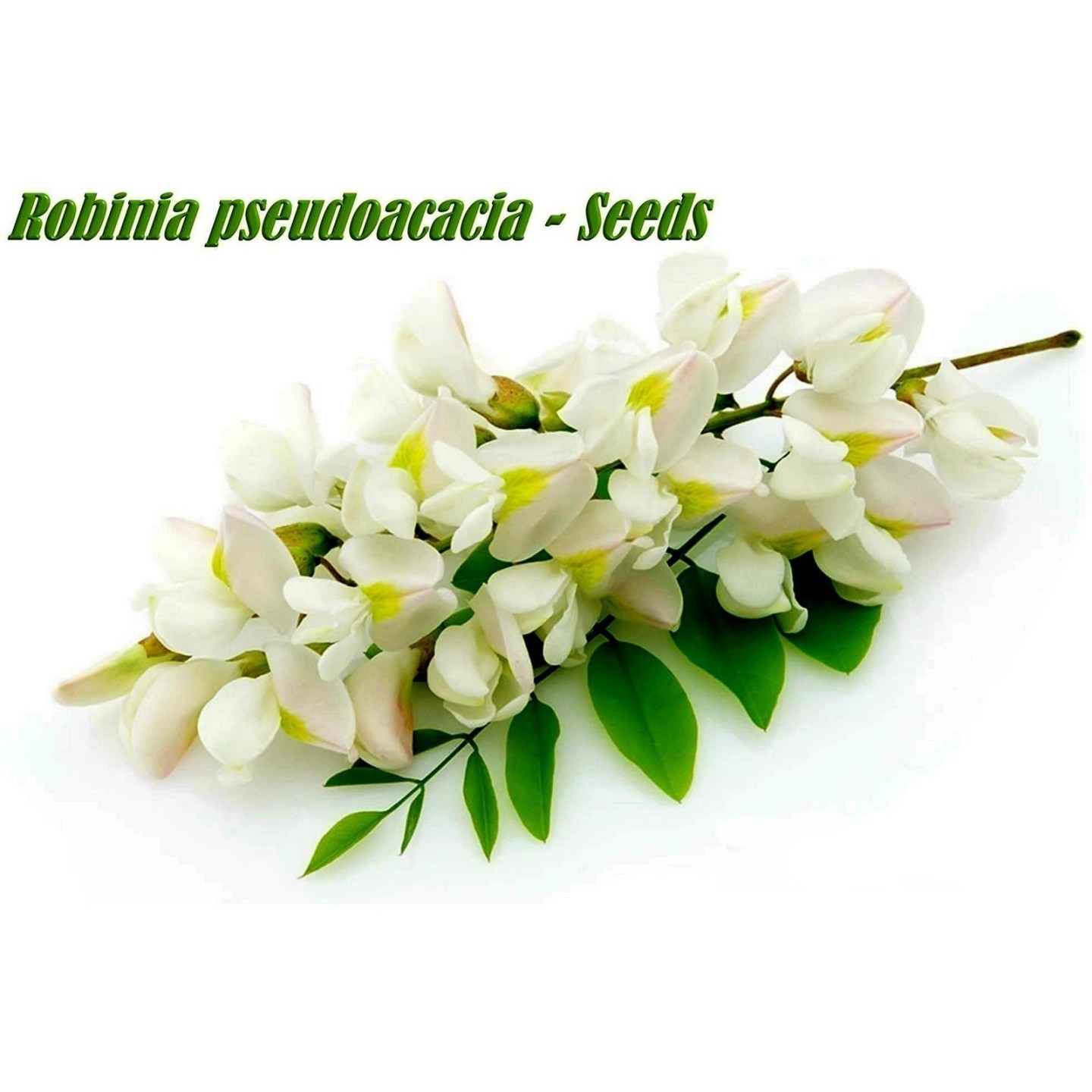
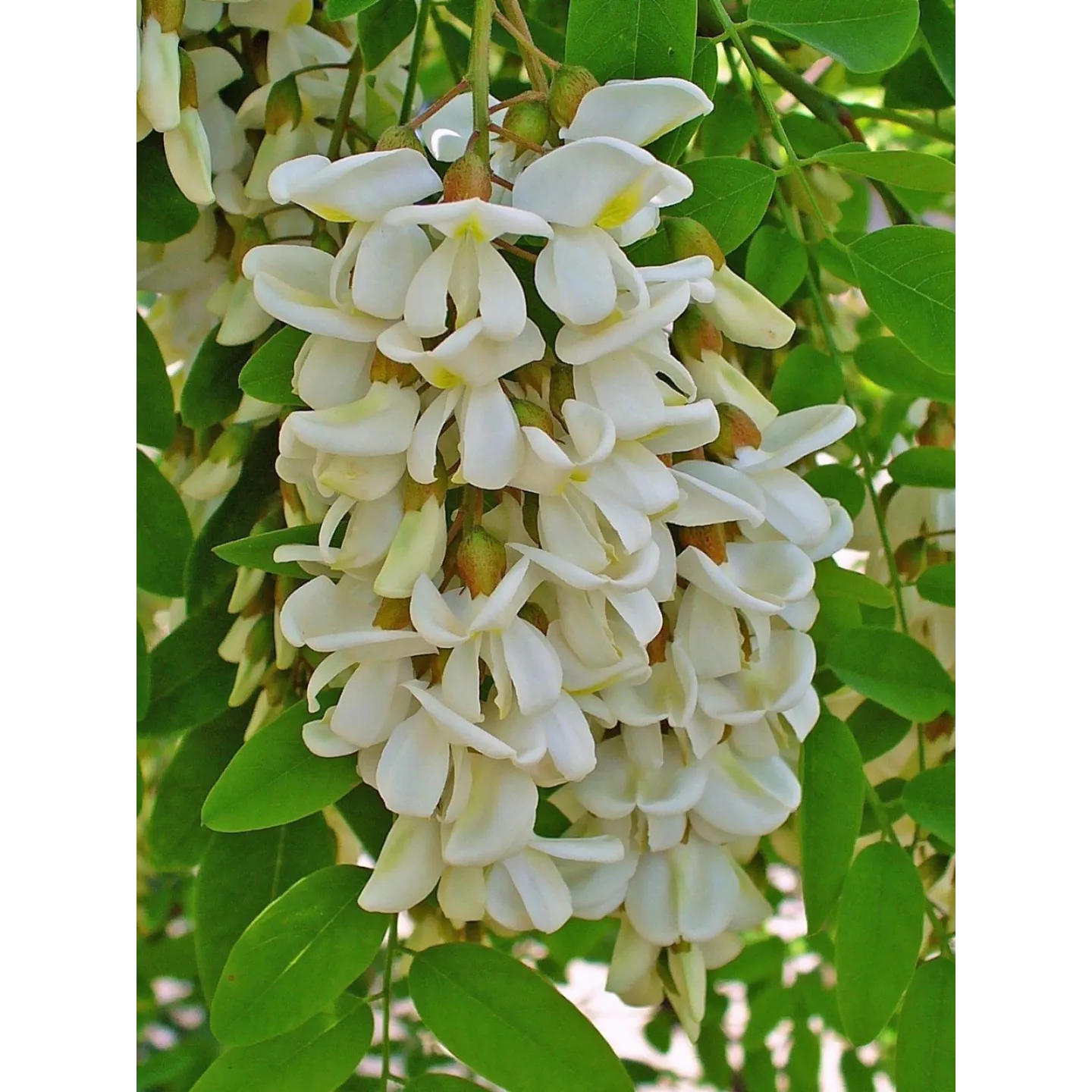
Nasiona robinii akacjowej białej (Robinia pseudoacacia)
Price:
2,00 €
Brutto
White Wisteria Seeds (Robinia pseudoacacia)
Price for Package of 20 seeds.
Robinia pseudoacacia, commonly known as the White Wisteria, is a tree of the genus Robinia in the subfamily Faboideae of the pea family Fabaceae. It is native to the southeastern United States, but has
White Wisteria Seeds (Robinia pseudoacacia)
Price for Package of 20 seeds.
Robinia pseudoacacia, commonly known as the White Wisteria, is a tree of the genus Robinia in the subfamily Faboideae of the pea family Fabaceae. It is native to the southeastern United States, but has been widely planted and naturalized elsewhere in temperate North America, Europe, Southern Africa and Asia and is considered an invasive species in some areas. A less frequently used common name is false Acacia, which is a literal translation of the specific epithet. It was introduced into Britain in 1636.
Description
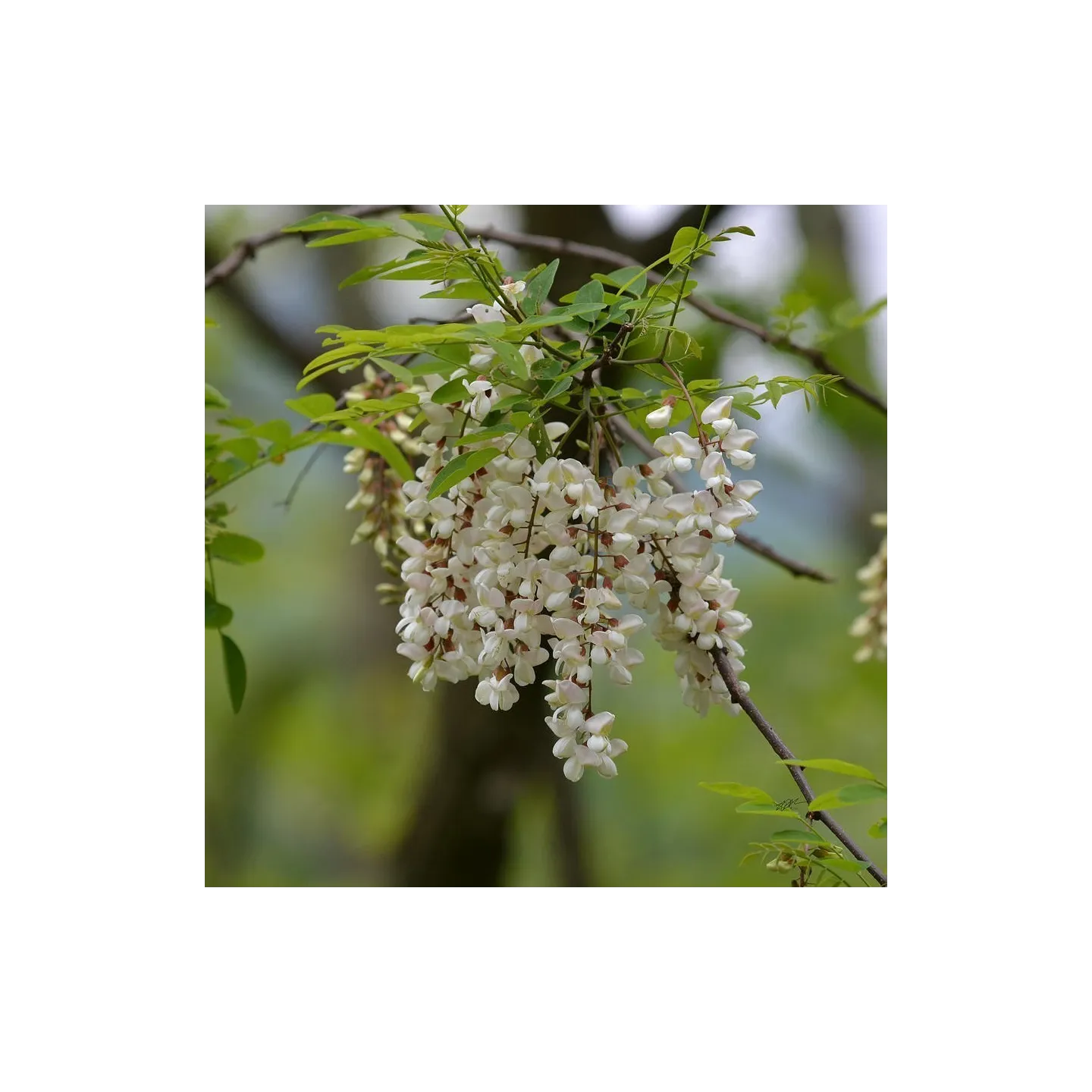
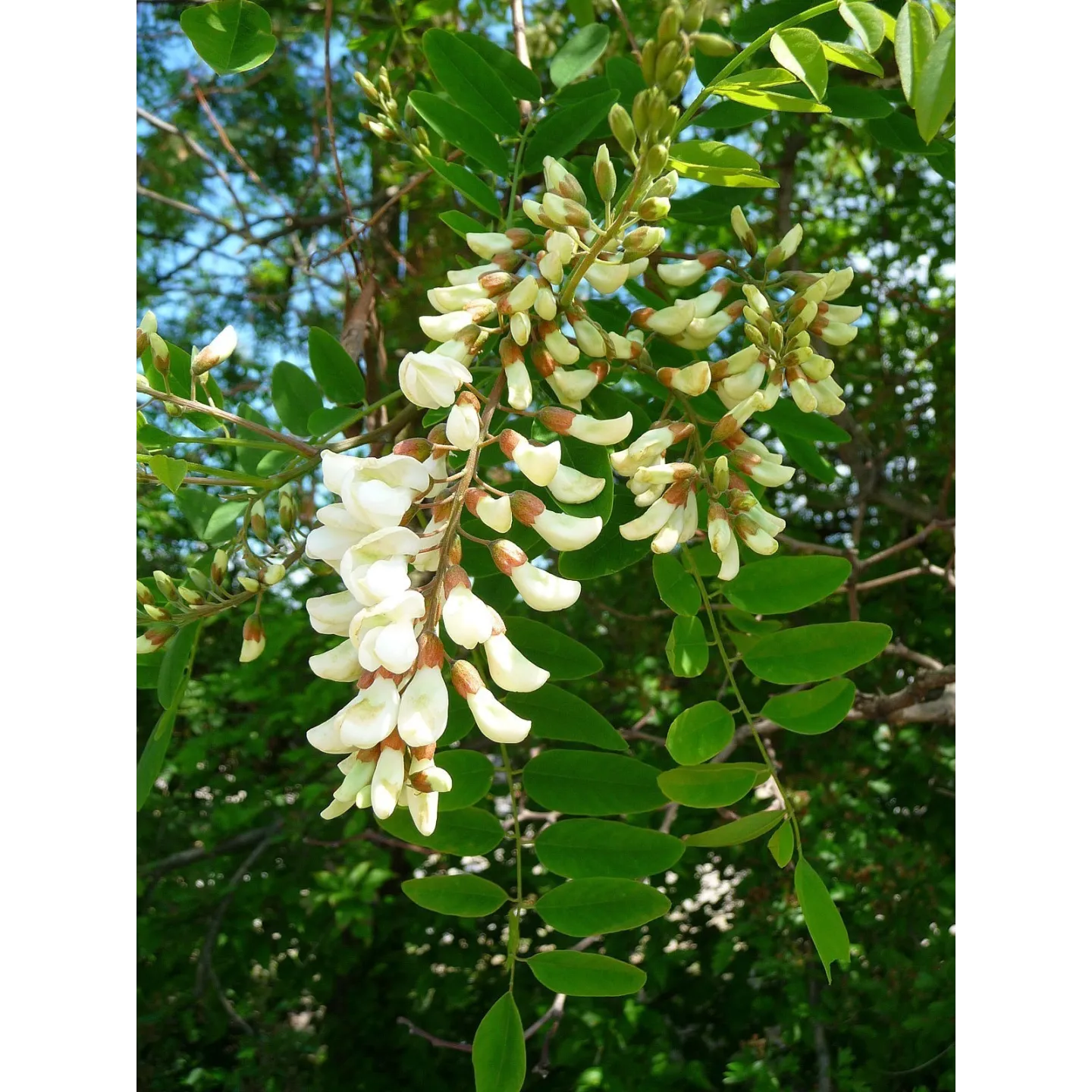
With a trunk up to 0.8 m diameter (exceptionally up to 52 m tall[2] and 1.6 m diameter in very old trees), with thick, deeply furrowed blackish bark. The leaves are 10–25 cm long, pinnate with 9–19 oval leaflets, 2–5 cm long and 1.5–3 cm broad. Each leaf usually has a pair of short spines at the base, 1–2 mm long or absent on adult crown shoots, up to 2 cm long on vigorous young plants. The intensely fragrant (reminiscent of orange blossoms) flowers are white to lavender or purple, borne in pendulous racemes 8–20 cm long, and are edible. The fruit is a legume 5–10 cm long, containing 4–10 seeds.
Although similar in general appearance to the honey locust, it lacks that tree’s characteristic long branched thorns on the trunk, instead having the pairs of short spines at the base of each leaf; the leaflets are also much broader.
The black locust is native in the United States from Pennsylvania to northern Georgia and westward as far as Arkansas and Oklahoma, but has been widely spread. The tree reaches a height of seventy feet, with a trunk three or four feet in diameter and brittle branches that form an oblong narrow head. It spreads by underground shoots. The leaflets fold together in wet weather and at night; some change of position at night is a habit of the entire leguminous family.
Bark: Dark gray brown tinged with red, deeply furrowed, surface inclined to scale. Branchlets at first coated with white silvery down. This soon disappears and they become pale green, afterward reddish brown. Prickles develop from stipules, are short, somewhat triangular, dilated at base, sharp, dark purple, adhering only to the bark, but persistent.
Wood: Pale yellowish brown; heavy, hard, strong, close-grained and very durable in contact with the ground. The wood has a specific gravity 0.7333, and a weight of approximately 45.7 pounds per cubic foot
Winter buds: Minute, naked, three or four together, protected in a depression by a scale-like covering lined on the inner surface with a thick coat of tomentum and opening in early spring; when forming are covered by the swollen base of the petiole.
Leaves: Parallel, compound, odd-pinnate, 21-40 inches long, with slender hairy petioles, grooved and swollen at the base. Leaflets petiolate, seven to nine, one to two inches long, one-half to three-fourths of an inch broad, emarginate or rounded at apex. They come out of the bud conduplicate, yellow green, covered with silvery down which soon disappears; when full grown are dull dark green above, paler beneath. Feather-veined, midvein prominent. In autumn they turn a clear pale yellow. Leafs out relatively late in spring. Stipules linear, downy, membranous at first, ultimately developing into hard woody prickles, straight or slightly curved. Each leaflet has a minute stipel which quickly falls and a short petiole.
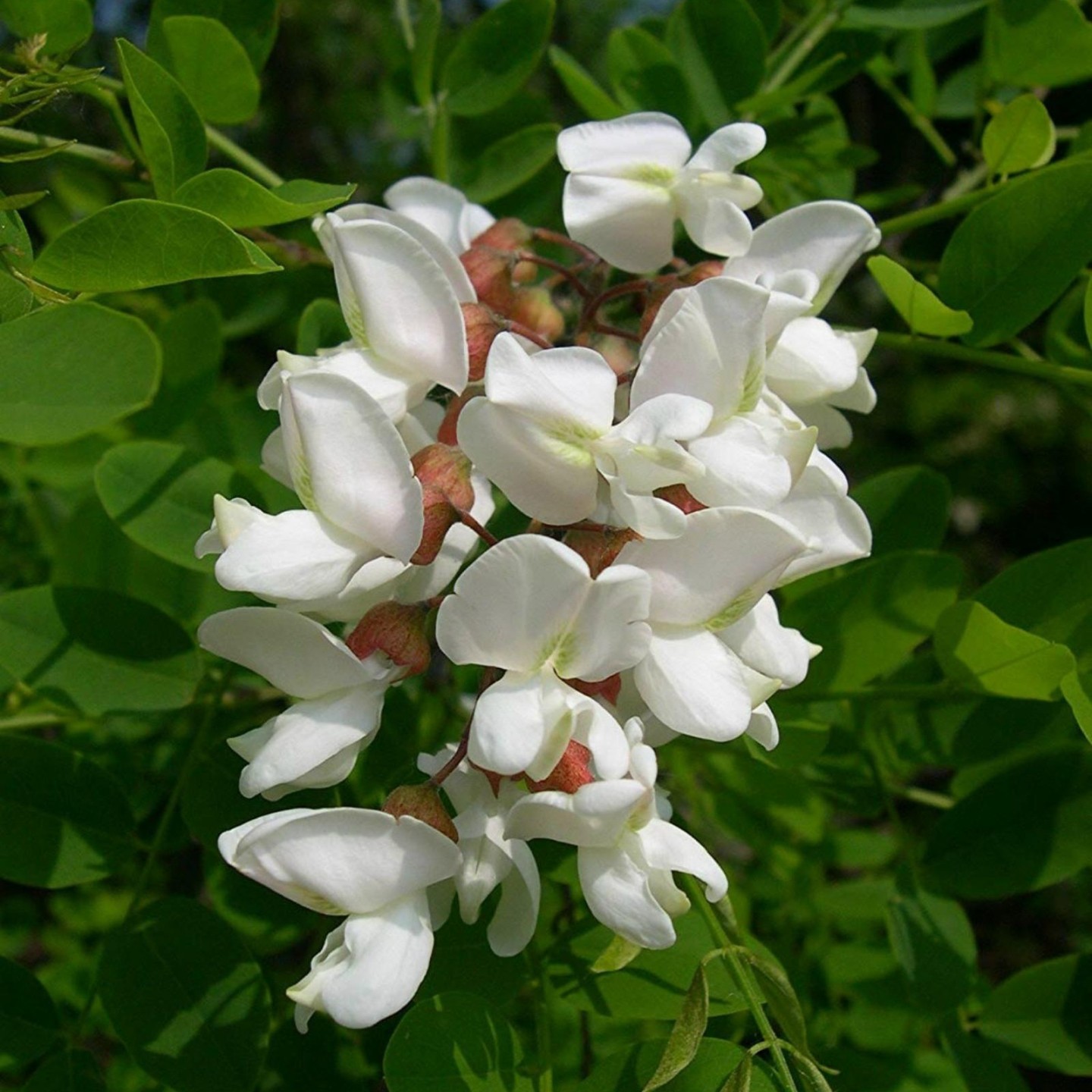
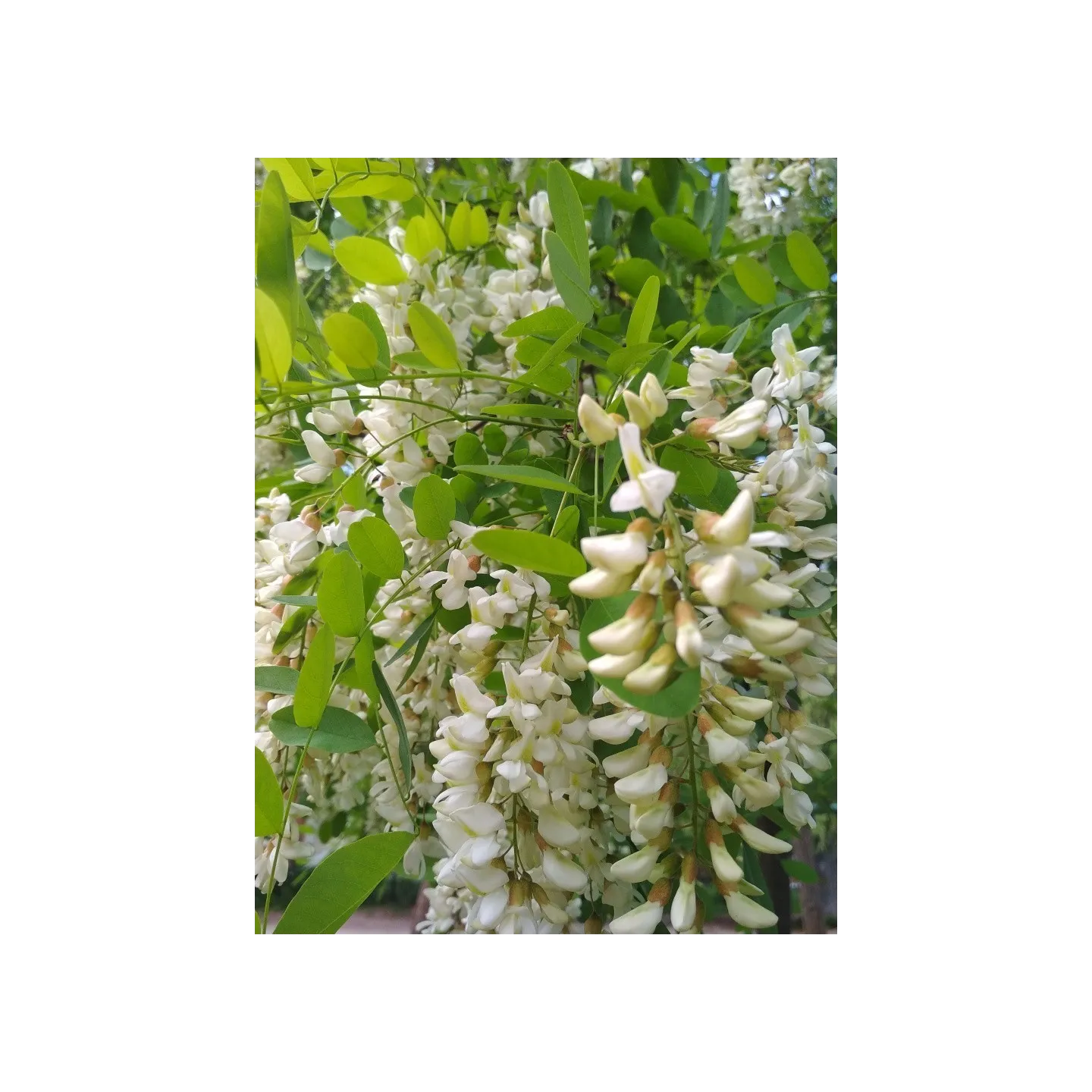
Flowers: May or June, after the leaves. Papilionaceous. Perfect, borne in loose drooping racemes four to five inches long, cream-white, about an inch long, nectar bearing, fragrant. Pedicels slender, half an inch long, dark red or reddish green.
Calyx: Campanulate, gibbous, hairy, five-toothed, slightly two-lipped, dark green blotched with red, especially on the upper side teeth valvate in bud.
Corolla: Imperfectly papilionaceous, petals inserted upon a tubular disk; standard white with pale yellow blotch; wings white, oblong-falcate; keel petals incurved, obtuse, united below.
Stamens: Ten, inserted, with the petals, diadelphous, nine inferior, united into a tube which is cleft on the upper side, superior one free at the base. Anthers two-celled, cells opening longitudinally.
Pistil: Ovary superior, linear-oblong, stipitate, one-celled; style inflexed, long, slender, bearded; stigma capitate; ovules several, two-ranked.
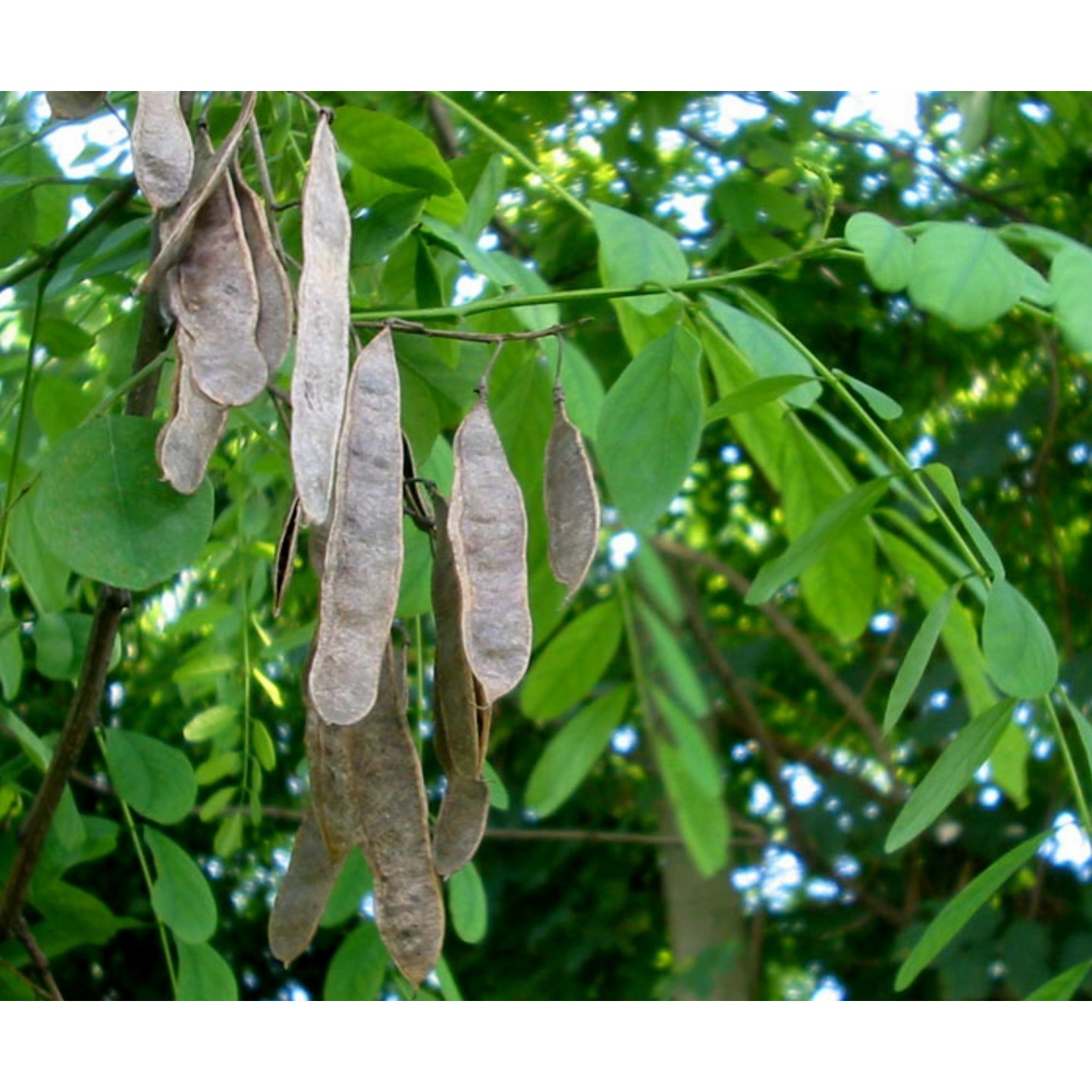
Fruit: legume two-valved, smooth three to four inches long and half an inch broad, usually four to eight seeded. Ripens late in autumn and hangs on the branches until early spring. Seeds dark orange brown with irregular markings. Cotyledons oval, fleshy.
Cultivation
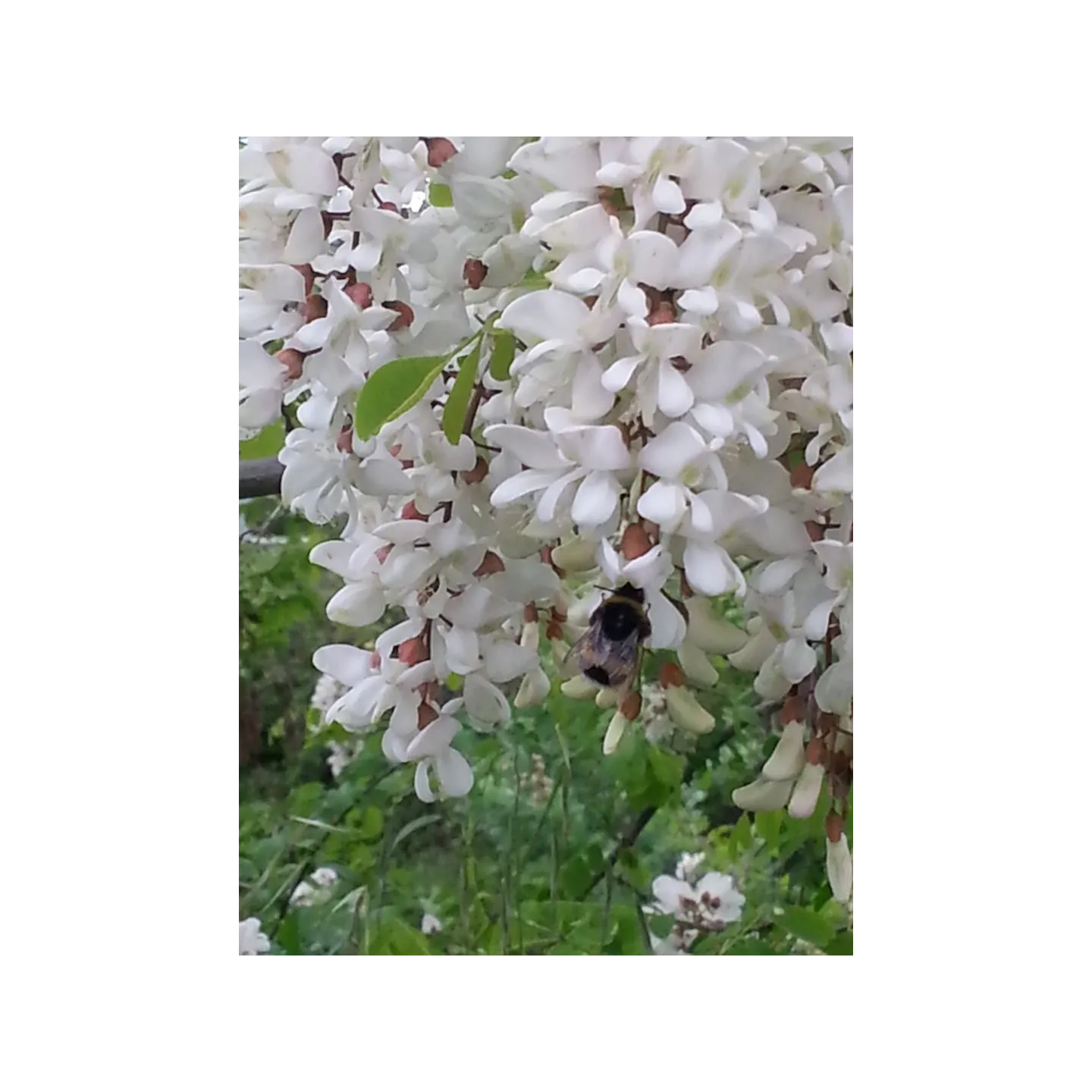
Black locust is a major honey plant in the eastern US, and, having been taken and planted in France, Italy and other European nations. At least In France and Italy it is the source of the renowned acacia monofloral honey. Flowering starts after 140 growing degree days. However, its blooming period is short (about 10 days) and it does not consistently produce a honey crop year after year. Weather conditions can have quite an effect on the amount of nectar collected as well; in Ohio state for example, good locust honey flow happens in one out of five years.
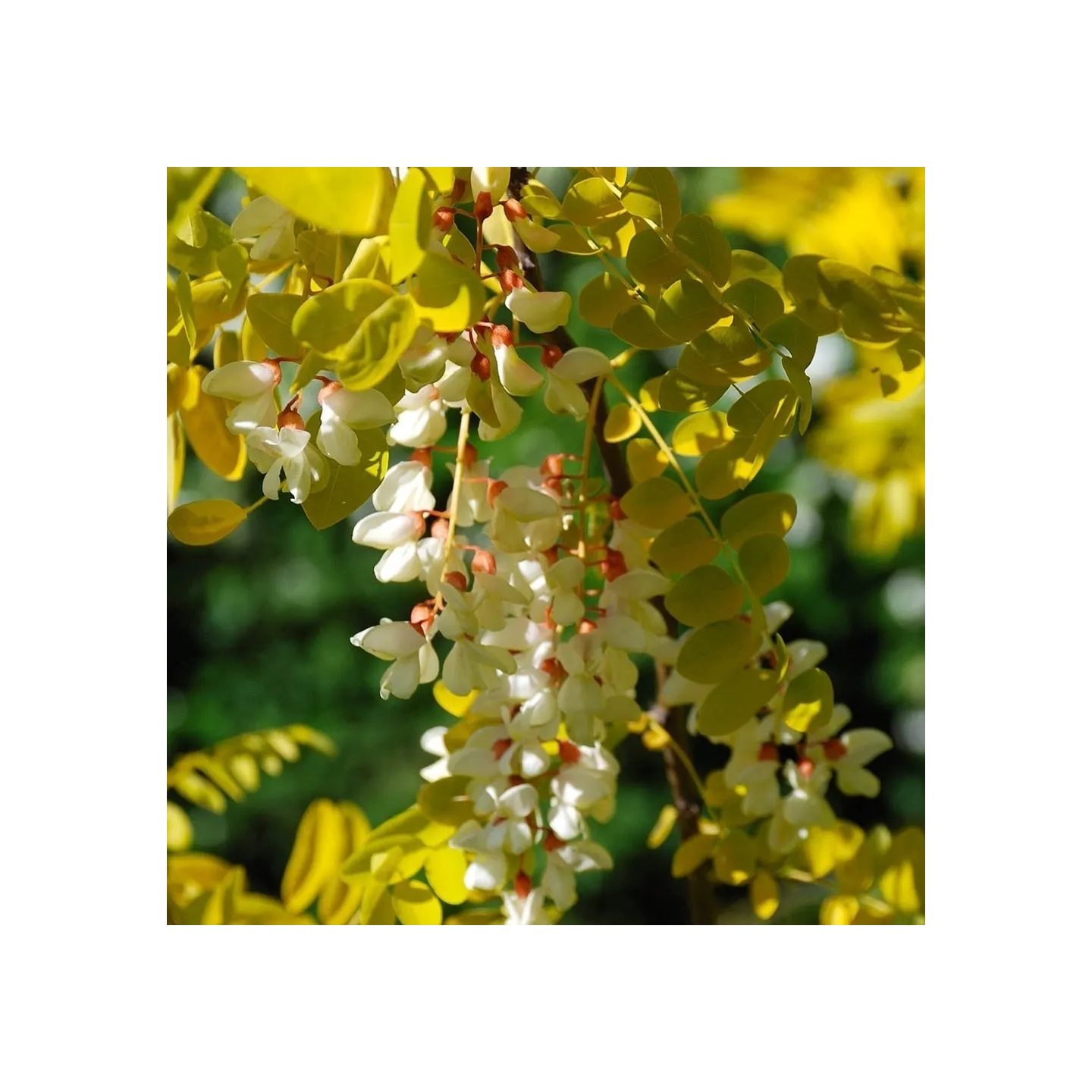
In Europe it is often planted alongside streets and in parks, especially in large cities, because it tolerates pollution well. The species is unsuitable for small gardens due to its large size and rapid growth, but the cultivar ‘Frisia’, a selection with bright yellow-green leaves, is occasionally planted as an ornamental tree.
In South Africa it is regarded as a weed because of its habit of freely suckering from roots near the surface and aggravated by cutting of the main stem.
Black locust has nitrogen-fixing bacteria on its root system; for this reason it can grow on poor soils and is an early colonizer of disturbed areas.
In 1900 it was reported that the value of Robinia pseudoacacia was practically destroyed in nearly all parts of the United States beyond the mountain forests which are its home by locust borers which riddle the trunk and branches. Were it not for these insects, it would be one of the most valuable timber trees that could be planted in the northern and middle states. Young trees grow quickly and vigorously for a number of years, but soon become stunted and diseased, and rarely live long enough to attain any commercial value.
Flavonoids content
Black locust leaves contain flavone glycosides characterised by spectroscopic and chemical methods as the 7-O-β-d-glucuronopyranosyl-(1 → 2)[α-l-rhamnopyranosyl-(1 → 6)]-β-d-glucopyranosides of acacetin (5,7-dihydroxy-4′-methoxyflavone), apigenin (5,7,4′-trihydroxyflavone), diosmetin (5,7,3′-trihydroxy-4′-methoxyflavone) and luteolin (5,7,3′,4′-tetrahydroxyflavone).
Uses
The wood is extremely hard, resistant to rot and durable, making it prized for furniture, flooring, paneling, fence posts and small watercraft. Wet, newly-cut planks have an offensive odour which disappears with seasoning. As a young man, Abraham Lincoln spent much of his time splitting rails and fence posts from black locust logs. Black locust is still in use in rustic handrail systems. Flavonoids in the heartwood allow the wood to last over 100 years in soil.[7] In the Netherlands and some other parts of Europe, black locust is one of the most rot-resistant local trees, and projects have started to limit the use of tropical wood by promoting this tree and creating plantations. It is one of the heaviest and hardest woods in North America.
Black locust is highly valued as firewood for wood-burning stoves; it burns slowly, with little visible flame or smoke, and has a higher heat content than any other species that grows widely in the Eastern United States, comparable to the heat content of anthracite.[8] It is most easily ignited by insertion into a hot stove with an established coal bed.[citation needed] For best results it should be seasoned like any other hardwood, however black locust is also popular because of its ability to burn even when wet.[9] In fireplaces it can be less satisfactory because knots and beetle damage make the wood prone “spitting” coals for distances of up to several feet.[citation needed] If the black locust is cut, split, and cured while relatively young (within ten years), thus minimizing beetle damage, “spitting” problems are minimal.
It is also planted for firewood because it grows rapidly, is highly resilient in a variety of soils, and it grows back even faster from its stump after harvest by using the existing root system.
With fertilizer prices rising, the importance of black locust as a nitrogen-fixing species is also noteworthy. The mass application of fertilizers in agriculture and forestry is increasingly expensive; therefore nitrogen-fixing tree and shrub species are gaining importance in managed forestry.
In traditional medicine of India different parts of Robinia pseudoacacia are used as laxative, antispasmodic, and diuretic.
Toxicity
Black locust’s pods are small and light, and easily carried long distances. Although the bark and leaves are toxic, various reports suggest that the seeds and the young pods of the black locust are edible. Shelled seeds are safe to harvest from summer through fall, and are edible both raw and/or boiled.[12] Due to the small nature of Black Locust seeds, shelling them efficiently can prove tedious and difficult. In France and in Italy Robinia pseudoacacia flowers are eaten as beignets after being coated in batter and fried in oil. [13] Important constituents of the plant are the toxalbumin robin, which loses its toxicity when heated and robinin, a non-toxic glucoside.[14] Horses that consume the plant show signs of anorexia, depression, incontinence, colic, weakness, and cardiac arrhythmia. Symptoms usually occur about 1 hour following consumption, and immediate veterinary attention is required.
History
The name locust is said to have been given to Robinia by Jesuit missionaries, who fancied that this was the tree that supported St. John in the wilderness, but it is native only to North America. The locust tree of Spain (Ceratonia siliqua or Carob Tree), which is also native to Syria and the entire Mediterranean basin, is supposed to be the true locust of the New Testament.
Robinia is now a North American genus, but traces of it are found in the Eocene and Miocene rocks of Europe.
-
IndeksT-45-(20-S)
-
W magazynie28 Przedmioty
4 innych produktów w tej samej kategorii


- Obecnie brak na stanie

Komentarze (0)
Chwilowo nie możesz polubić tej opinii
Zgłoś komentarz
Zgłoszenie wysłane
Twoje zgłoszenie nie może zostać wysłane