Giant Blackberry Seeds (Rubus fruticosus)
SKU V-126 Categorie Home
Prijs: € 2,25
Giant Blackberry Seeds (Rubus fruticosus)
Price for Package of 10 or 20 seeds.
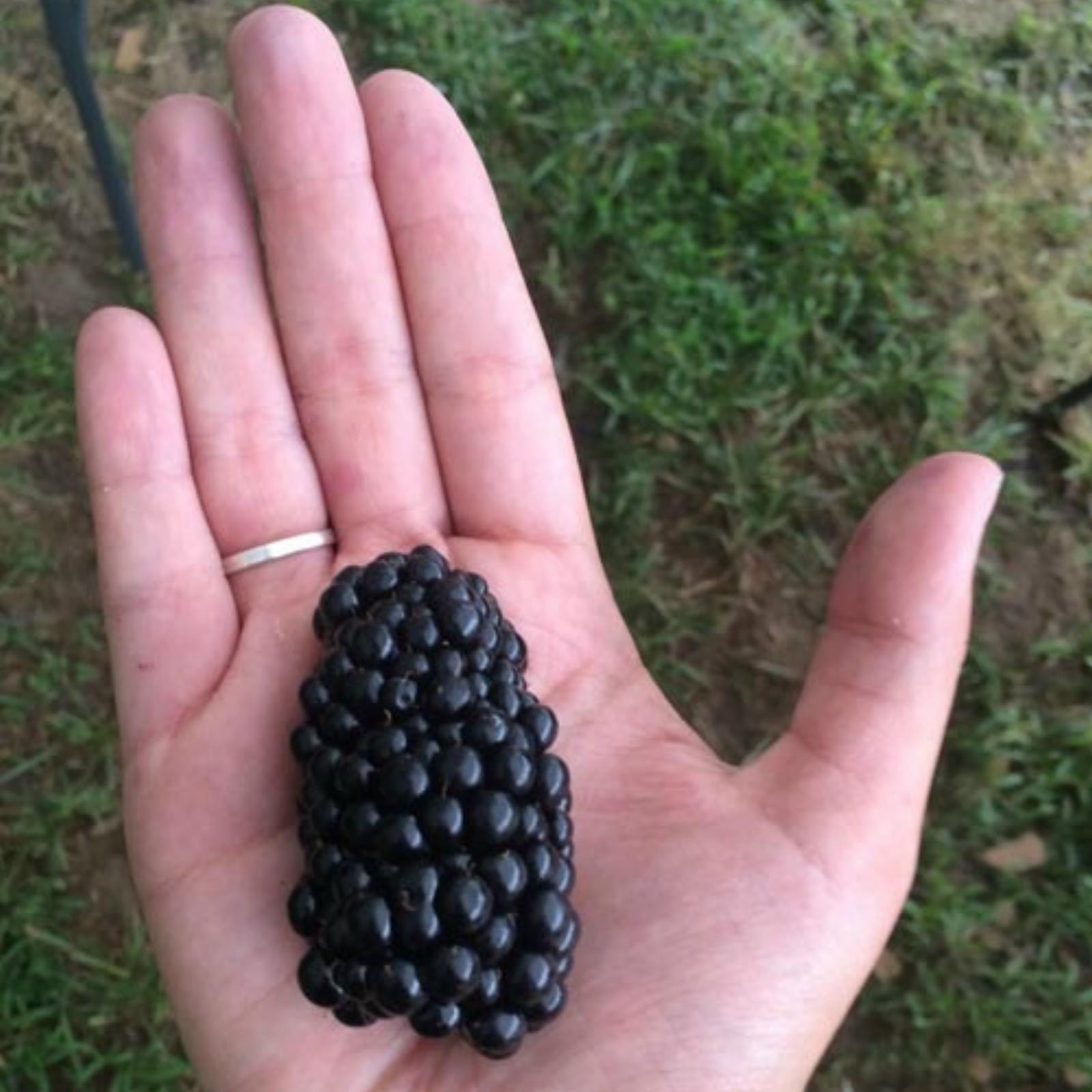
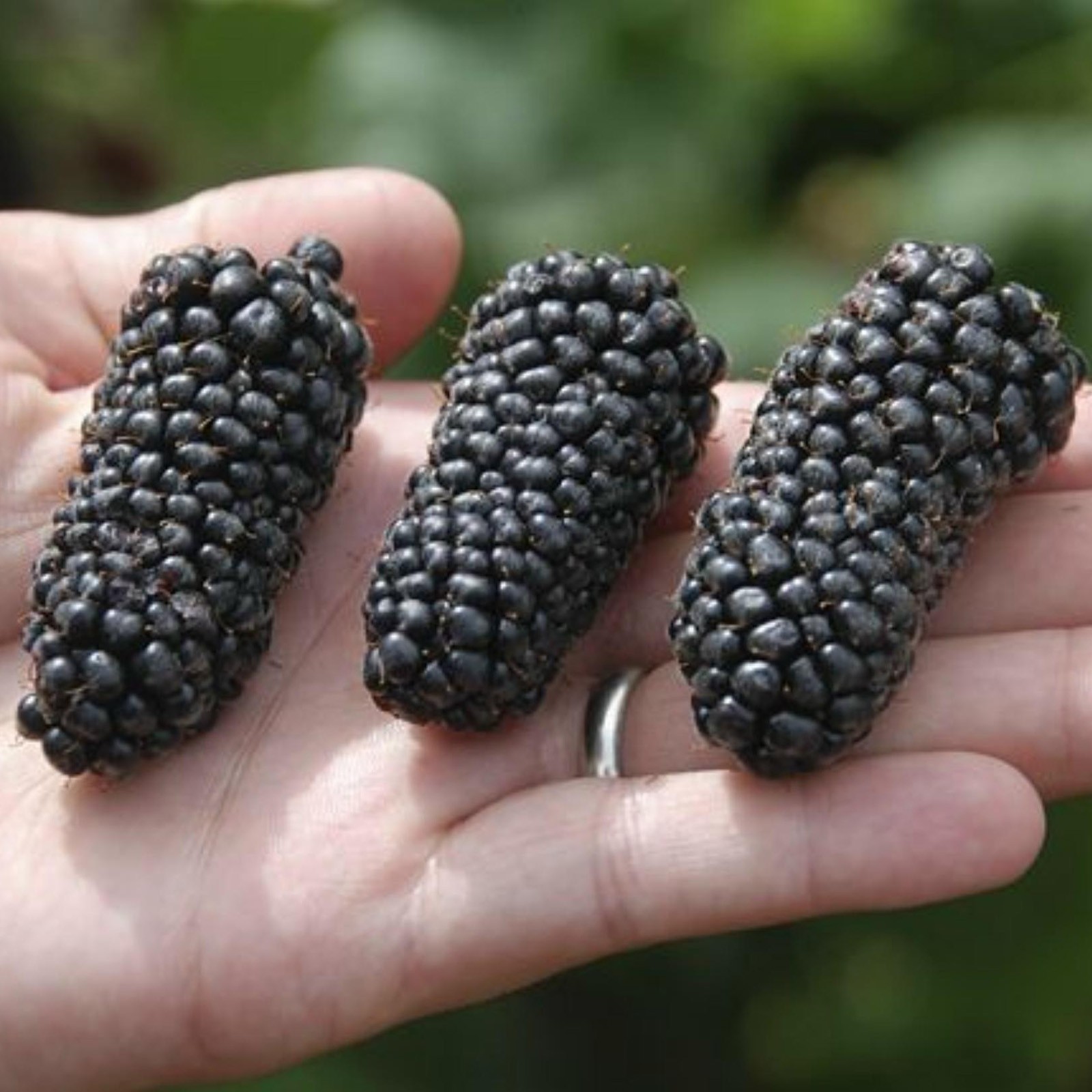
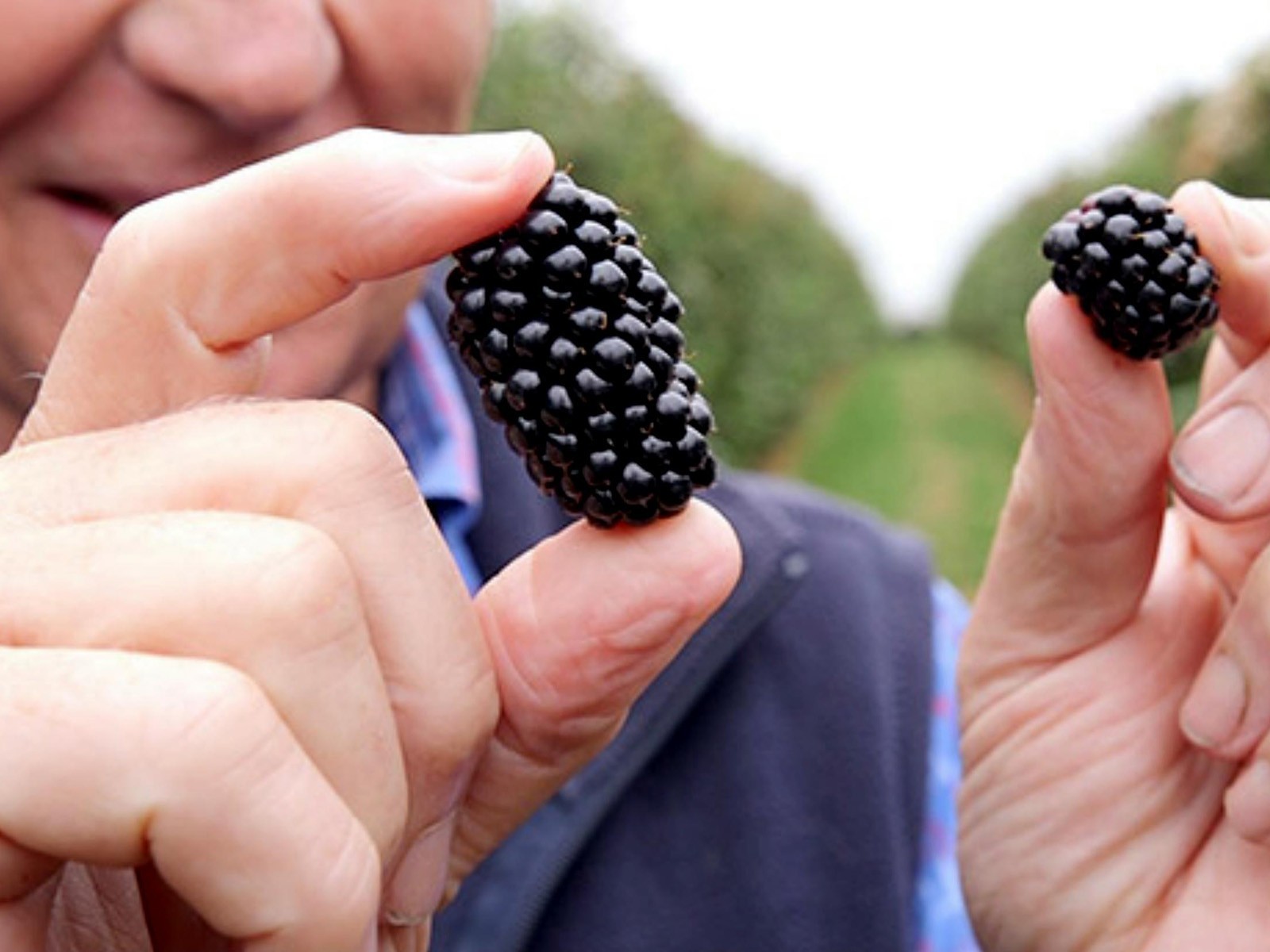
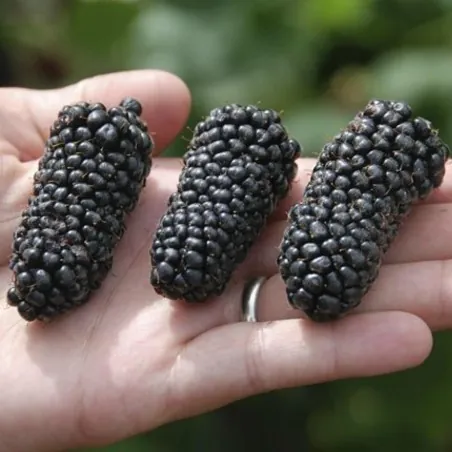
This variety produces extremely large fruits weighing 10 grams per fruit. Triple Crown Blackberry Seeds . The healthful benefits are many , rich in vitamin C , vitamin K , B vitamin , Omega-3 , Manganese . Antioxidant strength
Share on
Giant Blackberry Seeds (Rubus fruticosus)
Price for Package of 10 or 20 seeds.
This variety produces extremely large fruits weighing 10 grams per fruit.
Triple Crown Blackberry Seeds . The healthful benefits are many , rich in vitamin C , vitamin K , B vitamin , Omega-3 , Manganese . Antioxidant strength at top of more than 1000 antioxidant foods consumed in the U.S.
Wikipedia:
The blackberry is an edible fruit produced by many species in the Rubus genus in the Rosaceae family, hybrids among these species within the Rubus subgenus, and hybrids between the Rubus and Idaeobatus subgenera. What distinguishes the blackberry from its raspberry relatives is whether or not the torus (receptacle or stem) 'picks-with' (i.e. stays with) the fruit. When picking a blackberry fruit, the torus does stay with the fruit. With a raspberry, the torus remains on the plant, leaving a hollow core in the raspberry fruit. The term 'bramble', a word meaning any impenetrable scrub, has traditionally been applied specifically to the blackberry or its products,[1] though in the United States it applies to all members of the Rubus genus. In the western US, the term caneberry is used to refer to blackberries and raspberries as a group rather than the term bramble.
The usually black fruit is not a berry in the botanical sense of the word. Botanically it is termed an aggregate fruit, composed of small drupelets. It is a widespread and well-known group of over 375 species, many of which are closely related apomictic microspecies native throughout Europe, northwestern Africa, temperate western and central Asia and North and South America.
Growth and anatomical description
Blackberries are perennial plants which typically bear biennial stems ("canes") from the perennial root system.
In its first year, a new stem, the primocane, grows vigorously to its full length of 3–6 m (in some cases, up to 9 m), arching or trailing along the ground and bearing large palmately compound leaves with five or seven leaflets; it does not produce any flowers. In its second year, the cane becomes a floricane and the stem does not grow longer, but the lateral buds break to produce flowering laterals (which have smaller leaves with three or five leaflets).[3] First- and second-year shoots usually have numerous short-curved, very sharp prickles that are often erroneously called thorns. These prickles can tear through denim with ease and make the plant very difficult to navigate around. Prickle-free cultivars have been developed. Recently the University of Arkansas has developed primocane fruiting blackberries that grow and flower on first-year growth much as the primocane-fruiting (also called fall bearing or everbearing) red raspberries do.
Unmanaged mature plants form a tangle of dense arching stems, the branches rooting from the node tip on many species when they reach the ground. Vigorous and growing rapidly in woods, scrub, hillsides, and hedgerows, blackberry shrubs tolerate poor soils, readily colonizing wasteland, ditches, and vacant lots.
The flowers are produced in late spring and early summer on short racemes on the tips of the flowering laterals.[3] Each flower is about 2–3 cm in diameter with five white or pale pink petals.[3]
The drupelets only develop around ovules that are fertilized by the male gamete from a pollen grain. The most likely cause of undeveloped ovules is inadequate pollinator visits.[5] Even a small change in conditions, such as a rainy day or a day too hot for bees to work after early morning, can reduce the number of bee visits to the flower, thus reducing the quality of the fruit. Incomplete drupelet development can also be a symptom of exhausted reserves in the plant's roots or infection with a virus such as Raspberry bushy dwarf virus.
In botanical terminology, the fruit is not a berry but an aggregate fruit of numerous drupelets.
Ecology
Blackberry leaves are food for certain caterpillars; some grazing mammals, especially deer, are also very fond of the leaves. Caterpillars of the concealer moth Alabonia geoffrella have been found feeding inside dead blackberry shoots. When mature, the berries are eaten and their seeds dispersed by several mammals, such as the red fox and the Eurasian badger, as well as by small birds.
Blackberries grow wild throughout all parts of the United Kingdom and Ireland. They are an important element in the ecology of those countries. Harvesting the berries is a popular pastime in these countries. However, it is also considered an invasive weed, sending down its strong suckering roots amongst garden hedges and shrubs. In some parts of the world, such as in Australia, Chile, New Zealand, and the Pacific Northwest of North America, some blackberry species, particularly Rubus armeniacus (syn. R. procerus, 'Himalaya') and Rubus laciniatus ('Evergreen'), are naturalised and considered an invasive species and a serious weed.
The blackberry tends to be red during its unripe ("green") phase, leading to an old expression that "blackberries are red when they're green".
In various parts of the United States, wild blackberries are sometimes called "Black-caps", a term more commonly used for black raspberries, Rubus occidentalis.
As there is forensic evidence from the Iron Age Haraldskær Woman that she consumed blackberries some 2500 years ago, it is reasonable to conclude that blackberries have been eaten by humans over thousands of years.
Uses
Food
The soft fruit is popular for use in desserts, jams, seedless jelly, and sometimes wine. It is often mixed with apples for pies and crumbles. Blackberries are also used to produce candy.
Good nectar producers, blackberry shrubs bearing flowers yield a medium to dark, fruity honey.
Phytochemical research
Blackberries contain numerous phytochemicals including polyphenols, flavonoids, anthocyanins, salicylic acid, ellagic acid, and fiber.[7][8] Anthocyanins in blackberries are responsible for their rich dark color.
Phytochemical components of blackberries, salicylic acid and ellagic acid have been associated in preliminary research with toxicity to cancer cells,[9][10] including breast cancer cells.
Blackberries rank highly among fruits for in vitro antioxidant strength, particularly because of their dense content of polyphenolic compounds, such as ellagic acid, tannins, ellagitannins, quercetin, gallic acid, anthocyanins, and cyanidins.[12][13] One report placed blackberry at the top of more than 1000 antioxidant foods consumed in the United States.
Nutrients
Blackberries are notable for their high nutritional contents of dietary fiber, vitamin C, vitamin K, and the essential mineral manganese.
Blackberries have both soluble and insoluble fiber.[15] One cup of blackberries (144 g) has an average of 7.6 g of fibre and contains half the daily recommended dose of vitamin C.[8] Dietary fiber is important in maintaining a healthy digestive system, as it supports regular bowel movements.
Nutrient content of seeds
Blackberries contain numerous large seeds that are not always preferred by consumers. The seeds contain oil rich in omega-3 (alpha-linolenic acid) and -6 fats (linoleic acid) as well as protein, dietary fiber, carotenoids, ellagitannins and ellagic acid.
Cultivation
Commercial cultivation
Worldwide, Mexico is the leading producer of blackberries, with nearly the entire crop being produced for export into the off-season fresh markets in North America and Europe. The Mexican market is almost entirely from the cultivar 'Tupy' (often spelled 'Tupi', but the EMBRAPA program in Brazil from which it was released prefers the 'Tupy' spelling.). In the US, Oregon is the leading commercial blackberry producer, producing 42.6 million pounds on 6,180 acres (25.0 km2), in 1995[17] and 56.1 million pounds on 7,000 acres (28 km2) in 2009.
Numerous cultivars have been selected for commercial and amateur cultivation in Europe[2] and the United States.[19] Since the many species form hybrids easily, there are numerous cultivars with more than one species in their ancestry.
'Marion' (marketed as "marionberry") is an important cultivar that was selected from seedlings from a cross between 'Chehalem' and 'Olallie' (commonly called "olallieberry") berries.[20] 'Olallie' in turn is a cross between loganberry and youngberry. 'Marion', 'Chehalem' and 'Olallie' are just three of many trailing blackberry cultivars developed by the United States Department of Agriculture Agricultural Research Service (USDA-ARS) blackberry breeding program at Oregon State University in Corvallis, Oregon.
The most recent cultivars released from this program are the prickle-free cultivars 'Black Diamond', 'Black Pearl', and 'Nightfall' as well as the very early-ripening 'Obsidian' and 'Metolius'. 'Black Diamond' is now the leading cultivar being planted in the Pacific Northwest. Some of the other cultivars from this program are 'Newberry', 'Waldo', 'Siskiyou', 'Black Butte', 'Kotata', 'Pacific', and 'Cascade'.
Trailing blackberries are vigorous and crown forming, require a trellis for support, and are less cold hardy than the erect or semi-erect blackberries. In addition to the United States's Pacific Northwest, these types do well in similar climates such as the United Kingdom, New Zealand, Chile, and the Mediterranean countries.
Semi-erect, prickle-free blackberries were first developed at the John Innes Centre in Norwich, UK, and subsequently by the USDA-ARS in Beltsville, Maryland. These are crown forming and very vigorous and need a trellis for support. Cultivars include 'Black Satin' 'Chester Thornless', 'Dirksen Thornless', 'Hull Thornless', 'Loch Ness', 'Loch Tay', 'Merton Thornless', 'Smoothstem', and 'Triple Crown'. Recently, the cultivar 'Cacanska Bestrna' (also called 'Cacak Thornless') has been developed in Serbia and has been planted on many thousands of hectares there.
The University of Arkansas has developed cultivars of erect blackberries. These types are less vigorous than the semi-erect types and produce new canes from root initials (therefore they spread underground like raspberries). There are prickly and prickle-free cultivars from this program, including 'Navaho', 'Ouachita', 'Cherokee', 'Apache', 'Arapaho', and 'Kiowa'. They are also responsible for developing the primocane fruiting blackberries such as 'Prime-Jan' and 'Prime-Jim'.
In raspberries, these types are called primocane fruiting, fall fruiting, or everbearing. 'Prime-Jim' and 'Prime-Jan' were released in 2004 by the University of Arkansas and are the first cultivars of primocane fruiting blackberry.[22] They grow much like the other erect cultivars described above, however the canes that emerge in the spring, will flower in mid-summer and fruit in late summer or fall. The fall crop has its highest quality when it ripens in cool mild climate such as in California or the Pacific Northwest.
'Illini Hardy' a semi-erect prickly cultivar introduced by the University of Illinois is cane hardy in zone 5, where traditionally blackberry production has been problematic, since canes often failed to survive the winter.
Blackberry production in Mexico has expanded enormously in the past decade. While once based on the cultivar 'Brazos', an old erect blackberry cultivar developed in Texas in 1959, the Mexican industry is now dominated by the Brazilian 'Tupy' released in the 1990s. 'Tupy' has the erect blackberry 'Comanche', and a "wild Uruguayan blackberry" as parents.[23] Since there are no native blackberries in Uruguay, the suspicion is that the widely grown 'Boysenberry' is the male parent. In order to produce these blackberries in regions of Mexico where there is no winter chilling to stimulate flower bud development, chemical defoliation and application of growth regulators are used to bring the plants into bloom.
Diseases and pests
As a result of blackberries belonging to the same genus as raspberries,[24] they share the same diseases including anthracnose which can cause the berry to have uneven ripening and sap flow may also be slowed.[25][26] They also share the same remedies including the Bordeaux mixture,[27] a combination of lime, water and Copper(II) sulfate.[28] The rows between blackberry plants must be free of weeds, blackberry suckers and grasses which may lead to pests or diseases.[29] Fruit growers are selective when planting blackberry bushes as wild blackberries may be infected[29] and gardeners are recommended to purchase only certified disease-free plants.
The spotted-wing drosophila, Drosophila suzukii is a serious pest of blackberries.[31] Unlike its vinegar fly relatives which are primarily attracted to rotting or fermented fruit, D. suzukii attacks fresh, ripe fruit by laying eggs under the soft skin. The larvae hatch and grow in the fruit, destroying the fruit's commercial value.
Another pest is Amphorophora rubi, known as the Blackberry Aphid, which not only eats blackberries but raspberries as well.
Byturus tomentosus (Raspberry beetle), Lampronia corticella (Raspberry Moth) and Anthonomus rubi (Strawberry blossom weevil) are also known to infest blackberries.
Folklore
Folklore in the United Kingdom is told that blackberries should not be picked after Old Michaelmas Day (11 October) as the devil has claimed them. There is some value behind this legend as wetter and cooler weather often allows the fruit to become infected by various molds such as Botryotinia which give the fruit an unpleasant look and may be toxic.
Commentaar (0)
Geen klantenbeoordelingen op het moment.
Uw beoordelingswaardering kan niet worden verzonden
Rapporteer reactie
Bent u zeker dat u deze opmerking wil rapporteren?
Melding verzonden
Uw opmerking is ingediend en zal door een beheerder worden behandeld.
Uw opmerking kan niet worden verzonden
Schrijf uw recensie
Beoordeling verstuurd
Uw beoordeling is toegevoegd en wordt beschikbaar zodra deze is goedgekeurd.
Uw beoordeling kan niet worden verzonden
🌍 Wereldwijde verzending vanuit de EU
Wij verzenden wereldwijd vanuit de Europese Unie via aangetekende luchtpost met handtekening voor ontvangst bij levering.
📦 Uw bestelling volgen
Om uw trackingnummer te vinden, logt u in op uw account en gaat u naar: Bestelgeschiedenis > Details. Uw trackingnummer bevindt zich direct in de bestelgegevens.
U ontvangt e-mailmeldingen voor elke fase van uw bestelling.
Als u deze berichten niet ziet, controleer dan uw map Spam/Ongewenste e-mail of neem contact op met uw e-mailprovider. Zoek anders online naar hoe u e-mails van afzenders kunt deblokkeren.
ONZE E-MAILSERVICE WERKT — Als u geen e-mails ontvangt, ligt dit waarschijnlijk aan uw e-mailprovider of instellingen.
📧 Hoe u ervoor zorgt dat e-mails van onze webshop altijd in uw inbox terechtkomen
Om te voorkomen dat onze e-mails als spam worden gemarkeerd, voegt u ons e-mailadres toe aan uw contacten:
Open Gmail (of een andere provider) en zoek een e-mail van ons (xxxxxxxxxxxx@xxx.com).
Beweeg de muis over de naam of het e-mailadres van de afzender.
Klik op het icoon "Toevoegen aan contacten" (het poppetje).
We kunnen u niet helpen als uw instellingen niet zo staan. Neem contact op met uw e-mailprovider voor hulp.
Als alternatief kunt u een filter maken in Gmail:
Open Gmail en ga naar Instellingen > Alle instellingen bekijken.
Ga naar het tabblad Filters en geblokkeerde adressen.
Klik op Nieuw filter maken en voer ons e-mailadres in.
Vink Nooit naar Spam verzenden aan en klik op Filter maken.
📍 Uw pakket volgen
Uw trackingnummer staat in uw bestelgegevens. U kunt uw bestelling volgen via de volgende platforms:
⚠️ Belangrijke mededelingen
Betaling onder rembours is NIET mogelijk.
Geef bij het bestellen altijd een geldig mobiel nummer op met landnummer (bijv. +31 6 1234 5678).
Bestel NIET naar postbussen (P.O. Boxes) of als u niet thuis kunt zijn om voor het pakket te tekenen. Pakketten kunnen niet bij de buren worden afgegeven.
Als een pakket dat naar een postbus is verzonden verloren gaat of niet wordt bezorgd, vindt er geen terugbetaling plaats.
⚖️ Verantwoordelijkheid van de klant voor wettelijke naleving
De klant is verantwoordelijk om ervoor te zorgen dat het product legaal in zijn land mag worden geïmporteerd, inclusief naleving van alle importvoorschriften, het verkrijgen van de nodige vergunningen en de betaling van toepasselijke douanerechten, belastingen en andere kosten. Controleer uw lokale wetgeving voordat u bestelt.
🔄 Verloren, geretourneerde en opnieuw verzonden pakketten
Klanten uit Brazilië en Mexico: We kunnen geen pakketten terugbetalen die door de douane zijn verloren of vernietigd.
Als uw pakket wordt geretourneerd, betalen we alleen de productkosten terug — verzendkosten worden niet gerestitueerd.
Retourkosten (€2) en eventuele kosten voor opnieuw verzenden zijn voor rekening van de klant.
🚚 Levering van de zending
Aangetekende zendingen vereisen een handtekening.
Als de tracking aangeeft dat het pakket nog op het postkantoor van herkomst is, is het onderweg — neem contact op met uw lokale postkantoor voor updates.
Helaas kunnen wij, noch het postkantoor waardoor uw bestelling is verzonden, u helpen met de vraag waar uw bestelling zich precies bevindt. Wanneer u ziet dat het pakket in uw land is, MOET u contact opnemen met uw postkantoor met het trackingnummer.
⏱️ Leveringsopties & geschatte tijden
| Leveringsoptie | Verwerkingstijd | Opmerkingen |
| Priority Delivery | Verzonden binnen 1–7 werkdagen | Prioriteit bij orderverwerking; vertragingen mogelijk tijdens feestdagen (3–10 dagen) |
| Secured Delivery | Verzonden binnen 1–7 werkdagen | Beschikbaar voor bestellingen tot €150; terugbetaling bij verlies |
| Standard Delivery | Verzonden binnen 7–10 werkdagen | Voordeliger; vertragingen mogelijk tijdens feestdagen (7–14 dagen) |
Geschatte levertijden:
Binnen de EU: 3–20 dagen
Wereldwijd: 5–30 dagen
Opmerking: Levertijden zijn afhankelijk van uw locatie en het lokale postsysteem. COVID-19 of feestdagen kunnen extra vertraging veroorzaken.
💰 Verzendkosten
Verzend- en administratiekosten worden automatisch berekend bij het afrekenen op basis van het gewicht van het pakket en de bestemming.
⏰ Verwerkingstijden
Wij verwerken of verzenden geen bestellingen op zaterdag of zondag.
💳 Betalingsmogelijkheden
Wij willen u informeren over een belangrijke wijziging met betrekking tot de betalingskosten. Helaas zijn wij, vanwege de uitzonderlijk hoge transactiekosten die PayPal in rekening brengt, genoodzaakt een toeslag toe te passen voor betalingen die via hun service worden gedaan.
We hebben echter een oplossing voor u! U kunt deze astronomische kosten vermijden door te kiezen voor een van onze alternatieve betaalmethoden met NUL COMMISSIE:
✅ Creditcard/Betaalpas betaling – 0% Kosten
✅ Bankoverschrijving – 0% Kosten
Bankoverschrijving (SEPA / IBAN / SWIFT-BIC): Vermeld uw bestelreferentie in de betalingsomschrijving. Bestellingen zonder betaling binnen 4 dagen worden automatisch geannuleerd.
PayPal: Betalingen worden alleen in Euro geaccepteerd. Selecteer Euro tijdens het afrekenen.
Kaartbetaling: Wij accepteren Visa, MasterCard, American Express, CB, Diners Club, Discover, China UnionPay, JCB en Discover.
⚠️ Transactiekosten
Klanten zijn verantwoordelijk voor eventuele bank- of PayPal-transactiekosten.
📝 Slotopmerkingen
Controleer voor het plaatsen van uw bestelling altijd onze website voor speciale mededelingen, vakantieschema's of specifieke verzendvoorwaarden.