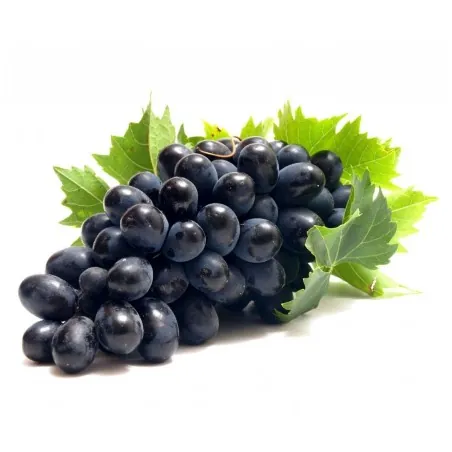
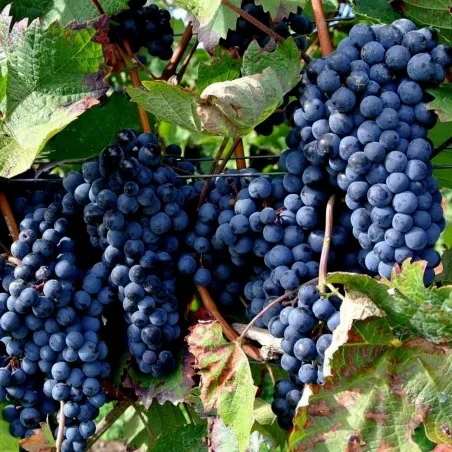
A grape is a fruiting berry of the deciduous woody vines of the botanical genus Vitis. Grapes can be eaten raw or they can be used for making wine, jam, juice, jelly, grape seed extract, raisins, vinegar
A grape is a fruiting berry of the deciduous woody vines of the botanical genus Vitis. Grapes can be eaten raw or they can be used for making wine, jam, juice, jelly, grape seed extract, raisins, vinegar, and grape seed oil. Grapes are a non-climacteric type of fruit, generally occurring in clusters.
Description
Grapes are a type of fruit that grow in clusters of 15 to 300, and can be crimson, black, dark blue, yellow, green, orange and pink. "White" grapes are actually green in color, and are evolutionarily derived from the purple grape. Mutations in two regulatory genes of white grapes turn off production of anthocyanins, which are responsible for the color of purple grapes. Anthocyanins and other pigment chemicals of the larger family of polyphenols in purple grapes are responsible for the varying shades of purple in red wines. Grapes are typically an ellipsoid shape resembling a prolate spheroid.
History
The cultivation of the domesticated grape began 6,000–8,000 years ago in the Near East. The earliest archeological evidence for a dominant position of wine-making in human culture dates from 8,000 years ago in Georgia.
Yeast, one of the earliest domesticated microorganisms, occurs naturally on the skins of grapes, leading to the innovation of alcoholic drinks such as wine. The earliest known production occurred around 8,000 years ago on the territory of Georgia. During an extensive gene-mapping project, archaeologists analyzed the heritage of more than 110 modern grape cultivars, and narrowed their origin to a region in Georgia, where wine residues were also discovered on the inner surfaces of 8,000-year-old ceramic storage jars. The oldest winery was found in Armenia, dating to around 4000 BC. By the 9th century AD the city of Shiraz was known to produce some of the finest wines in the Middle East. Thus it has been proposed that Syrah red wine is named after Shiraz, a city in Persia where the grape was used to make Shirazi wine. Ancient Egyptian hieroglyphics record the cultivation of purple grapes, and history attests to the ancient Greeks, Phoenicians and Romans growing purple grapes for both eating and wine production. The growing of grapes would later spread to other regions in Europe, as well as North Africa, and eventually in North America.
In North America, native grapes belonging to various species of the Vitis genus proliferate in the wild across the continent, and were a part of the diet of many Native Americans, but were considered by European colonists to be unsuitable for wine. Vitis vinifera cultivars were imported for that purpose.
Distribution and production
According to the Food and Agriculture Organization (FAO), 75,866 square kilometers of the world are dedicated to grapes. Approximately 71% of world grape production is used for wine, 27% as fresh fruit, and 2% as dried fruit. A portion of grape production goes to producing grape juice to be reconstituted for fruits canned "with no added sugar" and "100% natural". The area dedicated to vineyards is increasing by about 2% per year.
There are no reliable statistics that break down grape production by variety. It is believed that the most widely planted variety is Sultana, also known as Thompson Seedless, with at least 3,600 km2. (880,000 acres) dedicated to it. The second most common variety is Airén. Other popular varieties include Cabernet Sauvignon, Sauvignon blanc, Cabernet Franc, Merlot, Grenache, Tempranillo, Riesling and Chardonnay.
Juice
Grape juice is obtained from crushing and blending grapes into a liquid. The juice is often sold in stores or fermented and made into wine, brandy or vinegar. In the wine industry, grape juice that contains 7–23% of pulp, skins, stems and seeds is often referred to as "must". In North America, the most common grape juice is purple and made from Concord grapes while white grape juice is commonly made from Niagara grapes, both of which are varieties of native American grapes, a different species from European wine grapes. In California, Sultana (known there as Thompson Seedless) grapes are sometimes diverted from the raisin or table market to produce white juice.
Health claims
French paradox
Comparing diets among Western countries, researchers have discovered that although the French tend to eat higher levels of animal fat, the incidence of heart disease remains low in France. This phenomenon has been termed the French paradox, and is thought to occur from protective benefits of regularly consuming red wine. Apart from potential benefits of alcohol itself, including reduced platelet aggregation and vasodilation, polyphenols (e.g., resveratrol) mainly in the grape skin provide other suspected health benefits, such as:
Alteration of molecular mechanisms in blood vessels, reducing susceptibility to vascular damage
Decreased activity of angiotensin, a systemic hormone causing blood vessel constriction that would elevate blood pressure
Increased production of the vasodilator hormone, nitric oxide (endothelium-derived relaxing factor)
Although adoption of wine consumption is not recommended by some health authorities, a significant volume of research indicates moderate consumption, such as one glass of red wine a day for women and two for men, may confer health benefits. Emerging evidence is that wine polyphenols like resveratrol provide physiological benefit whereas alcohol itself may have protective effects on the cardiovascular system. More may be seen in the article the Long-term effects of alcohol.
Resveratrol
Synthesized by many plants, resveratrol apparently serves antifungal and other defensive properties. Dietary resveratrol has been shown to modulate the metabolism of lipids and to inhibit oxidation of low-density lipoproteins and aggregation of platelets.
Resveratrol is found in widely varying amounts among grape varieties, primarily in their skins and seeds, which, in muscadine grapes, have about one hundred times higher concentration than pulp. Fresh grape skin contains about 50 to 100 micrograms of resveratrol per gram.
In vitro studies indicate that protection of the genome through antioxidant actions may be a general function of resveratrol. In laboratory studies with mice, resveratrol has transcriptional overlap with the beneficial effects of calorie restriction in heart, skeletal muscle and brain. Both dietary interventions inhibit gene expression associated with heart and skeletal muscle aging, and prevent age-related heart failure.
Resveratrol is the subject of several human clinical trials, among which the most advanced is a one year dietary regimen in a Phase III study of elderly patients with Alzheimer's disease.
Anthocyanins and other phenolics
Anthocyanins tend to be the main polyphenolics in purple grapes whereas flavan-3-ols (i.e. catechins) are the more abundant phenolic in white varieties.[31] Total phenolic content, a laboratory index of antioxidant strength, is higher in purple varieties due almost entirely to anthocyanin density in purple grape skin compared to absence of anthocyanins in white grape skin.[31] It is these anthocyanins that are attracting the efforts of scientists to define their properties for human health.[32] Phenolic content of grape skin varies with cultivar, soil composition, climate, geographic origin, and cultivation practices or exposure to diseases, such as fungal infections.
Red wine may offer health benefits more so than white because potentially beneficial compounds are present in grape skin, and only red wine is fermented with skins. The amount of fermentation time a wine spends in contact with grape skins is an important determinant of its resveratrol content.[33] Ordinary non-muscadine red wine contains between 0.2 and 5.8 mg/L,[34] depending on the grape variety, because it is fermented with the skins, allowing the wine to absorb the resveratrol. By contrast, a white wine contains lower phenolic contents because it is fermented after removal of skins.
Wines produced from muscadine grapes may contain more than 40 mg/L, an exceptional phenolic content. In muscadine skins, ellagic acid, myricetin, quercetin, kaempferol, and trans-resveratrol are major phenolics. Contrary to previous results, ellagic acid and not resveratrol is the major phenolic in muscadine grapes.
The flavonols syringetin, syringetin 3-O-galactoside, laricitrin and laricitrin 3-O-galactoside are also found in purple grape but absent in white grape.
Seed constituents
Main articles: Grape seed extract and Grape seed oil
Biochemical and preliminary clinical studies have demonstrated potential biological properties of grape seed oligomeric procyanidins. For example, laboratory tests indicated a potential anticancer effect from grape seed extract. According to the American Cancer Society, "there is very little reliable scientific evidence available at this time that drinking red wine, eating grapes, or following the grape diet can prevent or treat cancer in people".
Grape seed oil from crushed seeds is used in cosmeceuticals and skincare products for perceived health benefits. Grape seed oil contains tocopherols (vitamin E) and high contents of phytosterols and polyunsaturated fatty acids such as linoleic acid, oleic acid and alpha-linolenic acid.
Concord grape juice
Commercial juice products from Concord grapes have been applied in medical research studies, showing potential benefits against the onset stage of cancer, platelet aggregation and other risk factors of atherosclerosis, loss of physical performance and mental acuity during aging and hypertension in humans.
Aprecierea ta pentru recenzie nu a putut fi trimisa
Reclama un comentariu
Sigur doresti sa raportezi acest comentariu?
Raport trimis
Comentariul tau a fost inregistrat si va fi examinat de un moderator.
Reclamatia tau nu a putut fi trimisa
Recenzia a fost trimisa
Comentariul dumeavoastra a fost inregistrat si va fi vizibil de indata ce va fi aprobat de un moderator.
Recenzia ta nu a putut fi trimisa
🌍 Wysyłka na cały świat z UE
Wysyłamy na cały świat z Unii Europejskiej za pośrednictwem zarejestrowanej poczty lotniczej z wymaganym podpisem przy odbiorze.
📦 Śledzenie zamówienia
Aby znaleźć swój numer śledzenia, zaloguj się na swoje konto i przejdź do: Historia zamówień > Szczegóły. Twój numer śledzenia znajduje się bezpośrednio w szczegółach zamówienia.
Będziesz otrzymywać powiadomienia e-mail na każdym etapie zamówienia.
Jeśli nie widzisz tych wiadomości, sprawdź folder Spam/Wiadomości śmieci lub skontaktuj się ze swoim dostawcą e-mail. Alternatywnie poszukaj w Internecie informacji, jak odblokować wiadomości e-mail od nadawcy.
NASZ SERWIS E-MAIL DZIAŁA — Jeśli nie otrzymujesz wiadomości e-mail, prawdopodobnie jest to problem z Twoim dostawcą poczty lub ustawieniami.
📧 Jak zapewnić, aby e-maile z naszego sklepu internetowego zawsze trafiały do Twojej skrzynki odbiorczej
Aby zapobiec oznaczaniu naszych wiadomości jako spam, dodaj nasz adres e-mail do swoich kontaktów:
Otwórz Gmail (lub innego dostawcę) i znajdź e-mail od nas (xxxxxxxxxxxx@xxx.com).
Najedź kursorem na nazwę lub adres e-mail nadawcy.
Kliknij ikonę „Dodaj do kontaktów” (ikonka małej osoby).
Nie możemy Ci pomóc, jeśli Twoje ustawienia nie są skonfigurowane w ten sposób. Skontaktuj się ze swoim dostawcą e-mail, aby uzyskać pomoc.
Alternatywnie utwórz filtr w Gmailu:
Otwórz Gmail i przejdź do Ustawienia > Zobacz wszystkie ustawienia.
Przejdź do karty Filtry i zablokowane adresy.
Kliknij Utwórz nowy filtr i wpisz nasz adres e-mail.
Zaznacz Nigdy nie wysyłaj do spamu i kliknij Utwórz filtr.
📍 Śledź swoją paczkę
Twój numer śledzenia znajduje się w szczegółach zamówienia. Możesz śledzić swoje zamówienie za pośrednictwem następujących platform:
Podczas składania zamówienia zawsze podawaj ważny numer telefonu komórkowego z numerem kierunkowym kraju (np. +48 601 234 567).
NIE zamawiaj do skrytek pocztowych (P.O. Boxes) ani jeśli nie możesz być w domu, aby podpisać odbiór paczki. Paczek nie można zostawiać u sąsiadów.
Jeśli paczka wysłana do skrytki pocztowej zaginie lub nie zostanie doręczona, zwrot pieniędzy nie zostanie przyznany.
⚖️ Odpowiedzialność klienta za zgodność z prawem
Klient jest odpowiedzialny za upewnienie się, że produkt może być legalnie importowany do jego kraju, w tym za przestrzeganie wszystkich przepisów importowych, uzyskanie niezbędnych zezwoleń oraz opłacenie obowiązujących ceł, podatków i innych opłat. Przed złożeniem zamówienia sprawdź lokalne przepisy.
🔄 Paczki zagubione, zwrócone i ponowna wysyłka
Klienci z Brazylii i Meksyku: Nie możemy zwrócić pieniędzy za paczki zagubione lub zniszczone przez urząd celny.
Jeśli Twoja paczka zostanie zwrócona, zwrócimy tylko koszt produktu — koszty wysyłki nie podlegają zwrotowi.
Opłatę za zwrot (2 €) oraz wszelkie koszty ponownej wysyłki musi pokryć klient.
🚚 Dostawa przesyłki
Przesyłki polecone wymagają podpisu.
Jeśli śledzenie pokazuje, że paczka nadal znajduje się w placówce początkowej, oznacza to, że jest w drodze — skontaktuj się ze swoim lokalnym urzędem pocztowym, aby uzyskać aktualne informacje.
Niestety, ani my, ani poczta, za pośrednictwem której wysłano zamówienie, nie możemy pomóc w ustaleniu, gdzie dokładnie znajduje się paczka. Gdy zobaczysz, że paczka jest w Twoim kraju, MUSISZ skontaktować się ze swoją pocztą, podając numer śledzenia.
⏱️ Opcje dostawy i szacowany czas
Opcja dostawy
Czas przetwarzania
Uwagi
Priority Delivery
Wysyłka w ciągu 1–7 dni roboczych
Priorytetowe przetwarzanie; możliwe opóźnienia w okresie świątecznym (3–10 dni)
Secured Delivery
Wysyłka w ciągu 1–7 dni roboczych
Dostępne dla zamówień do 150 €; zwrot pieniędzy w przypadku zagubienia
Standard Delivery
Wysyłka w ciągu 7–10 dni roboczych
Bardziej ekonomiczna; możliwe opóźnienia w okresie świątecznym (7–14 dni)
Szacowany czas dostawy:
Wewnątrz UE: 3–20 dni
Reszta świata: 5–30 dni
Uwaga: Czas dostawy zależy od Twojej lokalizacji i lokalnego systemu pocztowego. COVID-19 lub sezony świąteczne mogą powodować dodatkowe opóźnienia.
💰 Koszty wysyłki
Koszty wysyłki i obsługi są obliczane automatycznie podczas składania zamówienia na podstawie wagi paczki i miejsca przeznaczenia.
⏰ Godziny przetwarzania zamówień
Nie przetwarzamy ani nie wysyłamy zamówień w soboty i niedziele.
💳 Opcje płatności
Chcielibyśmy poinformować o ważnej zmianie dotyczącej opłat za płatności. Niestety, ze względu na wyjątkowo wysokie opłaty transakcyjne nakładane przez PayPal, jesteśmy zmuszeni doliczać dopłatę do płatności dokonywanych za pośrednictwem ich serwisu.
Mamy jednak dla Ciebie rozwiązanie! Możesz uniknąć tych astronomicznych opłat, wybierając jedną z naszych alternatywnych metod płatności z PROWIZJĄ 0%:
✅ Płatność kartą kredytową/debetową – 0% prowizji
✅ Przelew bankowy – 0% prowizji
Przelew bankowy (SEPA / IBAN / SWIFT-BIC): W opisie płatności podaj numer referencyjny zamówienia. Zamówienia nieopłacone w ciągu 4 dni zostaną automatycznie anulowane.
PayPal: Płatności są akceptowane wyłącznie w euro. Prosimy o wybranie euro podczas finalizacji zakupu.
Płatność kartą: Akceptujemy karty Visa, MasterCard, American Express, CB, Diners Club, Discover, China UnionPay, JCB i Discover.
⚠️ Opłaty transakcyjne
Klienci są odpowiedzialni za wszelkie bankowe lub transakcyjne opłaty PayPal.
📝 Uwagi końcowe
Przed złożeniem zamówienia zawsze sprawdzaj naszą stronę internetową pod kątem specjalnych ogłoszeń, harmonogramów świątecznych lub określonych warunków wysyłki.


Comentarii (0)
Aprecierea ta pentru recenzie nu a putut fi trimisa
Reclama un comentariu
Raport trimis
Reclamatia tau nu a putut fi trimisa