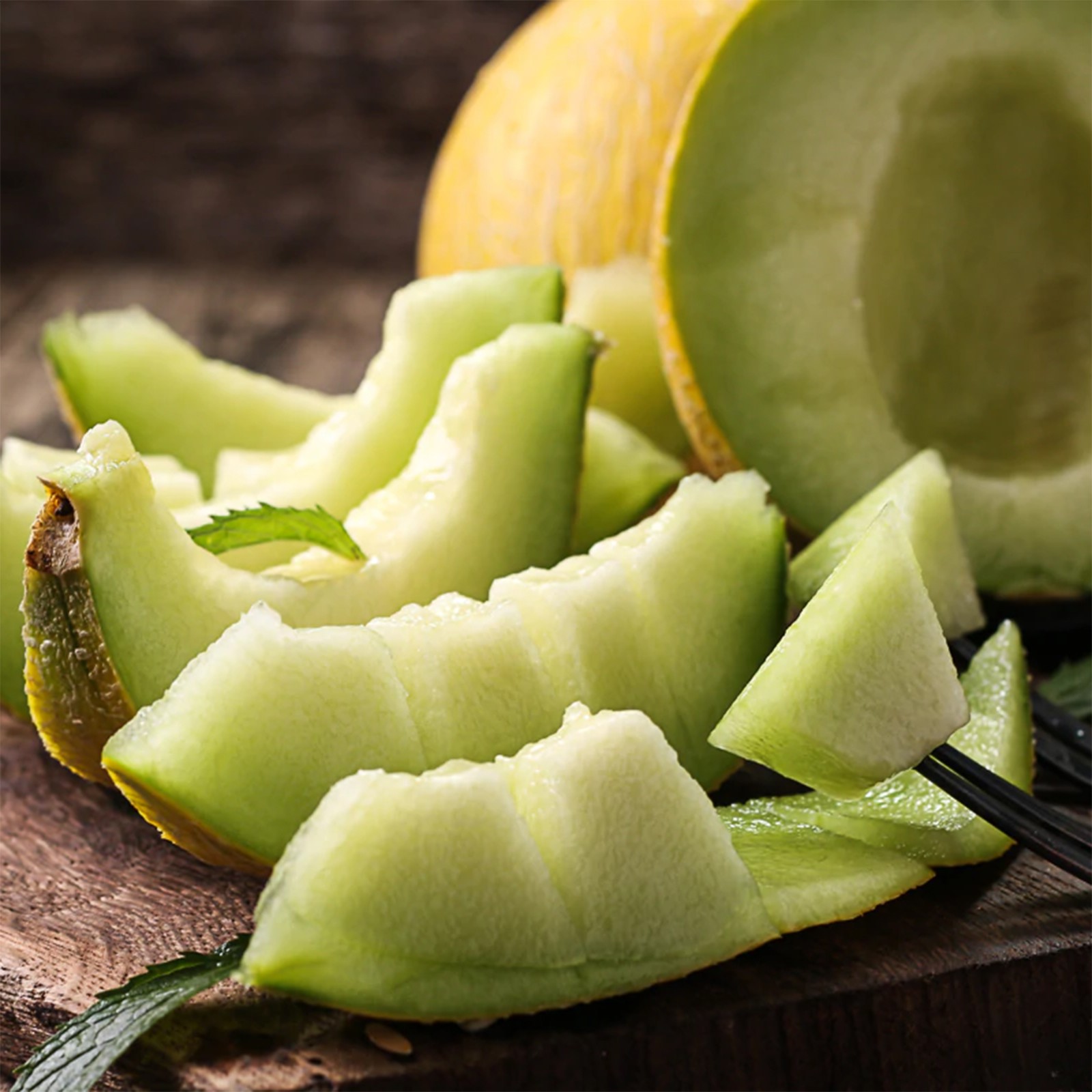
These Honeydew Melon Select Seeds produce one of the most delicious honeydew melons you'll ever taste. You can expect success from these carefully selected Honeydew Melon Select seeds. These vigorous, strong absolute winners have been chosen to meet your highest expectations. They have been
These Honeydew Melon Select Seeds produce one of the most delicious honeydew melons you'll ever taste. You can expect success from these carefully selected Honeydew Melon Select seeds. These vigorous, strong absolute winners have been chosen to meet your highest expectations. They have been tested nation-wide for great garden performance in all parts of our country.
Vegetable Garden – Tips on Growing Melons From Seed
65-90 Days to Harvest
SOWING THE SEED
The question has always been- should I sow indoors or outdoors? In warm climates you can direct sow melons, however starting the melons indoors is preferred, both, because the melon plants can grow well in soil that is 10-20 degrees cooler than that, is needed for best germination of the seed, and because the seeds germinate more slowly in cooler soil. Where ever you are, transplanting will probably give you the best yields in the finished crop. Remember that you will need to be very careful as to avoid transplant shock, Do not disturb the roots the best you can, also because melons need every day of sun that they can get to ripen the fruit so they can not afford any setbacks.
SOW INDOORS:
Start melon seeds indoors in a seed starting mix three weeks before the last frost date. Sow 3 seeds each in 3-inch pots. Germinate at a steady 80º to 90ºF (27-32ºC). Once the seedlings appear, lower the temperature to 75ºF (24ºC) for about a week until the first true leaves begin to emerge. Thin to one plant per pot with scissors. Lower the temperature to 65º-70ºF (18-21ºC) and reduce watering for another week.
Days to Germination: 3-5
DIRECT SOW OUTDOORS:
When the soil temperature reaches at least 70ºF(21º)C, and after any danger of frost is past.
Sow 2-3 Melon seeds every 16", in a row, and cover ½" to ¾" deep in late spring, after any danger of frost.
Soil temperature should be 80-90º F(27-32º)C.
Cooler temperatures can cause the melon seeds to rot.
GARDEN HINTS:
A warm-weather crop that should not be planted too early in the spring.
Growing
pH range: 6.0-7.0 where 6.0 is the absolute minimum, production drops below this.
Growing soil temperature: 70-85º F (21-29º)C.
Spacing in beds: 16" (40cm)
Watering: Moderate and even from germination to hardening off, low for one week prior to transplanting, moderate again from transplanting until fruit is full-sized, low or none during ripening of fruit.
Light: Full sun
Nutrient requirements: N=low, P=high, K=high
Rotation considerations:
Avoid following cucumber, pumpkin, and summer and winter squash.<.li>
Good Companions: Corn
Bad Companions: Potato
USDA Hardiness Zone -First Frost Date- Last Frost Date
Zone 1 -July 15th -June 15th
Zone 2 -August 15th- May 15th
Zone 3 -September 15th May 15th
Zone 4 -September 15th May 15th
Zone 5 -October 15th April 15th
Zone 6 -October 15th April 15th
Zone 7 -October 15th April 15th
Zone 8 -November 15th March 15th
Zone 9 -December 15th February 15th
Zone 10 -December 15th January 31st (sometimes earlier)
Zone 11 -No frost. No frost.
An old garden myth would suggest pinching off a vine’s growing shoots as melons start to ripen to cause the plant to divert all its energy to the ripening fruit. Research has proven this FALSE. The vine needs all its leaves to produce the sugars that sweeten the fruit. Anything that reduces the total number of leaves available for sugar production reduces melon sweetness.
The more fruits that ripen at the same time, the less sweet they will be, this is TRUE, since the vine will have to divide the leaves’ sugar production between fruits. In warmer climes with a long growing season, experienced growers often prune off all but one newly forming melon every 2 weeks. Ripening 1 melon at a time yields maximum sweetness. As you gain experience, you will develop your own technique.
In colder regions, remove any blossoms that start to develop within 50 days of your area’s first average frost date. This ensures remaining, larger fruits will ripen before frost.
The key to a sweet melon is lots of sugar, which is made by the leaves. So anything that hurts the leaves also hurts the quality of the fruit.
GROWING CONDITIONS:
Melons are sensitive to drought throughout the season, but especially from transplanting to fruit set. To get fruits of the proper size, water evenly but not too much, as too much water when fruits are enlarging can diminish flavor.
If possible, avoid overhead watering. Soaker hoses deliver water directly to the soil, preventing possible spread of fungus diseases on wet foliage. If you must use a sprinkler, then water vines very early in the morning so that leaves can dry early, which helps prevent fungus diseases.
Melons grow quickly and sometimes outgrow the nutrient reserve in the soil if this happens your leaves will be light green, so to correct this use a complete organic fertilizer like fish emulsion or kelp from the time of transplant to fruit set.
Plant in rich well-composted soil. Before the vine spread applies mulch to control weeds.
For vines running on the ground, keep fruit from direct contact with soil to prevent rot and protect the fruit from pests and rodents. Place ripening fruit on mulch, upturned coffee cans, or flowerpots. If large critters such as groundhogs discover your melons, protect ripening fruits by covering them with plastic milk crates or similar boxes weighted down with a few bricks.
After transplanting in spring you can cover plants with floating row covers to exclude insects and trap warm air near plants; this is most important in cooler climates but is useful everywhere to keep certain pests off the plants. Vines bear male and female flowers. Male flowers open first, joined by female blossoms about a week later. Female flowers have a small swelling at the base of the flower. When vines start to bear male and female flowers, remove row covers.
HARVESTING TIPS
It is normally pretty easy to tell when most vegetables are ripe, however, melons require a little more practice to get it right. A good tip to know is that all the fruits on any individual melon plant will ripen over a short period of time. When one melon is ripe, the remaining melons are not far behind.
MOST MELONS (with the exception of Watermelons) are ripe when the rinds change from a gray-green to yellow-buff color. The fruit is firm but with gentle thumb pressure, you can easily separate the stem from the vine.
WATERMELONS: Gauging when to pick a watermelon is a combination of science and tradition. Here are the most popular ways to determine when your watermelon is ripe.
The tendril nearest to the fruit will turn from green to brown.
The underside of the melon, where it sits on the ground is yellow.
When you rap it lightly you will hear a low pitched thunk or thump instead of high pitched ping. Try this out on a few that are NOT ripe so you can tune your ear to the sound.
Czy jesteś pewien, że chcesz zgłosić ten komentarz?
Zgłoszenie wysłane
Twój komentarz został wysłany i będzie widoczny po zatwierdzeniu przez moderatora.
Twoje zgłoszenie nie może zostać wysłane
Napisz swoją opinię
Recenzja została wysłana
Twój komentarz został dodany i będzie widoczny jak tylko zatwierdzi go moderator.
Twoja recenzja nie może być wysłana
🌍 Wysyłka na cały świat z UE
Wysyłamy na cały świat z Unii Europejskiej za pośrednictwem zarejestrowanej poczty lotniczej z wymaganym podpisem przy odbiorze.
📦 Śledzenie zamówienia
Aby znaleźć swój numer śledzenia, zaloguj się na swoje konto i przejdź do: Historia zamówień > Szczegóły. Twój numer śledzenia znajduje się bezpośrednio w szczegółach zamówienia.
Będziesz otrzymywać powiadomienia e-mail na każdym etapie zamówienia.
Jeśli nie widzisz tych wiadomości, sprawdź folder Spam/Wiadomości śmieci lub skontaktuj się ze swoim dostawcą e-mail. Alternatywnie poszukaj w Internecie informacji, jak odblokować wiadomości e-mail od nadawcy.
NASZ SERWIS E-MAIL DZIAŁA — Jeśli nie otrzymujesz wiadomości e-mail, prawdopodobnie jest to problem z Twoim dostawcą poczty lub ustawieniami.
📧 Jak zapewnić, aby e-maile z naszego sklepu internetowego zawsze trafiały do Twojej skrzynki odbiorczej
Aby zapobiec oznaczaniu naszych wiadomości jako spam, dodaj nasz adres e-mail do swoich kontaktów:
Otwórz Gmail (lub innego dostawcę) i znajdź e-mail od nas (xxxxxxxxxxxx@xxx.com).
Najedź kursorem na nazwę lub adres e-mail nadawcy.
Kliknij ikonę „Dodaj do kontaktów” (ikonka małej osoby).
Nie możemy Ci pomóc, jeśli Twoje ustawienia nie są skonfigurowane w ten sposób. Skontaktuj się ze swoim dostawcą e-mail, aby uzyskać pomoc.
Alternatywnie utwórz filtr w Gmailu:
Otwórz Gmail i przejdź do Ustawienia > Zobacz wszystkie ustawienia.
Przejdź do karty Filtry i zablokowane adresy.
Kliknij Utwórz nowy filtr i wpisz nasz adres e-mail.
Zaznacz Nigdy nie wysyłaj do spamu i kliknij Utwórz filtr.
📍 Śledź swoją paczkę
Twój numer śledzenia znajduje się w szczegółach zamówienia. Możesz śledzić swoje zamówienie za pośrednictwem następujących platform:
Podczas składania zamówienia zawsze podawaj ważny numer telefonu komórkowego z numerem kierunkowym kraju (np. +48 601 234 567).
NIE zamawiaj do skrytek pocztowych (P.O. Boxes) ani jeśli nie możesz być w domu, aby podpisać odbiór paczki. Paczek nie można zostawiać u sąsiadów.
Jeśli paczka wysłana do skrytki pocztowej zaginie lub nie zostanie doręczona, zwrot pieniędzy nie zostanie przyznany.
⚖️ Odpowiedzialność klienta za zgodność z prawem
Klient jest odpowiedzialny za upewnienie się, że produkt może być legalnie importowany do jego kraju, w tym za przestrzeganie wszystkich przepisów importowych, uzyskanie niezbędnych zezwoleń oraz opłacenie obowiązujących ceł, podatków i innych opłat. Przed złożeniem zamówienia sprawdź lokalne przepisy.
🔄 Paczki zagubione, zwrócone i ponowna wysyłka
Klienci z Brazylii i Meksyku: Nie możemy zwrócić pieniędzy za paczki zagubione lub zniszczone przez urząd celny.
Jeśli Twoja paczka zostanie zwrócona, zwrócimy tylko koszt produktu — koszty wysyłki nie podlegają zwrotowi.
Opłatę za zwrot (2 €) oraz wszelkie koszty ponownej wysyłki musi pokryć klient.
🚚 Dostawa przesyłki
Przesyłki polecone wymagają podpisu.
Jeśli śledzenie pokazuje, że paczka nadal znajduje się w placówce początkowej, oznacza to, że jest w drodze — skontaktuj się ze swoim lokalnym urzędem pocztowym, aby uzyskać aktualne informacje.
Niestety, ani my, ani poczta, za pośrednictwem której wysłano zamówienie, nie możemy pomóc w ustaleniu, gdzie dokładnie znajduje się paczka. Gdy zobaczysz, że paczka jest w Twoim kraju, MUSISZ skontaktować się ze swoją pocztą, podając numer śledzenia.
⏱️ Opcje dostawy i szacowany czas
Opcja dostawy
Czas przetwarzania
Uwagi
Priority Delivery
Wysyłka w ciągu 1–7 dni roboczych
Priorytetowe przetwarzanie; możliwe opóźnienia w okresie świątecznym (3–10 dni)
Secured Delivery
Wysyłka w ciągu 1–7 dni roboczych
Dostępne dla zamówień do 150 €; zwrot pieniędzy w przypadku zagubienia
Standard Delivery
Wysyłka w ciągu 7–10 dni roboczych
Bardziej ekonomiczna; możliwe opóźnienia w okresie świątecznym (7–14 dni)
Szacowany czas dostawy:
Wewnątrz UE: 3–20 dni
Reszta świata: 5–30 dni
Uwaga: Czas dostawy zależy od Twojej lokalizacji i lokalnego systemu pocztowego. COVID-19 lub sezony świąteczne mogą powodować dodatkowe opóźnienia.
💰 Koszty wysyłki
Koszty wysyłki i obsługi są obliczane automatycznie podczas składania zamówienia na podstawie wagi paczki i miejsca przeznaczenia.
⏰ Godziny przetwarzania zamówień
Nie przetwarzamy ani nie wysyłamy zamówień w soboty i niedziele.
💳 Opcje płatności
Chcielibyśmy poinformować o ważnej zmianie dotyczącej opłat za płatności. Niestety, ze względu na wyjątkowo wysokie opłaty transakcyjne nakładane przez PayPal, jesteśmy zmuszeni doliczać dopłatę do płatności dokonywanych za pośrednictwem ich serwisu.
Mamy jednak dla Ciebie rozwiązanie! Możesz uniknąć tych astronomicznych opłat, wybierając jedną z naszych alternatywnych metod płatności z PROWIZJĄ 0%:
✅ Płatność kartą kredytową/debetową – 0% prowizji
✅ Przelew bankowy – 0% prowizji
Przelew bankowy (SEPA / IBAN / SWIFT-BIC): W opisie płatności podaj numer referencyjny zamówienia. Zamówienia nieopłacone w ciągu 4 dni zostaną automatycznie anulowane.
PayPal: Płatności są akceptowane wyłącznie w euro. Prosimy o wybranie euro podczas finalizacji zakupu.
Płatność kartą: Akceptujemy karty Visa, MasterCard, American Express, CB, Diners Club, Discover, China UnionPay, JCB i Discover.
⚠️ Opłaty transakcyjne
Klienci są odpowiedzialni za wszelkie bankowe lub transakcyjne opłaty PayPal.
📝 Uwagi końcowe
Przed złożeniem zamówienia zawsze sprawdzaj naszą stronę internetową pod kątem specjalnych ogłoszeń, harmonogramów świątecznych lub określonych warunków wysyłki.