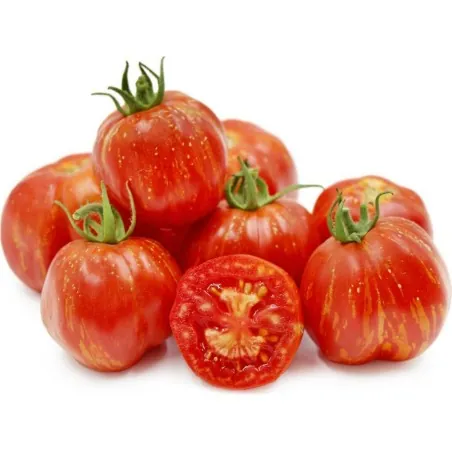
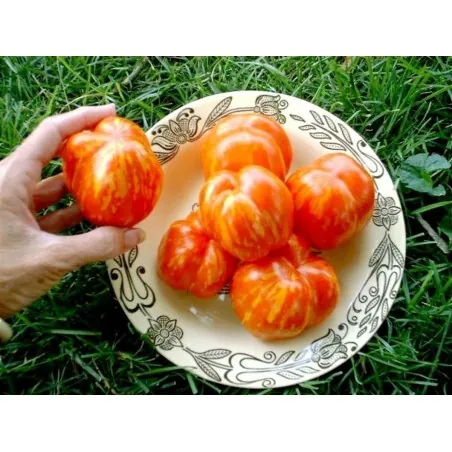
This cordon variety produces blocky, firm, thick-walled fruits with yellow stripes, each weighing up to 200g (7oz). The central core is easily removed making this one of the best beefsteak
This cordon variety produces blocky, firm, thick-walled fruits with yellow stripes, each weighing up to 200g (7oz). The central core is easily removed making this one of the best beefsteak tomato varieties for stuffing and baking. Fruits of Tomato 'Striped Stuffer' will keep up to 4 weeks in the refrigerator. An outstanding variety that is well suited to both indoor and outdoor cultivation. Height: 200cm (79"). Spread: 50cm (20").
Companion planting: Try growing tomatoes with French marigolds to deter whitefly, and basil, chives or mint to deter aphids and other pests.
How to Grow Tomatoes
You can’t rival the flavour of a fresh home-grown tomato straight from the vine. Their taste is far superior to the bland tomatoes offered in the supermarkets and they’re so easy to grow! Thompson & Morgan offer a great range of tomato seeds and tomato plants for sale. With such a huge range of tomato varieties available, from tiny cherry tomatoes to big beefsteak tomatoes they are ideal for gardens of any size, including patios, balconies, window boxes and even hanging baskets. Follow our tomato growing guide below to learn how to grow tomatoes successfully.
Take a look at our tomato selector guide to help you decide which tomato varieties to grow.
Growing tomatoes from seed
Growing tomato plants from seed is a great way to discover new varieties. Tomato seed is normally sown 6-8 weeks before the last frost date (March/April) although they can be sown earlier for greenhouse cultivation. Sprinkle your tomato seed thinly on the surface of good quality seed compost. Cover the seed with about 1.5mm (1/16in) of compost and water lightly with a fine-rose watering can. If only a few plants are required sow two seeds into a 7.5cm (3in) pot and after germination remove the smaller plant. The seeds generally germinate in about 7 to 14 days at a temperature of around 21C (70F). Keep the compost moist, but be careful not to over-water as wet conditions can encourage "damping off disease and other moulds and diseases.
Pot on the tomato seedlings when large enough to handle, taking care not to touch the stem. Handle the plants by the leaves and transplant them carefully into 7.5cm (3in) pots. Take care not to expose the plants to frost, cold winds and draughts as this may kill them.
Caring for your tomato plants
Tomatoes need a lot of water and feed to get the best fruit. Water little and often for the best results. Feed your tomatoes with a general liquid feed until the first truss has formed then alternate with a high potash feed. This will encourage more flowers and fruit.
Growing tomatoes in a greenhouse
Growing tomatoes indoors can mean an earlier crop. For greenhouse tomatoes grow recommended varieties such as 'Sungold', 'Money Maker' or 'Country Taste'. If you’re after tomatoes to make soups and sauces with then tomato ‘Roma VF’ is the variety for you. Sow as directed on the individual seed packet. This is generally from February onwards and in 7.5cm (3in) pots.
Plant the young plants when they are about 15-20cm (6-8in) tall and the flowers of the first truss are just beginning to open. If you are planting into your greenhouse border make sure you have dug in plenty of garden compost or well-rotted manure during the winter. If you have used the border before for tomatoes, it is better to change the soil before growing tomatoes in it again. This will help avoid soil pests and root diseases becoming a problem. Just before planting, rake in a general purpose fertiliser.
If you are growing tomatoes in pots or a grow bag remember they will require a lot more watering and care. Plant approximately 45cm (18in) between the plants and 75cm (30in) between the rows. In a grow bag, generally plant no more than two plants per bag. Make sure you ventilate the greenhouse regularly to reduce the risk of pests and diseases. Tomatoes prefer a temperature of 21 - 24C (70 - 75F) and will perform poorly at temperatures above 27C (81F) or below 16C (61F).
Growing tomatoes outside
When growing outdoor tomatoes, choose recommended varieties such as 'Gardeners Delight', 'Money Maker' or 'Sweet Olive'. You can grow varieties such as ‘Cherry Cascade’ or 'Tasty Tumbler’ in a flower pouch or as hanging basket tomatoes. Wait until approximately 6-8 weeks before the last frost is forecast and sow as directed on the individual seed packet in 7.5cm (3in) pots.
When all risk of frost has passed, plant the young plants when they are about 15-20cm (6-8in) tall and the flowers of the first truss are just beginning to open. If you are planting into your border make sure you have dug in plenty of garden compost or manure during the winter. Just before planting, rake in a general purpose fertiliser - tomatoes are hungry plants!
Plant approximately 45cm (18 in) between the plants and 75cm (30in) between the rows. If you are growing tomatoes in grow bags or pots remember they will require a lot more watering and care. In a grow bag, generally plant no more than two plants per bag. There has been a recent trend for growing tomatoes upside down to save space in the garden. This is a great space saving solution similar to growing tomatoes in hanging baskets. Simply plant a young tomato plant through a hole in the bottom of a bucket or similar hanging container, and fill the container with multi-purpose compost. Suspend the bucket from a bracket and allow the plant to hang down beneath it.
Training tomato plants
Training your tomato plants will depend on the varieties and types of tomatoes grown. You may see varieties referred to as ‘cordon’, ‘indeterminate’ or ‘determinate’. Don’t be put off by these terms!
Indeterminate-these varieties of tomatoes are the most common and are grown as cordons (single stemmed plants with side shoots removed). They will grow very tall - sometimes taller than 2.5m in very warm conditions.
Bush/Determinate - these varieties stop growing sooner than indeterminate varieties with the stem ending in a fruit truss. They are referred to as ‘bush’ and ‘dwarf’ types (suitable as hanging basket tomatoes) and don’t require any pruning.
Semi-determinate - these are similar to indeterminate varieties (grown as cordons) only they produce shorter plants.
With indeterminate and semi-determinate varieties (cordons), tie the plants to a support as they grow. You will notice side-shoots appearing where the leaf stems joins the main stem (the leaf axil). Regularly pinching out of tomato side shoots will concentrate the plant’s energy into producing fruit. When the cordon has reached the top of its support, cut out the tip of the main stem 2 leaves above the top flower truss. For the best quality fruit it’s best to let no more than 6 fruit trusses form on the plant. If the tomato plant hasn’t reached the top of its support by late summer, cut out the main tip anyway to allow the remaining fruits time to ripen.
Determinate varieties (bush/dwarf types) don’t require any pruning or training and will happily sprawl along the ground or pot they’re growing in. Determinate varieties may stop flower production after several trusses, but upward growth can be carried on by training up the topmost side shoot.
Top tip
We were fascinated by Joe Maiden's article in Kitchen Garden (January 2012 issue) where he described how he accidentally created a multi-cordon Sungold tomato plant, when one of the plants fell out of its box prior to planting and snapped off the growing point of the stem. The plant grew sideshoots, which Joe decided to train as cordons, creating a multi-stemmed tomato plant. He removed the side shoots that grew from these new stems and ended up with a 60-truss plant by the end of the season!
Common problems when growing tomatoes
Tomato blight
One of the most common problems when growing tomatoes is tomato blight, which spreads quickly throughout the plant in wet weather, causing the plant to die and the fruits to decay. The symptoms are brown patches on all parts of the plant. It is much more common in tomatoes growing outside than tomatoes growing in a greenhouse. You can prevent blight infection by spraying Bordeaux Mixture on your plants in early summer. Growing blight resistant tomato varieties will also help to overcome this fungal disease.
Fruit problems
Most tomato fruit problems are caused by irregular watering. Examples include 'Blossom End Rot' (dark patch at the base of the fruit, more common if the plant is grown in a grow bag), 'Blossom Drop' (flower bud falls off), 'Dry Set' (fruitlet growth stops when the fruit is the size of a match-head), and 'Fruit Splitting'. The key is to give your tomatoes an even, regular amount of water at the base of the plant. Too much water too late tends to be the problem in most cases, especially with plants grown in pots and grow bags.
Other problems tend to be caused by too much direct sunlight. Tomatoes need high light intensity to grow well, but too much can cause blotches, scalds or spots on the developing fruit. 'Greenback' is a common problem caused by too much sunlight, leaving the ripe fruit with a hard green area on its ‘shoulder’. If this is a problem increase the potassium in the plants' feeding regime and use fleece or shading as a cover in the hottest part of the day. It may also help to use resistant varieties such as ‘Alicante’ or ‘Craigella’.
Insect pests
As with most plants look out for green and white fly - both can spread viruses. Spray with a recommended insecticide as soon as any pest is noticed or for organic gardening use a natural pest control. Planting marigolds such as ‘Tomato Growing Secret’ and similar flowers will attract beneficial insects that will eat the pests.
Leaf problems
If leaf yellowing starts on the older leaves and moves upwards it may not be a virus but a deficiency of magnesium. It is a common problem which is not serious if the plant is otherwise vigorous. It can be remedied by using a special magnesium feed if required but this is not essential.
You may also notice curling of the leaves; this can be caused by aphids sucking the sap out of the leaves. If there is no sign of insects then it is most likely caused by cold temperatures at night (more noticeable in early summer) and this is nothing to worry about. If you notice anything unusual affecting both younger and older leaves such as mosaic patterns, streaks or distorted leaf surfaces, your tomatoes may have a virus. If you believe your tomatoes do have a virus, the plant or plants must be removed and destroyed as there is no cure for viruses. Avoid handling other tomatoes, or using the same tools on your tomatoes until the tools have been thoroughly sterilised and your hands washed in hot soapy water.
Harvesting your tomatoes
Start picking your tomatoes as the fruits ripen and gain full colour. When frost threatens at the end of the season, lift any plants with unripe fruit on them and hang them upside down under cover. Tomatoes can be successfully frozen if you find you have a glut.
Aprecierea ta pentru recenzie nu a putut fi trimisa
Reclama un comentariu
Sigur doresti sa raportezi acest comentariu?
Raport trimis
Comentariul tau a fost inregistrat si va fi examinat de un moderator.
Reclamatia tau nu a putut fi trimisa
Scrie-ti recenzia
Recenzia a fost trimisa
Comentariul dumeavoastra a fost inregistrat si va fi vizibil de indata ce va fi aprobat de un moderator.
Recenzia ta nu a putut fi trimisa
🌍 Livrare în toată lumea din UE
Expediem în toată lumea din Uniunea Europeană prin poștă aeriană recomandată, cu semnătură obligatorie la livrare.
📦 Urmărirea comenzii dumneavoastră
Pentru a găsi numărul de urmărire, conectați-vă la contul dumneavoastră și accesați: Istoric comenzi > Detalii. Numărul de urmărire se află direct în detaliile comenzii.
Veți primi notificări prin e-mail pentru fiecare etapă a comenzii dumneavoastră.
Dacă nu vedeți aceste mesaje, vă rugăm să verificați folderul Spam/Junk sau să contactați furnizorul dumneavoastră de e-mail. Alternativ, căutați online cum să deblocați e-mailurile de la expeditor.
SERVICIUL NOSTRU DE E-MAIL FUNCȚIONEAZĂ — Dacă nu primiți e-mailuri, este probabil o problemă cu furnizorul dumneavoastră de e-mail sau cu setările dumneavoastră.
📧 Cum să vă asigurați că e-mailurile de la magazinul nostru online ajung întotdeauna în Inbox
Pentru a preveni marcarea e-mailurilor noastre ca spam, adăugați adresa noastră de e-mail în contactele dumneavoastră:
Deschideți Gmail (sau orice alt furnizor) și găsiți un e-mail de la noi (xxxxxxxxxxxx@xxx.com).
Treceți mouse-ul peste numele sau adresa de e-mail a expeditorului.
Faceți clic pe pictograma "Adaugă în contacte" (pictograma cu persoana mică).
Nu vă putem ajuta dacă setările dumneavoastră nu sunt așa. Contactați furnizorul de e-mail pentru asistență.
Alternativ, creați un filtru în Gmail:
Deschideți Gmail și accesați Setări > Vezi toate setările.
Mergeți la fila Filtre și adrese blocate.
Faceți clic pe Creați un filtru nou și introduceți adresa noastră de e-mail.
Bifați Nu se trimite niciodată în Spam și faceți clic pe Creați filtru.
📍 Urmăriți-vă pachetul
Numărul de urmărire se află în detaliile comenzii dumneavoastră. Vă puteți urmări comanda prin următoarele platforme:
Posta.hr (pentru numere de urmărire de tip RGxxxxxxHR)
⚠️ Notificări importante
Plata la livrare (ramburs) NU este disponibilă.
Când comandați, furnizați întotdeauna un număr de telefon mobil valid cu prefixul țării (de ex. +40 712 345 678).
NU comandați la căsuțe poștale (P.O. Boxes) sau dacă nu puteți fi acasă pentru a semna pentru pachet. Pachetele nu pot fi lăsate la vecini.
Dacă un pachet trimis la o căsuță poștală este pierdut sau nelivrat, nu se va acorda nicio rambursare.
⚖️ Responsabilitatea clientului pentru conformitatea legală
Clientul este responsabil să se asigure că produsul este legal pentru import în țara sa, inclusiv respectarea tuturor reglementărilor de import, obținerea permiselor necesare și plata taxelor vamale aplicabile, a impozitelor și a altor taxe. Vă rugăm să verificați legile locale înainte de a comanda.
🔄 Pachete pierdute, returnate și reexpediate
Clienți din Brazilia și Mexic: Nu putem rambursa pachetele pierdute sau distruse de vamă.
Dacă pachetul dumneavoastră este returnat, vom rambursa doar costul produsului — costurile de transport sunt nerambursabile.
Taxa poștală de returnare (2 €) și orice costuri de reexpediere trebuie acoperite de client.
🚚 Livrarea transportului
Expedierile recomandate necesită semnătură.
Dacă urmărirea arată că pachetul este încă la oficiul poștal de origine, acesta este în tranzit — contactați oficiul poștal local pentru actualizări.
Din păcate, nici noi, nici oficiul poștal prin care a fost trimisă comanda dumneavoastră nu vă putem ajuta cu întrebarea unde se află exact comanda dumneavoastră. Când vedeți că pachetul este în țara dumneavoastră, TREBUIE să contactați oficiul poștal cu numărul de urmărire.
⏱️ Opțiuni de livrare și timp estimat
Opțiune de livrare
Timp de procesare
Note
Priority Delivery
Se expediază în 1–7 zile lucrătoare
Prioritizează procesarea comenzii; posibile întârzieri în timpul sărbătorilor (3–10 zile)
Secured Delivery
Se expediază în 1–7 zile lucrătoare
Disponibil pentru comenzi de până la 150 €; rambursare în caz de pierdere
Standard Delivery
Se expediază în 7–10 zile lucrătoare
Mai economic; posibile întârzieri în timpul sărbătorilor (7–14 zile)
Timp estimat de livrare:
În interiorul UE: 3–20 zile
În restul lumii: 5–30 zile
Notă: Timpul de livrare depinde de locația dumneavoastră și de sistemul poștal local. COVID-19 sau perioadele de sărbători pot cauza întârzieri suplimentare.
💰 Costuri de livrare
Taxele de transport și manipulare sunt calculate automat la finalizarea comenzii pe baza greutății coletului și a destinației.
⏰ Programul de procesare a comenzilor
Nu procesăm și nu expediem comenzi sâmbăta sau duminica.
💳 Opțiuni de plată
Dorim să vă informăm despre o modificare importantă privind taxele de plată. Din păcate, din cauza comisioanelor de tranzacție excepțional de mari impuse de PayPal, suntem forțați să aplicăm o suprataxă pentru plățile efectuate prin serviciul lor.
Cu toate acestea, avem o soluție pentru dumneavoastră! Puteți evita aceste taxe astronomice alegând una dintre metodele noastre alternative de plată cu COMISION ZERO:
✅ Plată cu cardul de credit/debit – comision 0%
✅ Transfer bancar – comision 0%
Transfer bancar (SEPA / IBAN / SWIFT-BIC): Includeți referința comenzii dumneavoastră în descrierea plății. Comenzile fără plată în termen de 4 zile vor fi anulate automat.
PayPal: Plățile sunt acceptate numai în euro. Vă rugăm să selectați euro în timpul procesului de plată.
Plata cu cardul: Acceptăm Visa, MasterCard, American Express, CB, Diners Club, Discover, China UnionPay, JCB și Discover.
⚠️ Comisioane de tranzacție
Clienții sunt responsabili pentru orice comisioane bancare sau taxe de tranzacție PayPal.
📝 Note finale
Înainte de a plasa comanda, verificați întotdeauna site-ul nostru pentru anunțuri speciale, programe de sărbători sau condiții specifice de livrare.