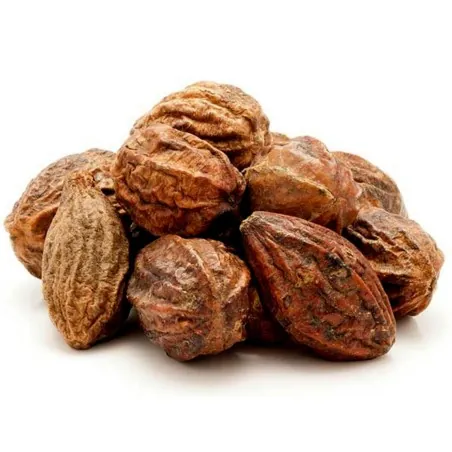
King of medicinal herbs Myrobalan Seeds (Terminalia chebula)
Price for Package of 1 seed.
Thailand Recognized as the King of Herbs. Because the effect of the removal of toxins from the body and treat many diseases. The same can also be healthy. And repair of the body. Terminalia chebula, also known as haritaki fruit and He Zi herb, is a common herb used in Traditional Chinese
King of medicinal herbs Myrobalan Seeds (Terminalia chebula)
Price for Package of 1 seed.
Thailand Recognized as the King of Herbs. Because the effect of the removal of toxins from the body and treat many diseases. The same can also be healthy. And repair of the body.
Terminalia chebula, also known as haritaki fruit and He Zi herb, is a common herb used in Traditional Chinese medicine, Tibetan medicine, and Ayurveda medicine. It has had very good reviews from different alternative medicine genres, especially in Tibetan medicine, in which it is called as the King. And related statistical analysis showed that its frequency of utilization in Tibetan medicine is higher than that of Gan Cao (Licorice Root) in TCM. That’s to say, almost all Tibetan herbal formulas include this herb. It is native to India, Burma and other countries and was introduced to China as an astringent before the Tang Dynasty, according to Tang Ben Cao (Tang Materia Medica), a revised text compiled in 657-659 A.D.
What is terminalia chebula?
Medicinally it refers to the dried ripe fruits of Terminalia chebula Retz. or Terminalia chebula Retz. var. tomentella Kurt., plants that belongs to the family of Combretaceae. Therefore, its common names include Myrobalan fruit, fructus chebulae, medicine terminalia fruit, chebula fruit, fructus terminaliae chebulae, Sheng He Li Le, terminalia chebulae fructus, Ke Zi, Sheng He Zi Rou, fruit of medicine terminalia, haritaki fruit, chebulic myrobalan, and more.
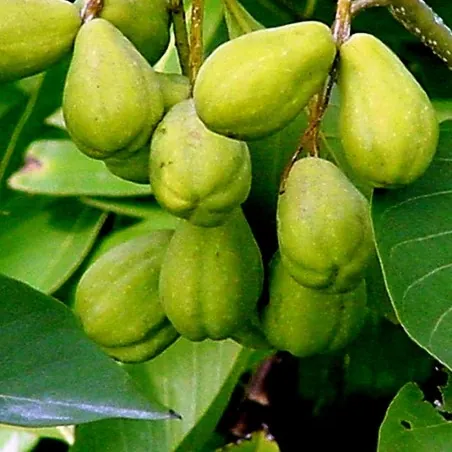
Its plant is a large deciduous tree, and often reaches 20 to 30 meters. Leaves are alternate or nearly opposite, ovate or elliptic, 7 to 2cm long, 3 to 15cm wide, with short pointed apex, obtuse or rounded base, entire margin, and bald clean sides. Spica grows on the top of branches or leaf axil. Flowers are bisexual and yellow. Drupe is obovate or oval, 2.5 to 4.5cm long, green when young, tan when ripe, and with smooth surface and 5 edges when dried. Seed is 1. And it usually flowers from June to August and fruits from August to October. The habitat and distribution covers roadsides and areas near villages. It originates in India, Burma and other places. In China, it mainly grows in Tibet, Yunnan, Guangdong, and Guangxi.
Key chemical constituents include 23.60% to 37.36% tannin, triterpenoids, sennoside A, chebulin, tannase, polyphenol oxidase, ascorbic acid enzyme and so on. And tannin mainly contains chebulinic acid, chebulagic acid, corilagin, terchebulin, punicalagin, terflavin A, terchebin, glucogallin, gallic acid, and so on. In addition, triterpenoids mainly contains terminoic acid, chebupentol, shikimic acid, dehydroshikimic acid, and more.
Terminalia chebula benefits
As what mentioned before, it is one of the most common Chinese herbs and was known as the King in the medical classic of Tibetan Pharmaceutical Science – Jing Zhu Ben Cao (Tibetan title: Shel. Gong Shel Phreng). As a matter of fact, its health benefits have been the major subject of Tibetan medicine and it has become a symbol of Tibetan medicine thanks to its widespread medicinal uses. What’s more, in Tibetan medicine this herb is considered with all the merits, namely six flavors, eight properties, three processing tastes, and seventeen efficiency, that treat a variety of diseases. In fact, today because of its high medicinal value and properties, terminalia chebula bark and fruit have been made into tea, fruit extract, oil, supplement, and tincture for hair, lyme disease, skin care, cancer, cystic fibrosis, diabetes, weight loss, vitiligo, and so on. So, what is the explanation in its pharmacology? Now let’s take a close look at it.
Modern pharmacological actions of chebula fruit
1. Its tannin has astringent, antidiarrheal effect;
2. In addition to tannin, it also contains lapactic composition, which has the similar effect available on Da Huang (Rhubarb);
3. Its 100% decoction works to a variety of Shigella and has strong effect on Pseudomonas aeruginosa and diphtheria bacilli. Besides, it inhibits Staphylococcus aureus, Escherichia coli, pneumococcus, hemolytic streptococcus, Proteus, and Salmonella typhimurium;
4. Its alcohol extract with hydrochloric acid and ether has stronger antifungal and antimicrobial activity;
5. Cardiotonic effect shows on the extract of ethyl acetate, methyl ethyl ketone, n-butanol and water and large dose of benzene and chloroform extract;
5. The active ingredient of chebulin, extracted from dried fruits with 80% ethanol, has papaverine-like spasmolysis on smooth muscle.
Proven herbal remedies on medicine terminalia fruit
From the description of Chinese Materia Medica, it is bitter and sour in flavor and astringent and neutral in properties. It goes to three meridians of lung, large intestine, and stomach. Vital functions include astringing the lung and intestine, descending qi, and relieving sore throat. Chief terminalia chebula uses and indications are chronic diarrhea, chronic dysentery, prolapse of the anus, wheezing, expectoration, and aphonia caused by chronic cough. Recommended terminalia chebula dosage is from 3 to 6 grams in decoction, pills or powder.
1. He Zi Yin. This formula, from Ji sheng fang (Formulas to Aid the Living), is exclusively for the failure of uttering a word due to chronic cough. Other three herbal ingredients are Xing Ren (Apricot Seed), Tong Cao (Rice Paper Pith), and Sheng Jiang (Fresh Ginger Rhizome).
2. He Zi Tang. This prescription, from Tai Ping Sheng Hui Fang (Taiping Holy Prescriptions for Universal Relief), is mainly design for aphonia. Other three herbs are Jie Geng (Balloon Flower Rhizome), Gan Cao (Licorice Root), and fresh lad urine.
3. He Li Le San. This recipe, from Sheng Hui Fang, is usually used for chronic diarrhea in the elderly. The other herb is Bai Fan (alum).
4. He Li Le San. This formula, from Jin Gui Yao Lue (Essential Prescriptions of the Golden Coffer), uses this herb alone as astringent to relieve diarrhea.
5. He Zi Pi San. This prescription, from Lan Shi Mi Zang (The Secret Treasury of the Orchid Chamber), is primarily made for chronic rectocele. Other three herbs include Yu Mi Ke (Pericarpium Papaveris), Ju Pi (orange peel), and Gan Jiang (Dried Ginger Root).
Terminalia chebula side effects and contraindications
So far no clearly recognized drug interactions about terminalia chebula fruit were reported. And generally it is believed with no toxicity when taken in the recommended doses. However, it is inadvisable to be taken during pregnancy because of its descending and laxative quality. Overdose may cause a variety of adverse reactions, such as extreme leanness, serious weakening, loss of energy, and depletion of bodily fluids. From the point of view of TCM, it shouldn’t be used in the case of exterior syndrome accompanied with damp-heat stagnation inside.
WIKIPEDIA:
Terminalia chebula, commonly known as black- or chebulic myrobalan, is a species of Terminalia, native to South Asia from India and Nepal east to southwest China (Yunnan), and south to Sri Lanka, Malaysia, and Vietnam.
Description
T. chebula is a medium to large deciduous tree growing to 30 m (98 ft) tall, with a trunk up to 1 m (3 ft 3 in) in diameter. The leaves are alternate to subopposite in arrangement, oval, 7–8 cm (2.8–3.1 in) long and 4.5–10 cm (1.8–3.9 in) broad with a 1–3 cm (0.39–1.18 in) petiole.[3] They have an acute tip, cordate at the base, margins entire, glabrous above with a yellowish pubescence below.[citation needed] The fruit is drupe-like, 2–4.5 cm (0.79–1.77 in) long and 1.2–2.5 cm (0.47–0.98 in) broad, blackish, with five longitudinal ridges.[3] The dull white to yellow flowers are monoecious, and have a strong, unpleasant odour. They are borne in terminal spikes or short panicles. The fruits are smooth ellipsoid to ovoid drupes, yellow to orange-brown in colour, with a single angled stone.
Distribution and habitat
T. chebula Is found throughout South East Asia - India, Sri Lanka, Bhutan, Nepal, Bangladesh, Myanmar, Cambodia, Laos, Vietnam, Indonesia, Malaysia, Pakistan, Sri Lanka, Thailand. In China: Native in W Yunnan; cultivated in Fujian, Guangdong, Guangxi (Nanning), and Taiwan (Nantou).
In India it is found in the Sub Himalayan tracks from Ravi eastwards to West Bengal and Assam, ascending up to the altitude of 1 500 m in the Himalayas. This tree is wild in forests of Northern India, central provinces and Bengal, common in Madras, Mysore and in the southern part of the Bombay presidency.
Habitat: Dry slopes up to 900 m (3000 ft) in elevation.
Cultivation and uses
This tree yields smallish, ribbed and nut-like fruits which are picked when still green and then pickled, boiled with a little added sugar in their own syrup or used in preserves. The seed of the fruit, which has an elliptical shape, is an abrasive seed enveloped by a fleshy and firm pulp. It is regarded as a universal panacea in Ayurveda and in the traditional Tibetan medicine. The fruit also provides material for tanning leather and dyeing wool,silk and cotton.
Seven types of fruit are recognized (i.e. vijaya, rohini, putana, amrita, abhaya, jivanti, and chetaki), based on the region where the fruit is harvested, as well as the colour and shape of the fruit. Generally speaking, the vijaya variety is preferred, which is traditionally grown in the Vindhya Range of west-central India, and has a roundish as opposed to a more angular shape.
Na tento produkt momentálně není přidána žádná recenze.
Vaše hodnocení nelze odeslat
Nahlásit komentář
Opravdu chcete nahlásit tento komentář?
Zpráva odeslána
Váš podnět byl odeslán a bude ho posuzovat moderátor.
Váš podnět nelze odeslat
Zkontrolovat před odesláním
Váš komentář byl přidán a bude zobrazen po schválení moderátorem.
Vaši recenzi nelze odeslat
🌍 Wereldwijde verzending vanuit de EU
Wij verzenden wereldwijd vanuit de Europese Unie via aangetekende luchtpost met handtekening voor ontvangst bij levering.
📦 Uw bestelling volgen
Om uw trackingnummer te vinden, logt u in op uw account en gaat u naar: Bestelgeschiedenis > Details. Uw trackingnummer bevindt zich direct in de bestelgegevens.
U ontvangt e-mailmeldingen voor elke fase van uw bestelling.
Als u deze berichten niet ziet, controleer dan uw map Spam/Ongewenste e-mail of neem contact op met uw e-mailprovider. Zoek anders online naar hoe u e-mails van afzenders kunt deblokkeren.
ONZE E-MAILSERVICE WERKT — Als u geen e-mails ontvangt, ligt dit waarschijnlijk aan uw e-mailprovider of instellingen.
📧 Hoe u ervoor zorgt dat e-mails van onze webshop altijd in uw inbox terechtkomen
Om te voorkomen dat onze e-mails als spam worden gemarkeerd, voegt u ons e-mailadres toe aan uw contacten:
Open Gmail (of een andere provider) en zoek een e-mail van ons (xxxxxxxxxxxx@xxx.com).
Beweeg de muis over de naam of het e-mailadres van de afzender.
Klik op het icoon "Toevoegen aan contacten" (het poppetje).
We kunnen u niet helpen als uw instellingen niet zo staan. Neem contact op met uw e-mailprovider voor hulp.
Als alternatief kunt u een filter maken in Gmail:
Open Gmail en ga naar Instellingen > Alle instellingen bekijken.
Ga naar het tabblad Filters en geblokkeerde adressen.
Klik op Nieuw filter maken en voer ons e-mailadres in.
Vink Nooit naar Spam verzenden aan en klik op Filter maken.
📍 Uw pakket volgen
Uw trackingnummer staat in uw bestelgegevens. U kunt uw bestelling volgen via de volgende platforms:
Geef bij het bestellen altijd een geldig mobiel nummer op met landnummer (bijv. +31 6 1234 5678).
Bestel NIET naar postbussen (P.O. Boxes) of als u niet thuis kunt zijn om voor het pakket te tekenen. Pakketten kunnen niet bij de buren worden afgegeven.
Als een pakket dat naar een postbus is verzonden verloren gaat of niet wordt bezorgd, vindt er geen terugbetaling plaats.
⚖️ Verantwoordelijkheid van de klant voor wettelijke naleving
De klant is verantwoordelijk om ervoor te zorgen dat het product legaal in zijn land mag worden geïmporteerd, inclusief naleving van alle importvoorschriften, het verkrijgen van de nodige vergunningen en de betaling van toepasselijke douanerechten, belastingen en andere kosten. Controleer uw lokale wetgeving voordat u bestelt.
🔄 Verloren, geretourneerde en opnieuw verzonden pakketten
Klanten uit Brazilië en Mexico: We kunnen geen pakketten terugbetalen die door de douane zijn verloren of vernietigd.
Als uw pakket wordt geretourneerd, betalen we alleen de productkosten terug — verzendkosten worden niet gerestitueerd.
Retourkosten (€2) en eventuele kosten voor opnieuw verzenden zijn voor rekening van de klant.
🚚 Levering van de zending
Aangetekende zendingen vereisen een handtekening.
Als de tracking aangeeft dat het pakket nog op het postkantoor van herkomst is, is het onderweg — neem contact op met uw lokale postkantoor voor updates.
Helaas kunnen wij, noch het postkantoor waardoor uw bestelling is verzonden, u helpen met de vraag waar uw bestelling zich precies bevindt. Wanneer u ziet dat het pakket in uw land is, MOET u contact opnemen met uw postkantoor met het trackingnummer.
⏱️ Leveringsopties & geschatte tijden
Leveringsoptie
Verwerkingstijd
Opmerkingen
Priority Delivery
Verzonden binnen 1–7 werkdagen
Prioriteit bij orderverwerking; vertragingen mogelijk tijdens feestdagen (3–10 dagen)
Secured Delivery
Verzonden binnen 1–7 werkdagen
Beschikbaar voor bestellingen tot €150; terugbetaling bij verlies
Standard Delivery
Verzonden binnen 7–10 werkdagen
Voordeliger; vertragingen mogelijk tijdens feestdagen (7–14 dagen)
Geschatte levertijden:
Binnen de EU: 3–20 dagen
Wereldwijd: 5–30 dagen
Opmerking: Levertijden zijn afhankelijk van uw locatie en het lokale postsysteem. COVID-19 of feestdagen kunnen extra vertraging veroorzaken.
💰 Verzendkosten
Verzend- en administratiekosten worden automatisch berekend bij het afrekenen op basis van het gewicht van het pakket en de bestemming.
⏰ Verwerkingstijden
Wij verwerken of verzenden geen bestellingen op zaterdag of zondag.
💳 Betalingsmogelijkheden
Wij willen u informeren over een belangrijke wijziging met betrekking tot de betalingskosten. Helaas zijn wij, vanwege de uitzonderlijk hoge transactiekosten die PayPal in rekening brengt, genoodzaakt een toeslag toe te passen voor betalingen die via hun service worden gedaan.
We hebben echter een oplossing voor u! U kunt deze astronomische kosten vermijden door te kiezen voor een van onze alternatieve betaalmethoden met NUL COMMISSIE:
✅ Creditcard/Betaalpas betaling – 0% Kosten
✅ Bankoverschrijving – 0% Kosten
Bankoverschrijving (SEPA / IBAN / SWIFT-BIC): Vermeld uw bestelreferentie in de betalingsomschrijving. Bestellingen zonder betaling binnen 4 dagen worden automatisch geannuleerd.
PayPal: Betalingen worden alleen in Euro geaccepteerd. Selecteer Euro tijdens het afrekenen.
Kaartbetaling: Wij accepteren Visa, MasterCard, American Express, CB, Diners Club, Discover, China UnionPay, JCB en Discover.
⚠️ Transactiekosten
Klanten zijn verantwoordelijk voor eventuele bank- of PayPal-transactiekosten.
📝 Slotopmerkingen
Controleer voor het plaatsen van uw bestelling altijd onze website voor speciale mededelingen, vakantieschema's of specifieke verzendvoorwaarden.


Komentáře (0)
Vaše hodnocení nelze odeslat
Nahlásit komentář
Zpráva odeslána
Váš podnět nelze odeslat