Tahitian Screwpine Seeds (Pandanus tectorius)
Pandanus tectorius is a species of Pandanus (screwpine) that is native to Malesia, eastern Australia, and the Pacific Islands. Common names in English include Tahitian screwpine[2] and thatch screwpine. P. tectorius is a tree that grows to 4β14 m (13β46 ft) tall. The single trunk is spiny and forks at a height
Β
Tahitian Screwpine Seeds (Pandanus tectorius)
Price for Package of 2 seeds.
Pandanus tectorius is a species of Pandanus (screwpine) that is native to Malesia, eastern Australia, and the Pacific Islands. Common names in English include Tahitian screwpine[2] and thatch screwpine.
P. tectorius is a tree that grows to 4β14 m (13β46 ft) tall. The single trunk is spiny and forks at a height of 4β8 metres (13β26 ft).[4] It is supported by prop roots that firmly anchor the tree to the ground. Its leaves are usually 90β150 cm (3.0β4.9 ft) long and 5β7 cm (2.0β2.8 in) wide with saw-like margins.
Β
Pandanus tectorius is dioecious, with very different male and female flowers. Male flowers are small, fragrant, form clusters or racemes, and short lived, lasting only a single day. Female flowers resemble pineapples.
Β
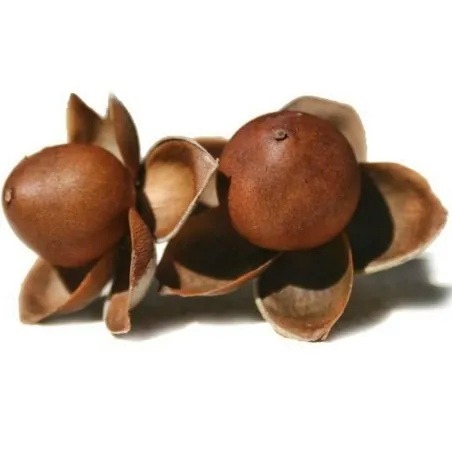
The fruit of P. tectorius is either ovoid, ellipsoid, subglobose or globose with a diameter of 4β20 cm (1.6β7.9 in) and a length of 8β30 cm (3.1β11.8 in). The fruit is made up of 38β200 wedge-like phalanges, which have an outer fibrous husk. Phalanges contain two seeds on average, with a maximum of eight reported. The phalanges are buoyant, and the seeds within them can remain viable for many months while being transported by ocean currents.
Β
Uses
The fruit can be eaten raw or cooked and is a major source of food in Micronesia, especially in the atolls. It is also one of the traditional foods of Maldivian cuisine. The fibrous nature of the fruit also serves as a natural dental floss. It is also used in Samoan culture as a Ula Fala, a necklace made out of the dried fruit painted in red and is worn by the Matai during special occasions and functions.
The tree's leaves are often used as flavoring for sweet dishes such as kaya jam, and are also said to have medicinal properties. It is also used in Sri Lankan cookery, where the leaves are used to flavor a variety of curries. Leaves were used by the Polynesians to make baskets, mats, outrigger canoe sails, thatch roofs, and grass skirts.
A large shrub or small tree of immense cultural, health, and economic importance in the Pacific, it is second only to coconut on atolls. It grows wild mainly in semi-natural vegetation in littoral habitats throughout the tropical and subtropical Pacific, where it can withstand drought, strong winds, and salt spray. It propagates readily from seed, but it is also widely propagated from branch cuttings by local people for farms and home gardens. It grows fairly quickly, and all parts are used, from the nutritious fruits of edible varieties to the poles and branches in construction to the leaves for weaving and garlands. The plant is prominent in Pacific culture and tradition, including local medicine.
Β
Hundreds of cultivated varieties are known by their local names and characteristics of fruits, branches, and leaves. At present, there is evidence that this diversity is declining, with certain varieties becoming difficult to find. The reasons include less replanting, deforestation, fire, flagging interest by the new generation, and rapid population growth leading to urbanization.
Β
Habitat
Pandanus tectorius naturally grows in coastal regions, such as on mangrove margins and beaches,
Β at elevations from sea level to 610 m (2,000 ft).[5] It requires 1,500β4,000 mm (59β157 in) of annual rainfall. Thatch Screwpine is well adapted to grow in the many soil types present on coasts, including quartz sand, coral sand, and peat, as well as in limestone and basalt. P. tectorius is salt and wind tolerant and favors slightly acidic to basic soil (pH of 6-10). It prefers to grow in full sunlight, but grows well with 30-50% shade.
Β
Range
Pandanus tectorius occurs from Port Macquarie in New South Wales to northern Queensland, Australia and Indonesia east through the islands of the tropical Pacific Ocean to Hawaii.[6] Its exact native range is unknown due to extensive cultivation; it may be an early Polynesian introduction to many of the more isolated Pacific islands on which it occurs. P. tectorius is known to have predated human settlement on Hawaii due to seed and pollen samples taken from KauaΚ»i's Makauwahi Cave.
Β
Culture
The seal of Punahou School in Honolulu, Hawaii features the hala tree, in part because lauhala, the art of weaving with the leaves of that tree, is pivotal to the history of the island, with everything from houses to pillows being made in this fashion. Local legend tells of an aged Hawaiian couple who lived long ago above the present Punahou campus, and had to travel far for water. They prayed each night for a spring, but to no avail. Finally one night, in a dream answering their prayers, they were told to uproot the stump of an old hala tree. They did as they were told and found a spring of clear, sweet water, which they named Ka Punahou, the New Spring. According to legend, Punahou School's lily pond is fed by this same spring.


Your review appreciation cannot be sent
Report comment
Report sent
Your report cannot be sent
Write your review
Review sent
Your review cannot be sent
π Worldwide Shipping from the EU
We ship worldwide from the European Union using registered air post with signature confirmation on delivery.
π¦ Tracking Your Order
Log in to your account and go to Order History > Details to find your tracking number.
You will receive email notifications at every step β please check your spam/junk folder if you donβt see them.
Track your package via:
β οΈ Important Notices
Cash on delivery is not available.
Always provide a valid mobile number with country code when ordering (e.g., +365 456 7686 576).
Do not order to P.O. Boxes or if you cannot be home to sign for the package. We cannot leave parcels with neighbors.
If a package sent to a P.O. Box is lost or undelivered, you lose the right to a refund.
π¦ Lost, Returned & Reshipping Packages
For customers in Brazil and Mexico:
We cannot refund packages lost or destroyed by customs.
If your package is returned, we will refund only the product cost β shipping costs are not refundable.
You must pay return postage (β¬2) and any costs for reshipping.
If a package is returned to us for any reason, you are responsible for paying the return shipping (β¬2) plus the cost to resend the package.
π Shipment Delivery
Registered shipments require a signature from the recipient.
If your tracking shows the package is still at the origin post office, it means the package is in transit β please contact your local post office directly for updates.
We are not responsible for delivery times and cannot track shipments for you.
π Delivery Options & Estimated Times
Delivery Option Processing Time Notes Priority Delivery Ships in 1-7 business days Prioritizes order processing (not guaranteed faster delivery); delays possible during holidays (3-10 days) Secured Delivery Ships in 1-7 business days Available for orders up to β¬150; refund if lost Standard Delivery Ships in 7-10 business days More economical; delays possible during holidays (7-14 days) Estimated Delivery Time:
Within the EU: 3β20 days
Worldwide: 5β30 days
Example delivery times to the USA:
Delivered in 13, 17, 19, 22, or 27 days.Note: Delivery times depend on your location and the local postal system. COVID-19 may cause additional delays.
π° Shipping Costs
Shipping and handling fees are calculated automatically during checkout based on the weight of the parcel and the destination country.
β° Order Processing Hours
We do not process or ship orders on Saturdays or Sundays.
π³ Payment Options
Bank Transfer (SEPA / IBAN / SWIFT-BIC)
Include your order reference in the payment description (e.g., "SGS-19811702"). Orders without payment within 7 days are automatically cancelled.PayPal
Payments accepted in Euros only. Please select Euros at checkout.Card Payment
For card payments, visit our other site: Exotic Seeds Store
We accept Visa, MasterCard, American Express, CB, Diners Club, Discover, China UnionPay, JCB, and Discover.
β οΈ Transaction Fees
Customers are responsible for any transaction fees. Please provide payment details to help us process your order efficiently.
π’ Final Notes
Before placing your order, please check our website for any special notices, holiday schedules, or specific conditions that may affect your purchase.
Related Products