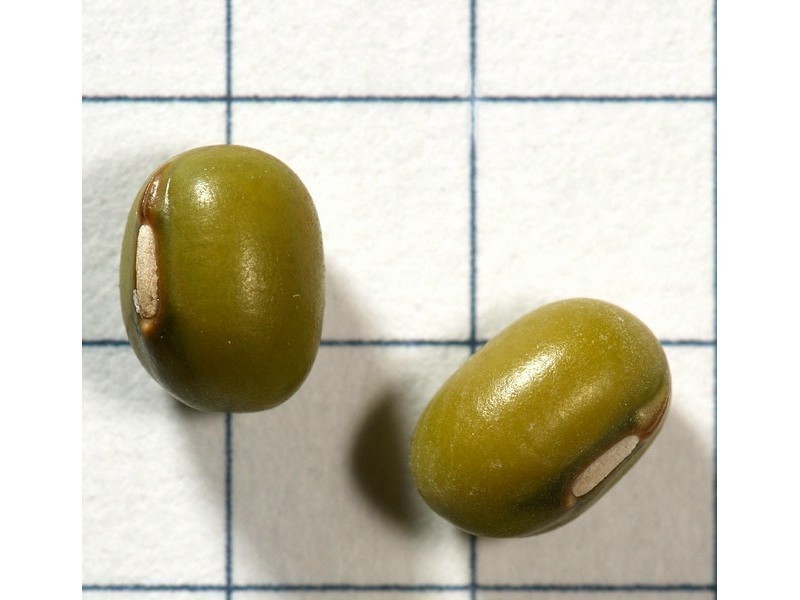
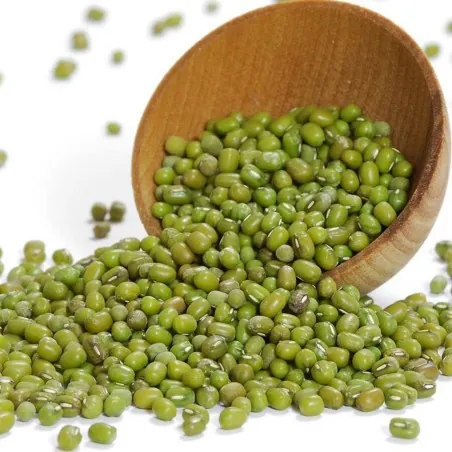
The mung bean (Vigna radiata), alternatively known as the moong bean, green gram, Lentil, but not Mungo, is a plant species in the legume family. Native to the Indian subcontinent, the mung bean is mainly cultivated today in India, China, and
The mung bean (Vigna radiata), alternatively known as the moong bean, green gram, Lentil, but not Mungo, is a plant species in the legume family. Native to the Indian subcontinent, the mung bean is mainly cultivated today in India, China, and Southeast Asia. It is also cultivated in hot, dry regions in Southern Europe and the Southern United States. It is used as an ingredient in both savory and sweet dishes.
Description
The English word mung is derived from the Hindi word मूंग Moong derived from the Sanskrit word मुद्ग (mudga). In Tamil it is பாசி பருப்பு (paasi paruppu). In Telugu language it is called పెసర పప్పు (Pesara pappu). In Kannada, it is ಹೆಸರು ಬೇಳೆ (hesaru bele).
Taxonomy
They are one of many species recently moved from the genus Phaseolus to Vigna, and is still often seen incorrectly cited as Phaseolus aureus or Phaseolus radiatus.
Uses
Mung beans are commonly used in various cuisines across Asia.
Whole beans and mung bean paste
Whole cooked mung beans are generally prepared from dried beans by boiling until they are soft. Mung beans are light yellow in color when their skins are removed. Mung bean paste can be made by dehulling, cooking, and pulverizing the beans to a dry paste.
Although whole mung beans are also occasionally used in Indian cuisine, beans without skins are more commonly used; but in Kerala, whole mung beans are commonly boiled to make a dry preparation often served with rice gruel (kanji). Dehulled mung beans can also be used in a similar fashion as whole beans for the purpose of making sweet soups. Mung beans in some regional cuisines of India are stripped of their outer coats to make mung dal. In Tamil Nadu, Telangana and Andhra Pradesh, steamed whole beans are seasoned with spices and fresh grated coconut in a preparation called sundal. In south and north Indian states, mung beans are also eaten as pancakes. They are soaked in water for six to 12 hours (the higher the temperature, the lesser soaking time). Then they are ground into fine paste along with ginger and salt. Then pancakes are made on a very hot griddle. These are usually eaten for breakfast. This provides high quality protein that is rare in most Indian regional cuisines. Pongal or kichdi is another recipe that is made with rice and mung beans without skin. In Kerala, it is commonly used to make the parippu preparation in the Travancore region (unlike Cochin and Malabar, where toor dal, tuvara parippu, is used). It is also used, with coconut milk and jaggery, to make a type of payasam.
In Chinese cuisine, whole mung beans are used to make a tángshuǐ, or dessert, otherwise literally translated, "sugar water", called lǜdòu tángshuǐ, which is served either warm or chilled. In Indonesia, they are made into a popular dessert snack called es kacang hijau, which has the consistency of a porridge. The beans are cooked with sugar, coconut milk, and a little ginger.
In Hong Kong, dehulled mung beans and mung bean paste are made into ice cream or frozen ice pops. Mung bean paste is used as a common filling for Chinese mooncakes in East China and Taiwan. Also in China, the boiled and shelled beans are used as filling in glutinous rice dumplings eaten during the dragon boat festival (端午节).[4] The beans may also cooked until soft, blended into a liquid, sweetened, and served as a beverage, popular in many parts of China.
In the Philippines, ginisáng monggó (sautéed mung bean stew), also known as monggó guisado or balatong, is a savoury stew of whole mung beans with shrimp or fish. It is traditionally served on Fridays of Lent, when the majority Roman Catholic Filipinos traditionally abstain from meat. Variants of ginisáng monggó may also be made with chicken or pork.
Mung bean paste is also a common filling of pastries known as hopia (or bakpia) popular in Indonesia, the Philippines and further afield in Guyana (where it is known as black eye cake) and originating from southern China
Bean sprouts
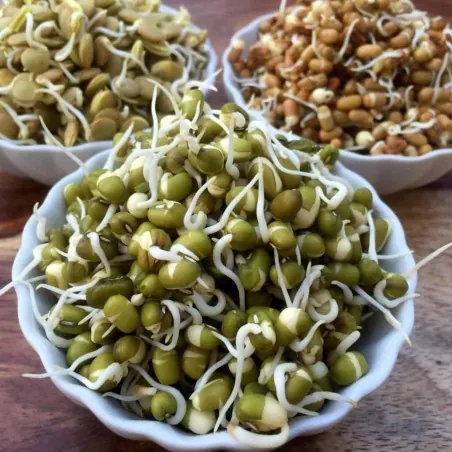
Mung bean sprouts are germinated by leaving them in water for four hours of daytime light and spending the rest of the day in the dark. Mung bean sprouts can be grown under artificial light for four hours over the period of a week. They are usually simply called "bean sprouts". However, when bean sprouts are called for in recipes, it generally refers to mung bean or soybean sprouts.
Mung bean sprouts are stir-fried as a Chinese vegetable accompaniment to a meal, usually with garlic, ginger, spring onions, or pieces of salted dried fish to add flavour. Uncooked bean sprouts are used in filling for Vietnamese spring rolls, as well as a garnish for phở. They are a major ingredient in a variety of Malaysian and Peranakan cuisine, including char kway teow, hokkien mee, mee rebus, and pasembor. In Korea, slightly cooked mung bean sprouts, called sukjunamul (hangul: 숙주나물), are often served as a side dish. They are blanched (placed into boiling water for less than a minute), immediately cooled in cold water, and mixed with sesame oil, garlic, salt, and often other ingredients. In the Philippines, mung bean sprouts are made into lumpia rolls called lumpiang togue.
In northern China and Korea, soybean sprouts, called kongnamul (hangul: 콩나물) in Korean, are more widely used in a variety of dishes.
Starch
Mung bean starch, which is extracted from ground mung beans, is used to make transparent cellophane noodles (also known as bean thread noodles, bean threads, glass noodles, fensi (粉絲), tung hoon (冬粉), miến, bún tàu, or bún tào). Cellophane noodles become soft and slippery when they are soaked in hot water. A variation of cellophane noodles, called mung bean sheets or green bean sheets, are also available. In Korea, a jelly called nokdumuk (hangul: 녹두묵; also called cheongpomuk; hangul: 청포묵) is made from mung bean starch; a similar jelly, colored yellow with the addition of gardenia coloring, is called hwangpomuk (hangul: 황포묵). In northern China, mung bean jelly is called liangfen (凉粉, meaning chilled bean jelly), which is very popular food during summer. Jidou liangfen is another flavor of mung bean jelly food in Yunnan, in southern China.
Mung batter is used to make crepes named pesarattu in Andhra Pradesh, India and pancakes named Bindaetteok in Korea.
History of domestication and cultivation
The mung bean was domesticated in India, where its progenitor (Vigna radiata subspecies sublobata) occurs wild.[8][9] Archaeological evidence has turned up carbonized mung beans on many sites in India. Areas with early finds include the eastern zone of the Harappan civilization in Punjab and Haryana, where finds date back about 4500 years, and South India in the modern state of Karnataka where finds date back more than 4000 years. Some scholars therefore infer two separate domestications in the northwest and south of India. In South India there is evidence for evolution of larger-seeded mung beans 3500 to 3000 years ago. By about 3500 years ago mung beans were widely cultivated throughout India. Cultivated mung beans later spread from India to China and Southeast Asia. Archaeobotanical research at the site of Khao Sam Kaeo in southern Thailand indicates that mung beans had arrived in Thailand by at least 2200 years ago. Finds on Pemba Island indicate that during the era of Swahili trade, in the 9th or 10th century, mung beans also came to be cultivated in Africa.
A jelentésed beküldve, és egy moderátor megvizsgálja.
Jelentésed beküldése nem lehetséges
Írd meg véleményedet
Vélemény elküldve
A hozzászólásodat elküldtük és elérhető lesz, amint egy moderátor jóváhagyja.
Véleményed nem lehet elküldeni
🌍 Világszerte történő szállítás az EU-ból
Az Európai Unióból szállítunk világszerte, ajánlott légipostai küldeményként, átvételkor aláírási kötelezettséggel.
📦 A rendelés nyomon követése
A nyomon követési szám megkereséséhez jelentkezzen be fiókjába, és lépjen a: Rendelési előzmények > Részletek menüponthoz. A nyomon követési szám közvetlenül a rendelés részleteinél található.
Rendelésének minden szakaszáról e-mailben értesítjük.
Ha nem látja ezeket az üzeneteket, kérjük, ellenőrizze a Spam/Levélszemét mappát, vagy vegye fel a kapcsolatot e-mail szolgáltatójával. Alternatív megoldásként keressen rá az interneten, hogyan engedélyezheti a feladóktól érkező e-maileket.
AZ E-MAIL SZOLGÁLTATÁSUNK MŰKÖDIK — Ha nem kap e-maileket, az valószínűleg az e-mail szolgáltatója vagy a beállításai miatt van.
📧 Hogyan biztosíthatja, hogy webáruházunk e-mailjei mindig a beérkező levelek közé kerüljenek
Annak elkerülése érdekében, hogy e-mailjeinket spamnek jelöljék, adja hozzá e-mail címünket a névjegyeihez:
Nyissa meg a Gmailt (vagy bármely más szolgáltatót), és keressen egy tőlünk érkező e-mailt (xxxxxxxxxxxx@xxx.com).
Vigye az egeret a feladó neve vagy e-mail címe fölé.
Kattintson a "Hozzáadás a névjegyekhez" ikonra (a kis ember alakú ikon).
Nem tudunk segíteni, ha a beállításai nem ilyenek. Segítségért forduljon e-mail szolgáltatójához.
Alternatív megoldásként hozzon létre egy szűrőt a Gmailben:
Nyissa meg a Gmailt: Beállítások > Az összes beállítás megtekintése.
Lépjen a Szűrők és blokkolt címek lapra.
Kattintson az Új szűrő létrehozása gombra, és adja meg e-mail címünket.
Válassza a Soha ne legyen spam opciót, majd kattintson a Szűrő létrehozása gombra.
📍 A csomag nyomon követése
A nyomon követési szám a rendelés részleteinél található. Rendelését az alábbi platformokon követheti nyomon:
Posta.hr (az RGxxxxxxHR típusú nyomon követési számokhoz)
⚠️ Fontos megjegyzések
Utánvétes fizetés (Cash on Delivery) NEM lehetséges.
A rendeléskor mindig adjon meg egy érvényes mobiltelefonszámot országkóddal (pl. +36 30 123 4567).
NE rendeljen postafiókra (P.O. Box), vagy ha nem tud otthon lenni, hogy aláírja a csomagot. A csomagokat nem lehet a szomszédoknál hagyni.
Ha egy postafiókra küldött csomag elveszik vagy nem kézbesíthető, nem áll módunkban visszatérítést nyújtani.
⚖️ A vásárló felelőssége a jogi megfelelőségért
A vásárló felelőssége megbizonyosodni arról, hogy a termék legálisan importálható-e az országába, beleértve az összes importszabály betartását, a szükséges engedélyek beszerzését, valamint az alkalmazandó vámok, adók és egyéb díjak megfizetését. Kérjük, rendelés előtt ellenőrizze a helyi törvényeket.
🔄 Elveszett, visszaküldött és újraküldött csomagok
Brazíliai és mexikói vásárlók: Nem tudjuk visszatéríteni a vámhatóság által elveszített vagy megsemmisített csomagok árát.
Ha csomagját visszaküldik, csak a termék költségét térítjük vissza — a szállítási költség nem visszatéríthető.
A visszaküldési postaköltséget (2 €) és az újraküldés minden költségét a vásárlónak kell fedeznie.
🚚 A küldemény kézbesítése
Az ajánlott küldeményekhez aláírás szükséges.
Ha a nyomon követés azt mutatja, hogy a csomag még a feladási postahivatalban van, akkor úton van — friss információkért érdeklődjön a helyi postán.
Sajnos sem mi, sem a posta, amelyen keresztül a rendelését feladtuk, nem tudunk segíteni abban a kérdésben, hogy pontosan hol tartózkodik a csomagja. Amint látja, hogy a csomag megérkezett az országába, ÖNNEK KELL felvennie a kapcsolatot a postával a nyomon követési szám birtokában.
⏱️ Szállítási opciók és becsült idők
Szállítási opció
Feldolgozási idő
Megjegyzések
Priority Delivery
Feladás 1–7 munkanapon belül
Elsőbbségi feldolgozás; ünnepek alatt késések várhatók (3–10 nap)
Secured Delivery
Feladás 1–7 munkanapon belül
150 € alatti rendelésekhez; visszatérítés elvesztés esetén
Standard Delivery
Feladás 7–10 munkanapon belül
Gazdaságosabb; ünnepek alatt késések várhatók (7–14 nap)
Becsült szállítási idők:
Az EU-n belül: 3–20 nap
Világszerte: 5–30 nap
Megjegyzés: A szállítási idő függ az Ön tartózkodási helyétől és a helyi postai rendszertől. A COVID-19 vagy az ünnepi időszakok további késéseket okozhatnak.
💰 Szállítási költségek
A szállítási és kezelési költségeket a rendszer automatikusan kiszámítja a fizetéskor a csomag súlya és a célállomás alapján.
⏰ Feldolgozási idő
Szombaton és vasárnap nem dolgozunk fel és nem adunk fel rendeléseket.
💳 Fizetési lehetőségek
Szeretnénk tájékoztatni Önt egy fontos változásról a fizetési díjakkal kapcsolatban. Sajnos a PayPal által felszámított rendkívül magas tranzakciós díjak miatt kénytelenek vagyunk felárat alkalmazni a szolgáltatásukon keresztül történő fizetésekre.
Azonban van megoldásunk az Ön számára! Elkerülheti ezeket a csillagászati díjakat, ha választja alternatív fizetési módjaink egyikét, amelyeknél NULLA A JUTALÉK:
✅ Hitelkártyás/Bankkártyás fizetés – 0% díj
✅ Banki átutalás – 0% díj
Banki átutalás (SEPA / IBAN / SWIFT-BIC): A közleményben tüntesse fel a rendelési azonosítót. A 4 napon belül nem kifizetett rendeléseket a rendszer automatikusan törli.
PayPal: Csak euróban fogadunk el fizetést. Kérjük, válassza az eurót a fizetéskor.
Kártyás fizetés: Elfogadunk Visa, MasterCard, American Express, CB, Diners Club, Discover, China UnionPay, JCB és Discover kártyákat.
⚠️ Tranzakciós díjak
A banki vagy PayPal tranzakciós díjak a vásárlót terhelik.
📝 Záró megjegyzések
Rendelés előtt mindig ellenőrizze weboldalunkat a különleges hirdetmények, ünnepi menetrendek vagy egyedi szállítási feltételek miatt.