


FLORENCE Fennel Seeds (Foeniculum vulgare)
SKU VE-231-(1g) Categorie Home
Prijs: € 1,85
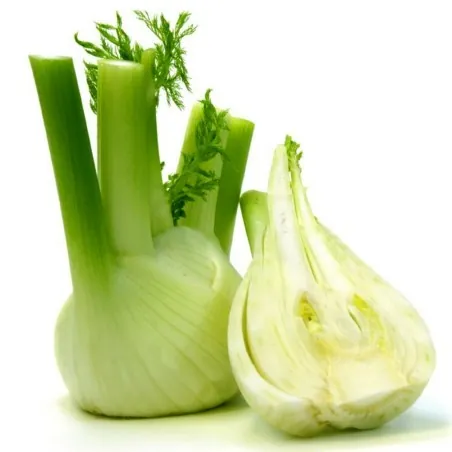
FLORENCE Fennel Seeds large bulbs
Price for Package of 250 (1g) seeds.
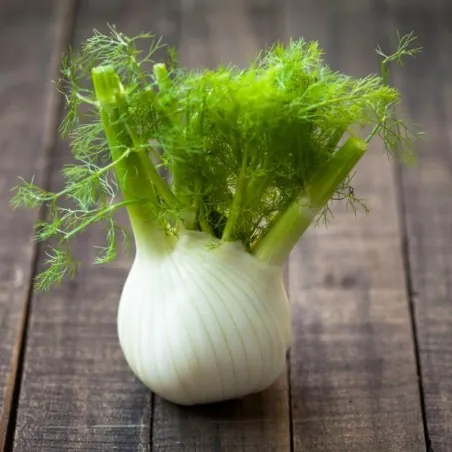
Mid to late season fennel, well-known as a premium selection for its very large oval bulbs, average weight about 600 g, with thick, flavorsome sticks.
Netto gewicht:
Share on
FLORENCE Fennel Seeds large bulbs
Price for Package of 250 (1g) seeds.
Mid to late season fennel, well-known as a premium selection for its very large oval bulbs, average weight about 600 g, with thick, flavorsome sticks.
Fennel (Foeniculum vulgare) is a plant species in the genus Foeniculum (treated as the sole species in the genus by most botanists). It is a member of the family Apiaceae (formerly the Umbelliferae). It is a hardy, perennial, umbelliferous herb, with yellow flowers and feathery leaves. It is indigenous to the shores of the Mediterranean but has become widely naturalized in many parts of the world, especially on dry soils near the sea-coast and on riverbanks.
It is a highly aromatic and flavorful herb with culinary and medicinal uses and, along with the similar-tasting anise, is one of the primary ingredients of absinthe. Florence fennel or finocchio is a selection with a swollen, bulb-like stem base that is used as a vegetable.
Fennel is used as a food plant by the larvae of some Lepidoptera species including the mouse moth and the anise swallowtail.
Etymology and names
The word "fennel" developed from the Middle English fenel or fenyl. This came from the Old English fenol or finol, which in turn came from the Latin feniculum or foeniculum, the diminutive of fenum or faenum, meaning "hay". The Latin word for the plant was ferula, which is now used as the genus name of a related plant.
Vernacular names
Fennel is known as सौंफ़ (Saunf) in Hindi. It is called பெருஞ்சீரகம் (perunjeeragam) in Tamil and പെരുംജീരകം (perumjeeragam) in Malayalam.
Cultural references
As Old English finule, fennel is one of the nine plants invoked in the pagan Anglo-Saxon Nine Herbs Charm, recorded in the 10th century.
In Greek mythology, Prometheus used the stalk of a fennel plant to steal fire from the gods. Also, it was from the giant fennel, Ferula communis, that the Bacchanalian wands of the god Dionysus and his followers were said to have come.
The Greek name for fennel is a marathon (μάραθον) or marathos (μάραθος),[3] and the place of the famous battle of Marathon and the subsequent sports event Marathon (Μαραθών), literally means a plain with fennels.
Appearance
Fennel, Foeniculum vulgare, is a perennial herb. It is erect, glaucous green, and grows to heights of up to 2.5 m, with hollow stems. The leaves grow up to 40 cm long; they are finely dissected, with the ultimate segments filiform (threadlike), about 0.5 mm wide. (Its leaves are similar to those of dill but thinner.) The flowers are produced in terminal compound umbels 5–15 cm wide, each umbel section having 20–50 tiny yellow flowers on short pedicels. The fruit is a dry seed from 4–10 mm long, half as wide or less, and grooved.
Cultivation and uses
Fennel is widely cultivated, both in its native range and elsewhere, for its edible, strongly flavored leaves and fruits. Its aniseed flavour comes from anethole, an aromatic compound also found in anise and star anise, and its taste and aroma are similar to theirs, though usually not as strong.
The Florence fennel (Foeniculum vulgare Azoricum Group; syn. F. vulgare var. azoricum) is a cultivar group with inflated leaf bases which form a bulb-like structure. It is of cultivated origin,[7] and has a mild anise-like flavor, but is more aromatic and sweeter. Florence fennel plants are smaller than the wild type.[citation needed] Their inflated leaf bases are eaten as a vegetable, both raw and cooked. There are several cultivars of Florence fennel, which is also known by several other names, notably the Italian name finocchio. In North American supermarkets, it is often mislabelled as "anise".
Foeniculum vulgare 'Purpureum' or 'Nigra', "bronze-leaved" fennel, is widely available as a decorative garden plant.
Fennel has become naturalized along roadsides, in pastures, and in other open sites in many regions, including northern Europe, the United States, southern Canada and in much of Asia and Australia. It propagates well by seed and is considered an invasive species and a weed in Australia and the United States.[11] In western North America, fennel can be found from the coastal and inland wildland-urban interface east into hill and mountain areas, excluding desert habitats.
Florence fennel is one of the three main herbs used in the preparation of absinthe, an alcoholic mixture which originated as a medicinal elixir in Switzerland and became, by the late 19th century, a popular alcoholic drink in France and other countries.
Culinary uses
Sugar-coated and un-coated fennel seeds are used in India and Pakistan in mukhwas, an after-meal snack and breath freshener.
The bulb, foliage, and seeds of the fennel plant are widely used in many of the culinary traditions of the world. The small flowers of wild fennel (mistakenly known in America as fennel "pollen" [12]) are the most potent form of fennel, but also the most expensive.[13] Dried fennel seed is an aromatic, anise-flavored spice, brown or green in color when fresh, slowly turning a dull grey as the seed ages. For cooking, green seeds are optimal.[6] The leaves are delicately flavored and similar in shape to those of dill. The bulb is a crisp vegetable that can be sautéed, stewed, braised, grilled, or eaten raw. They are used for garnishes and to add flavor to salads. They are also added to sauces and served with pudding. The leaves used in soups and fish sauce and sometimes eaten raw as a salad.
Fennel seeds are sometimes confused with those of anise, which are similar in taste and appearance, though smaller. Fennel is also used as a flavoring in some natural toothpaste. The seeds are used in cookery and sweet desserts.
Many cultures in India, Pakistan, Afghanistan, Iran, and the Middle East use fennel seed in their cookery. It is one of the most important spices in Kashmiri Pandit and Gujarati cooking.[15] It is an essential ingredient of the Assamese/Bengali/Oriya spice mixture panch phoron[16] and in Chinese five-spice powders. In many parts of India and Pakistan, roasted fennel seeds are consumed as mukhwas, an after-meal digestive and breath freshener. Fennel leaves are used as leafy green vegetables either by themselves or mixed with other vegetables, cooked to be served and consumed as part of a meal, in some parts of India. In Syria and Lebanon, it is used to make a special kind of egg omelette (along with onions, and flour) called ijjeh.
Many egg, fish, and other dishes employ fresh or dried fennel leaves. Florence fennel is a key ingredient in some Italian and German salads, often tossed with chicory and avocado, or it can be braised and served as a warm side dish. It may be blanched or marinated, or cooked in risotto.
In Spain the stems of the fennel plant are used in the preparation of pickled eggplants, "berenjenas de Almagro".
Medicinal uses
Fennel (Foeniculum vulgare) essential oil in clear glass vial
Fennel contains anethole, which can explain some of its medical effects: It, or its polymers, act as phytoestrogens.
The essence of fennel can be used as a safe and effective herbal drug for primary dysmenorrhea, but could have lower potency than mefenamic acid at the current study level.
Intestinal tract
Fennel is widely employed as a carminative, both in humans and in veterinary medicine (e.g., dogs), to treat flatulence by encouraging the expulsion of intestinal gas. Anethole is responsible for the carminative action.
Mrs. Eencher Herbal states:
On account of its carminative properties, fennel is chiefly used medicinally with purgatives to allay their side effects, and for this purpose forms one of the ingredients of the well-known compound licorice powder. Fennel water has properties similar to those of anise and dill water: mixed with sodium bicarbonate and syrup, these waters constitute the domestic 'gripe water' used to correct the flatulence of infants. The volatile oil of fennel has these properties in concentration. Commercial preparations of fennel [1] are widely available as an alternative treatment for baby colic.
Fennel tea, also employed as a carminative, is made by pouring boiling water on a teaspoonful of bruised fennel seeds.
Fennel can be made into a syrup to treat babies with colic (formerly thought to be due to digestive upset), but long-term ingestion of fennel preparations by babies is a known cause of thelarche.
Eyes
In the Indian subcontinent, fennel seeds are also eaten raw, sometimes with some sweetener, as they are said to improve eyesight. Ancient Romans regarded fennel as the herb of sight.[21] Root extracts were often used in tonics to clear cloudy eyes. Extracts of fennel seed have been shown in animal studies to have potential use in the treatment of glaucoma.
Blood and urine
Fennel may be an effective diuretic and a potential drug for the treatment of hypertension.
Breastmilk
There are historical anecdotes that fennel is a galactagogue,[25] improving the milk supply of a breastfeeding mother. This use, although not supported by direct evidence, is sometimes justified by the fact that fennel is a source of phytoestrogens, which promote the growth of breast tissue. However, normal lactation does not involve growth of breast tissue. A single case report of fennel tea ingested by a breastfeeding mother resulted in neurotoxicity for the newborn child.
Other uses
Syrup prepared from fennel juice was formerly given for chronic coughs. It is one of the plants which is said to be disliked by fleas, and powdered fennel has the effect of driving away fleas from kennels and stables.
Parts Used: Seeds, leaves, roots, oil - the whole plant
Constituents: the essential oil is made up predominantly of anethole (50 to 80%), limonene, fenchone, and estragole. the seeds also contain fiber and complex carbohydrates.
Fennel also acts as an excellent digestive aid to relieve abdominal cramps, gas and bloating. The fresh stems of fennel can be eaten much like celery, the seeds add a lovely anise flavor to fish and other dishes. If you expect to eat a vegetable that you have trouble digesting, like cabbage, try adding fennel seeds to your recipe.
Fennel seeds (as well as anise) contain creosol and alpha-pinene, chemicals that help to loosen congestion and make coughs more productive. Fennel also calms the dry, hacking cough of bronchitis.
The Greek name for fennel was marathon was derived from "maraino", to grow thin, reflecting the widely held belief that fennel affected weight loss, a belief that was echoed by William Coles, in "Nature's Paradise"
both the seeds, leaves, and root of Garden Fennel are much used in drinks and broths for those that are grown fat, to abate their unwieldiness and cause them to grow more gaunt and lank.
Fennel's ancient reputation as a weight loss aid still holds up today. Drinking a cup of fennel seed tea 15 minutes before eating a heavy meal seems to take the edge off your appetite. Fennel also tunes up digestion, helping to turn food into energy instead of fat.
Women who are going through menopause or are experiencing menstrual problems may benefit from the estrogenic properties of fennel. It has a balancing effect on the female reproductive system and increases the flow of body energy. Extracts of fennel have estrogenic properties that may benefit women going through the hormonal imbalances caused by menopause.
Sow fennel seed directly into the ground in spring when the ground is warm and thin plants to 12-18 inches. Plants can also be propagated by division in spring. Fennel prefers moist but well-drained soil with a pH between 4.8 and 8.2.
Commentaar (0)
Geen klantenbeoordelingen op het moment.
Uw beoordelingswaardering kan niet worden verzonden
Rapporteer reactie
Bent u zeker dat u deze opmerking wil rapporteren?
Melding verzonden
Uw opmerking is ingediend en zal door een beheerder worden behandeld.
Uw opmerking kan niet worden verzonden
Schrijf uw recensie
Beoordeling verstuurd
Uw beoordeling is toegevoegd en wordt beschikbaar zodra deze is goedgekeurd.
Uw beoordeling kan niet worden verzonden
🌍 Wereldwijde verzending vanuit de EU
Wij verzenden wereldwijd vanuit de Europese Unie via aangetekende luchtpost met handtekening voor ontvangst bij levering.
📦 Uw bestelling volgen
Om uw trackingnummer te vinden, logt u in op uw account en gaat u naar: Bestelgeschiedenis > Details. Uw trackingnummer bevindt zich direct in de bestelgegevens.
U ontvangt e-mailmeldingen voor elke fase van uw bestelling.
Als u deze berichten niet ziet, controleer dan uw map Spam/Ongewenste e-mail of neem contact op met uw e-mailprovider. Zoek anders online naar hoe u e-mails van afzenders kunt deblokkeren.
ONZE E-MAILSERVICE WERKT — Als u geen e-mails ontvangt, ligt dit waarschijnlijk aan uw e-mailprovider of instellingen.
📧 Hoe u ervoor zorgt dat e-mails van onze webshop altijd in uw inbox terechtkomen
Om te voorkomen dat onze e-mails als spam worden gemarkeerd, voegt u ons e-mailadres toe aan uw contacten:
Open Gmail (of een andere provider) en zoek een e-mail van ons (xxxxxxxxxxxx@xxx.com).
Beweeg de muis over de naam of het e-mailadres van de afzender.
Klik op het icoon "Toevoegen aan contacten" (het poppetje).
We kunnen u niet helpen als uw instellingen niet zo staan. Neem contact op met uw e-mailprovider voor hulp.
Als alternatief kunt u een filter maken in Gmail:
Open Gmail en ga naar Instellingen > Alle instellingen bekijken.
Ga naar het tabblad Filters en geblokkeerde adressen.
Klik op Nieuw filter maken en voer ons e-mailadres in.
Vink Nooit naar Spam verzenden aan en klik op Filter maken.
📍 Uw pakket volgen
Uw trackingnummer staat in uw bestelgegevens. U kunt uw bestelling volgen via de volgende platforms:
⚠️ Belangrijke mededelingen
Betaling onder rembours is NIET mogelijk.
Geef bij het bestellen altijd een geldig mobiel nummer op met landnummer (bijv. +31 6 1234 5678).
Bestel NIET naar postbussen (P.O. Boxes) of als u niet thuis kunt zijn om voor het pakket te tekenen. Pakketten kunnen niet bij de buren worden afgegeven.
Als een pakket dat naar een postbus is verzonden verloren gaat of niet wordt bezorgd, vindt er geen terugbetaling plaats.
⚖️ Verantwoordelijkheid van de klant voor wettelijke naleving
De klant is verantwoordelijk om ervoor te zorgen dat het product legaal in zijn land mag worden geïmporteerd, inclusief naleving van alle importvoorschriften, het verkrijgen van de nodige vergunningen en de betaling van toepasselijke douanerechten, belastingen en andere kosten. Controleer uw lokale wetgeving voordat u bestelt.
🔄 Verloren, geretourneerde en opnieuw verzonden pakketten
Klanten uit Brazilië en Mexico: We kunnen geen pakketten terugbetalen die door de douane zijn verloren of vernietigd.
Als uw pakket wordt geretourneerd, betalen we alleen de productkosten terug — verzendkosten worden niet gerestitueerd.
Retourkosten (€2) en eventuele kosten voor opnieuw verzenden zijn voor rekening van de klant.
🚚 Levering van de zending
Aangetekende zendingen vereisen een handtekening.
Als de tracking aangeeft dat het pakket nog op het postkantoor van herkomst is, is het onderweg — neem contact op met uw lokale postkantoor voor updates.
Helaas kunnen wij, noch het postkantoor waardoor uw bestelling is verzonden, u helpen met de vraag waar uw bestelling zich precies bevindt. Wanneer u ziet dat het pakket in uw land is, MOET u contact opnemen met uw postkantoor met het trackingnummer.
⏱️ Leveringsopties & geschatte tijden
| Leveringsoptie | Verwerkingstijd | Opmerkingen |
| Priority Delivery | Verzonden binnen 1–7 werkdagen | Prioriteit bij orderverwerking; vertragingen mogelijk tijdens feestdagen (3–10 dagen) |
| Secured Delivery | Verzonden binnen 1–7 werkdagen | Beschikbaar voor bestellingen tot €150; terugbetaling bij verlies |
| Standard Delivery | Verzonden binnen 7–10 werkdagen | Voordeliger; vertragingen mogelijk tijdens feestdagen (7–14 dagen) |
Geschatte levertijden:
Binnen de EU: 3–20 dagen
Wereldwijd: 5–30 dagen
Opmerking: Levertijden zijn afhankelijk van uw locatie en het lokale postsysteem. COVID-19 of feestdagen kunnen extra vertraging veroorzaken.
💰 Verzendkosten
Verzend- en administratiekosten worden automatisch berekend bij het afrekenen op basis van het gewicht van het pakket en de bestemming.
⏰ Verwerkingstijden
Wij verwerken of verzenden geen bestellingen op zaterdag of zondag.
💳 Betalingsmogelijkheden
Wij willen u informeren over een belangrijke wijziging met betrekking tot de betalingskosten. Helaas zijn wij, vanwege de uitzonderlijk hoge transactiekosten die PayPal in rekening brengt, genoodzaakt een toeslag toe te passen voor betalingen die via hun service worden gedaan.
We hebben echter een oplossing voor u! U kunt deze astronomische kosten vermijden door te kiezen voor een van onze alternatieve betaalmethoden met NUL COMMISSIE:
✅ Creditcard/Betaalpas betaling – 0% Kosten
✅ Bankoverschrijving – 0% Kosten
Bankoverschrijving (SEPA / IBAN / SWIFT-BIC): Vermeld uw bestelreferentie in de betalingsomschrijving. Bestellingen zonder betaling binnen 4 dagen worden automatisch geannuleerd.
PayPal: Betalingen worden alleen in Euro geaccepteerd. Selecteer Euro tijdens het afrekenen.
Kaartbetaling: Wij accepteren Visa, MasterCard, American Express, CB, Diners Club, Discover, China UnionPay, JCB en Discover.
⚠️ Transactiekosten
Klanten zijn verantwoordelijk voor eventuele bank- of PayPal-transactiekosten.
📝 Slotopmerkingen
Controleer voor het plaatsen van uw bestelling altijd onze website voor speciale mededelingen, vakantieschema's of specifieke verzendvoorwaarden.