Carambolă, semințe de fructe stele (Averrhoa carambola)
Preț pentru pachet de 2 semințe.
Acest pom fructifer ușor de cultivat va înflori și va rodi odată ce atinge o înălțime de 3,8-5 cm, adesea în primul an. Mici ciorchini de flori de culoare liliac înfloresc intermitent pe tot parcursul anului.
Carambolă, semințe de fructe stele (Averrhoa carambola)
Preț pentru un pachet de 2 semințe.
Carambola , cunoscută și sub numele de carambola , este fructul Averrhoa carambola , o specie de copac originar din zonele tropicale Asia de Sud-Est. Fructul este consumat frecvent pe tot parcursul Asia de Sud-Est, Pacificul de Sud, Micronezia, părți din Asia de Est și Caraibe. Arborele este cultivat în zonele tropicale ale lumii.
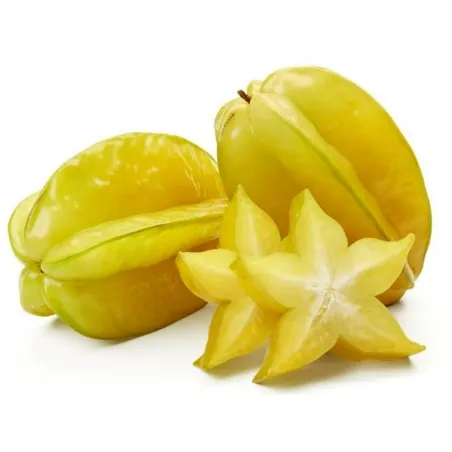
Fructul are creste distinctive care se întind pe laterale (de obicei 5-6). Când este tăiată în secțiune transversală, seamănă cu o stea, de unde și numele fructul carambolei . Întregul fruct este comestibil, de obicei crud, și poate fi gătit sau transformat în... sosuri, conserve, garnitură și sucuri.
Origini și distribuție
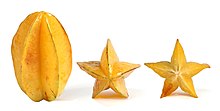
Carambole feliate cu 7, 6 și obișnuitele 5 puncte
Cel/Cea/Cei/Cele centrul diversității și gama originală de Averrhoa carambola este tropical Asia de Sud-Est, unde a fost cultivată de-a lungul secolelor. [1][3][4][5] A fost introdus la Subcontinentul indian şi Sri Lanka de Austronesian comercianți, împreună cu anticii austronezieni cultigeni ca nuci de cocos, langsat, noni și santol. [6] Acestea rămân comune în acele zone și în Asia de Est și pe tot parcursul Oceania și Insulele Pacificului. [1][2] Acestea sunt cultivate comercial în India, Asia de Sud-Est, sudul China, Taiwan și sudul Statele Unite. Sunt cultivate și în America Centrală, America de Sud, Sud-vestul Statelor Unite şi Florida, Caraibe și părți din Africa. [1][2] Sunt cultivate ca plante ornamentale. [1] Se consideră că carambola prezintă riscul de a deveni o specii invazive în multe regiuni ale lumii.
Descriere
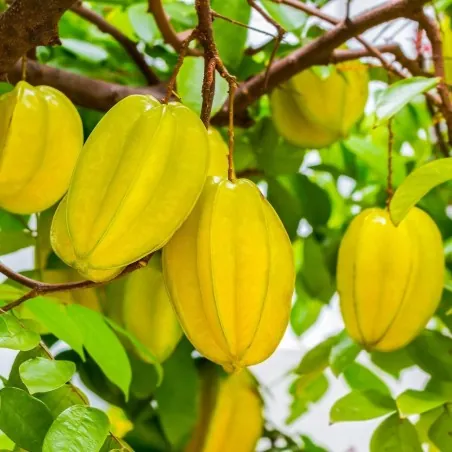
Carambola are un trunchi scurt cu multe ramuri, ajungând până la 9,1 m înălțime. [1] Frunzele sale caduce au o lungime de 15–25 cm, cu 5 până la 11 oval pliante de culoare verde mediu. [1] Florile sunt liliac de culoare, cu dungi violet și au o lățime de aproximativ 0,25 inci (6,4 mm).
Fructele spectaculoase au o formă subțire, ceroasă pericarp, piele galben-portocaliu și pulpă galbenă, crocantă, cu suc la coacere. [1] Fructul are o lungime de aproximativ 5 până la 15 centimetri și o formă ovală. De obicei, are cinci sau șase creste longitudinale proeminente. [1] În secțiune transversală, seamănă cu o stea. [1][2] Carnea este translucidă și de culoare galben deschis până la galben. Fiecare fruct poate avea 10 până la 12 semințe plate, de culoare maro deschis, cu o lățime de aproximativ 6 până la 13 mm (0,25 până la 0,5 in) și închise în pelicule gelatinoase. aril. Odată scoase din fruct, acestea își pierd viabilitatea în câteva zile. [7][8][9]
La fel ca cei strâns înrudiți bilimbi, există două tipuri principale de carambolă: tipul mic, acru (sau acrișor) și tipul mai mare, dulce. Soiurile acrișoare au o concentrație mai mare acid oxalic conținut de aromă mai mare decât tipul dulce. În ultimii ani au fost dezvoltate o serie de soiuri. Cele mai comune soiuri cultivate comercial includ tipurile dulci „Arkin” (Florida), „Yang Tao” (Taiwan), „Ma fueng” (Thailanda), „Maha” (Malaysia) și „Demak” (Indonezia) și tipurile acre „Golden Star”, „Newcomb”, „Star King” și „Thayer” (toate din Florida). Unele dintre soiurile acre, precum „Golden Star”, pot deveni dulci dacă sunt lăsate să se coacă.
Denumiri comune
Carambola este cunoscută sub multe denumiri în regiunile sale de cultivare, inclusiv balancing în Asia de Sud-Est, ma fen în China, kamaranga în India și carambolo în țările vorbitoare de limbă spaniolă, ca exemple. [1][2]
Culinar
Vedere verticală, din capăt și secțiune transversală a carambolei coapte
Carambola (fruct carambola), crudă
Valoare nutrițională per 100 g (3,5 oz)
Energie
128 kJ (31 kcal)
Carbohidrați
6,73 grame
Zaharuri
3,98 grame
Fibre alimentare
2,8 g
Grăsime
0,33 g
Proteină
1,04 g
Vitamine
Cantitate%VZ†
Echivalentul vitaminei A
luteină zeaxantină
66 μg
Tiamină ( B1 )
1%
0,014 mg
Riboflavină ( B2 )
1%
0,016 mg
Niacină ( B3 )
2%
0,367 mg
Acid pantotenic ( B5 )
8%
0,391 mg
Vitamina B6
1%
0,017 mg
Folat ( B9 )
3%
12 μg
Colină
2%
7,6 mg
Vitamina C
41%
34,4 mg
Vitamina E
1%
0,15 mg
Minerale
Cantitate%VZ†
Calciu
0%
3 mg
Fier
1%
0,08 mg
Magneziu
3%
10 mg
Mangan
2%
0,037 mg
Fosfor
2%
12 mg
Potasiu
3%
133 mg
Sodiu
0%
2 mg
Zinc
1%
0,12 mg
Alți constituenți
Cantitate
Apă
91,4 grame
Legătură către intrarea în baza de date USDA
Unități
μg = micrograme • mg = miligrame
UI = Unități internaționale
† Procentajele sunt aproximative folosind Recomandări din SUA pentru adulți. Sursă: Baza de date cu nutrienți USDA
Întregul fruct este comestibil, inclusiv coaja ușor ceroasă. Pulpa este crocantă, fermă și extrem de suculentă. [2] Nu conține fibre și are o textură similară ca consistență cu cea a struguri. Carambolele se consumă cel mai bine la scurt timp după coacere, când sunt galbene cu o nuanță deschisă de verde sau imediat după ce au dispărut toate urmele de verde. De asemenea, vor avea creste maronii la margini și se vor simți ferme. Fructele culese cât sunt încă ușor verzi se vor îngălbeni la depozitare la temperatura camerei, dar nu vor crește conținutul de zahăr. Carambolele prea coapte vor fi galbene cu pete maronii și pot deveni mai fade ca gust și mai moi ca consistență.
Carambolele dulci coapte sunt dulci fără a fi copleșitoare, deoarece rareori au un conținut de zahăr mai mare de 4%. Au o notă acrișoară și acrișoară și un miros de acid oxalic. Gustul este greu de egalat, dar a fost comparat cu un amestec de măr, pară, struguri și familia citricelor fructe. Carambolele necoapte sunt mai ferme și mai acre și au gust de mere verzi.
Carambolele coapte pot fi folosite și în gătit. În Asia de Sud-Est, acestea sunt de obicei fierte înăbușit în cuișoare și zahăr, uneori cu mere. În China, acestea sunt gătite cu pește. În Australia, acestea pot fi gătite ca legume, murate sau făcute în gemuri. În Jamaica uneori sunt uscate.
Carambolele necoapte și acre pot fi amestecate cu alte condimente tocate pentru a prepara relish-uri în Australia. [1] În Filipine, carambolele necoapte se mănâncă înmuiate în sare gemă. În Thailanda, acestea sunt gătite împreună cu creveți. [1]
Sucul de carambola este folosit și în băuturile cu gheață, în special în sucul soiurilor acre. În Filipine, acestea pot fi folosite ca și condimente. În India, sucul este îmbuteliat pentru băut.
Nutriţie
Carambola crudă este 91% apă, 7% carbohidrați, 1% proteine și are o valoare neglijabilă grăsime (tabel). O cantitate de referință de 100 de grame de fructe crude oferă 31 calorii și un conținut bogat de vitamina C (41% din Valoare zilnică), fără alte micronutrienți în conținut semnificativ (tabel).
Riscuri pentru sănătate
Carambolele conțin caramboxină [13] şi acid oxalic. [1][14] Ambele substanțe sunt dăunătoare persoanelor care suferă de insuficiență renală, pietre la rinichi sau cele de sub dializă renală tratament. [14] Consumul de către persoanele cu insuficiență renală poate produce sughiț, vărsături, greață, confuzie mentală și uneori moarte. [15][16][17] Caramboxina este o neurotoxină care este structural similar cu fenilalanină și este o glutamatergic agonist. [13]
Interacțiuni medicamentoase
Ca și grepfrutul, carambola este considerată a fi un inhibitor puternic a șapte citocrom P450 izoforme. [18][19] Aceste enzime sunt importante în eliminare la prima trecere a multor medicamente și, prin urmare, consumul de carambolă sau a sucului acesteia în combinație cu anumite medicamente eliberate pe bază de rețetă poate crește semnificativ doza eficientă a acestora în organism.
Cultivare
Carambola indiană necoaptă
Fructe de carambola coapte cu condimente indiene
Carambola este un fruct tropical și subtropical care poate fi cultivat la altitudini de până la 1.200 de metri. Preferă expunerea la soare, dar necesită suficientă umiditate și precipitații anuale de cel puțin 1.800 mm. [1][2] Nu are o preferință specifică pentru tipul de sol, dar va prospera în lut și necesită un drenaj bun. [1] Irigarea moderată susține creșterea sa în timpul sezoanelor secetoase. [1] Ploile abundente pot inhiba producția de fructe. [1]
Copacii de carambola sunt plantați la cel puțin 6 m unul de celălalt și sunt de obicei fertilizați de trei ori pe an. Copacul crește rapid și produce de obicei fructe la vârsta de patru sau cinci ani. Cantitatea mare de ploaie din timpul primăverii reduce de fapt cantitatea de fructe, dar, în condiții ideale, carambola poate produce între 90 și 180 de kilograme de fructe pe an. Copacul de carambola înflorește pe tot parcursul anului, cu principalele sezoane de fructificare din aprilie până în iunie și din octombrie până în decembrie în Malaezia, [20]. de exemplu, dar fructificarea are loc și în alte momente în alte localități, cum ar fi sudul Floridei. [1][8]
Creșterea și răspunsurile frunzelor la carambola „Arkin” ( Averrhoa carambola) cultivată în containere Copacii L.) la expunere pe termen lung la 25%, 50% sau 100% lumină solară au arătat că umbrirea a crescut rahis lungimea și suprafața foițelor, a redus grosimea foițelor și a produs o orientare mai orizontală a ramurilor. [21]
Dăunătorii majori sunt muște de fructe carambola, molii de fructe, furnici și păsări. [1][7][20] Culturile sunt, de asemenea, susceptibile la îngheț. [7]
Printre cei mai importanți producători de carambola de pe piața mondială se numără Australia, Guyana, India, Israel, Malaezia, Filipine, Taiwan și Statele Unite. [8] Malaezia este lider mondial în producția de carambola ca volum și livrează produsul pe scară largă în Asia și Europa. [20] Din cauza îngrijorărilor legate de dăunători și agenți patogeni, însă, carambola întreagă nu poate fi încă importată în SUA din Malaezia în conformitate cu reglementările actuale. Departamentul Agriculturii al Statelor Unite reglementări. În Statele Unite, carambolele sunt cultivate în zone tropicale și semitropicale, inclusiv Texas, Carolina de Sud, Louisiana, California, Virginia, Florida și Hawaii. [1][22]
În Statele Unite, cultivarea comercială și acceptarea largă a fructului de către consumatori datează abia din anii 1970, datorită... Morris Arkin, o curte din spate horticultor, în Coral Gables, Florida. Soiul „Arkin” reprezenta 98% din suprafața cultivată în sudul Floridei la începutul secolului al XXI-lea. [23]
Alte utilizări
Copacii sunt cultivați și ca plante ornamentale pentru fructele lor abundente, viu colorate și cu forme neobișnuite, precum și pentru frunzele lor atractive de un verde închis și florile lor de culoare lavandă până la roz. [8]
Ca și bilimbi, sucul tipurilor mai acide poate fi folosit pentru curățare ruginit sau pătat metal (în special alamă), precum și pentru a înălbi petele de rugină de pe țesătură. Pot fi folosite și ca mordant în vopsire.
Aprecierea ta pentru recenzie nu a putut fi trimisa
Reclama un comentariu
Sigur doresti sa raportezi acest comentariu?
Raport trimis
Comentariul tau a fost inregistrat si va fi examinat de un moderator.
Reclamatia tau nu a putut fi trimisa
Scrie-ti recenzia
Recenzia a fost trimisa
Comentariul dumeavoastra a fost inregistrat si va fi vizibil de indata ce va fi aprobat de un moderator.
Recenzia ta nu a putut fi trimisa
🌍 Livrare în toată lumea din UE
Expediem în toată lumea din Uniunea Europeană prin poștă aeriană recomandată, cu semnătură obligatorie la livrare.
📦 Urmărirea comenzii dumneavoastră
Pentru a găsi numărul de urmărire, conectați-vă la contul dumneavoastră și accesați: Istoric comenzi > Detalii. Numărul de urmărire se află direct în detaliile comenzii.
Veți primi notificări prin e-mail pentru fiecare etapă a comenzii dumneavoastră.
Dacă nu vedeți aceste mesaje, vă rugăm să verificați folderul Spam/Junk sau să contactați furnizorul dumneavoastră de e-mail. Alternativ, căutați online cum să deblocați e-mailurile de la expeditor.
SERVICIUL NOSTRU DE E-MAIL FUNCȚIONEAZĂ — Dacă nu primiți e-mailuri, este probabil o problemă cu furnizorul dumneavoastră de e-mail sau cu setările dumneavoastră.
📧 Cum să vă asigurați că e-mailurile de la magazinul nostru online ajung întotdeauna în Inbox
Pentru a preveni marcarea e-mailurilor noastre ca spam, adăugați adresa noastră de e-mail în contactele dumneavoastră:
Deschideți Gmail (sau orice alt furnizor) și găsiți un e-mail de la noi (xxxxxxxxxxxx@xxx.com).
Treceți mouse-ul peste numele sau adresa de e-mail a expeditorului.
Faceți clic pe pictograma "Adaugă în contacte" (pictograma cu persoana mică).
Nu vă putem ajuta dacă setările dumneavoastră nu sunt așa. Contactați furnizorul de e-mail pentru asistență.
Alternativ, creați un filtru în Gmail:
Deschideți Gmail și accesați Setări > Vezi toate setările.
Mergeți la fila Filtre și adrese blocate.
Faceți clic pe Creați un filtru nou și introduceți adresa noastră de e-mail.
Bifați Nu se trimite niciodată în Spam și faceți clic pe Creați filtru.
📍 Urmăriți-vă pachetul
Numărul de urmărire se află în detaliile comenzii dumneavoastră. Vă puteți urmări comanda prin următoarele platforme:
Posta.hr (pentru numere de urmărire de tip RGxxxxxxHR)
⚠️ Notificări importante
Plata la livrare (ramburs) NU este disponibilă.
Când comandați, furnizați întotdeauna un număr de telefon mobil valid cu prefixul țării (de ex. +40 712 345 678).
NU comandați la căsuțe poștale (P.O. Boxes) sau dacă nu puteți fi acasă pentru a semna pentru pachet. Pachetele nu pot fi lăsate la vecini.
Dacă un pachet trimis la o căsuță poștală este pierdut sau nelivrat, nu se va acorda nicio rambursare.
⚖️ Responsabilitatea clientului pentru conformitatea legală
Clientul este responsabil să se asigure că produsul este legal pentru import în țara sa, inclusiv respectarea tuturor reglementărilor de import, obținerea permiselor necesare și plata taxelor vamale aplicabile, a impozitelor și a altor taxe. Vă rugăm să verificați legile locale înainte de a comanda.
🔄 Pachete pierdute, returnate și reexpediate
Clienți din Brazilia și Mexic: Nu putem rambursa pachetele pierdute sau distruse de vamă.
Dacă pachetul dumneavoastră este returnat, vom rambursa doar costul produsului — costurile de transport sunt nerambursabile.
Taxa poștală de returnare (2 €) și orice costuri de reexpediere trebuie acoperite de client.
🚚 Livrarea transportului
Expedierile recomandate necesită semnătură.
Dacă urmărirea arată că pachetul este încă la oficiul poștal de origine, acesta este în tranzit — contactați oficiul poștal local pentru actualizări.
Din păcate, nici noi, nici oficiul poștal prin care a fost trimisă comanda dumneavoastră nu vă putem ajuta cu întrebarea unde se află exact comanda dumneavoastră. Când vedeți că pachetul este în țara dumneavoastră, TREBUIE să contactați oficiul poștal cu numărul de urmărire.
⏱️ Opțiuni de livrare și timp estimat
Opțiune de livrare
Timp de procesare
Note
Priority Delivery
Se expediază în 1–7 zile lucrătoare
Prioritizează procesarea comenzii; posibile întârzieri în timpul sărbătorilor (3–10 zile)
Secured Delivery
Se expediază în 1–7 zile lucrătoare
Disponibil pentru comenzi de până la 150 €; rambursare în caz de pierdere
Standard Delivery
Se expediază în 7–10 zile lucrătoare
Mai economic; posibile întârzieri în timpul sărbătorilor (7–14 zile)
Timp estimat de livrare:
În interiorul UE: 3–20 zile
În restul lumii: 5–30 zile
Notă: Timpul de livrare depinde de locația dumneavoastră și de sistemul poștal local. COVID-19 sau perioadele de sărbători pot cauza întârzieri suplimentare.
💰 Costuri de livrare
Taxele de transport și manipulare sunt calculate automat la finalizarea comenzii pe baza greutății coletului și a destinației.
⏰ Programul de procesare a comenzilor
Nu procesăm și nu expediem comenzi sâmbăta sau duminica.
💳 Opțiuni de plată
Dorim să vă informăm despre o modificare importantă privind taxele de plată. Din păcate, din cauza comisioanelor de tranzacție excepțional de mari impuse de PayPal, suntem forțați să aplicăm o suprataxă pentru plățile efectuate prin serviciul lor.
Cu toate acestea, avem o soluție pentru dumneavoastră! Puteți evita aceste taxe astronomice alegând una dintre metodele noastre alternative de plată cu COMISION ZERO:
✅ Plată cu cardul de credit/debit – comision 0%
✅ Transfer bancar – comision 0%
Transfer bancar (SEPA / IBAN / SWIFT-BIC): Includeți referința comenzii dumneavoastră în descrierea plății. Comenzile fără plată în termen de 4 zile vor fi anulate automat.
PayPal: Plățile sunt acceptate numai în euro. Vă rugăm să selectați euro în timpul procesului de plată.
Plata cu cardul: Acceptăm Visa, MasterCard, American Express, CB, Diners Club, Discover, China UnionPay, JCB și Discover.
⚠️ Comisioane de tranzacție
Clienții sunt responsabili pentru orice comisioane bancare sau taxe de tranzacție PayPal.
📝 Note finale
Înainte de a plasa comanda, verificați întotdeauna site-ul nostru pentru anunțuri speciale, programe de sărbători sau condiții specifice de livrare.