Common Sorrel Seeds (Rumex acetosa)

SKU VE-115-(20-S) Kategoria Strona główna
Cena: 2,00 €

Common Sorrel Seeds (Rumex acetosa)

Price for a Package of 20 seeds.

Of the two kinds of Sorrel cultivated for use as vegetables or salads, Rumex acetosa, the Garden Sorrel, is an indigenous English plant, common, too in the greater part of Europe, in almost all soils and situations. It grows abundantly in meadows, a slender plant about

Obecnie brak na stanie
Nasiona w paczce:
Share on

Common Sorrel Seeds (Rumex acetosa)

Price for a Package of 20 seeds.

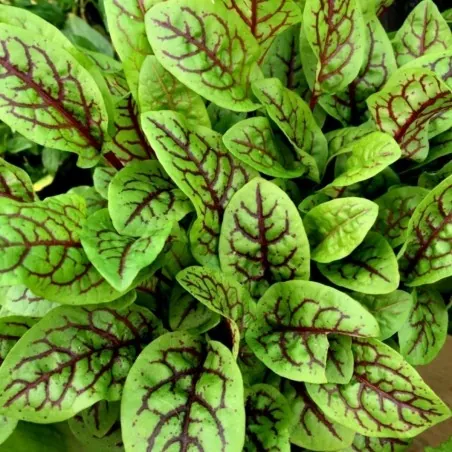
Of the two kinds of Sorrel cultivated for use as vegetables or salads, Rumex acetosa, the Garden Sorrel, is an indigenous English plant, common, too in the greater part of Europe, in almost all soils and situations. It grows abundantly in meadows, a slender plant about 2 feet high, with juicy stems and leaves, and whorled spikes of reddish-green flowers, which give colour, during the months of June and July, to the grassy spots in which it grows.

It is generally found in pastures where the soil contains iron.

The leaves are oblong, the lower ones 3 to 6 inches in length, slightly arrow-shaped at the base, with very long petioles. The upper ones are sessile. They frequently become a beautiful crimson.

As the flowers increase in size, they become a purplish colour. The stamens and pistils are on different plants. The seeds, when ripe, are brown and shining. The perennial roots run deeply into the ground.

Sorrel is well known for the grateful acidity of its herbage, which is most marked when the plant is in full season, though in early spring it is almost tasteless.

The plant is also called 'Cuckoo's-meate' from an old belief that the bird cleared its voice by its agency. In Scotland it is 'gowkemeat.'

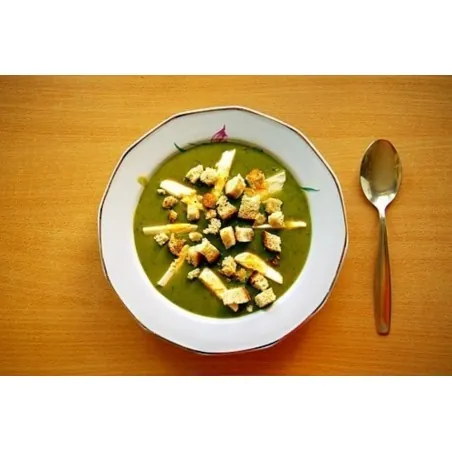
Domestic animals are fond of this and other species of Sorrel. The leaves contain a considerable quantity of binoxalate of potash, which gives them their acid flavour and medicinal and dietetic properties. They have been employed from the most distant time as a salad. In France, Sorrel is put into ragouts, fricassées and soups, forming the chief constituent of the favourite Soupe aux herbes.

In the time of Henry VIII, this plant was held in great repute in England, for table use, but after the introduction of French Sorrel, with large succulent leaves, it gradually lost its position as a salad and a potherb, and for many years it has ceased to be cultivated.

John Evelyn thought that Sorrel imparted 'so grateful a quickness to the salad that it should never be left out.' He wrote in 1720:

    'Sorrel sharpens the appetite, assuages heat, cools the liver and strengthens the heart; is an antiscorbutic, resisting putrefaction and in the making of sallets imparts a grateful quickness to the rest as supplying the want of oranges and lemons. Together with salt, it gives both the name and the relish to sallets from the sapidity, which renders not plants and herbs only, but men themselves pleasant and agreeable.

Culpepper tells us:

    'Sorrel is prevalent in all hot diseases, to cool any inflammation and heat of blood in agues pestilential or choleric, or sickness or fainting, arising from heat, and to refresh the overspent spirits with the violence of furious or fiery fits of agues: to quench thirst, and procure an appetite in fainting or decaying stomachs: For it resists the putrefaction of the blood, kills worms, and is a cordial to the heart, which the seed doth more effectually, being more drying and binding.... Both roots and seeds, as well as the herb, are held powerful to resist the poison of the scorpion. . . . The leaves, wrapt in a colewort leaf and roasted in the embers, and applied to a large imposthume, botch boil, or plague-sore, doth both ripen and break it. The distilled water of the herb is of much good use for all the purposes aforesaid.'

In this country, the leaves are now rarely eaten, unless by children and rustics, to allay thirst, though in Ireland they are still largely consumed by the peasantry with fish and milk. Our country people used to beat the herb to a mash and take it mixed with vinegar and sugar, as a green sauce with cold meat, hence one of its popular names: Greensauce.

Because of their acidity, the leaves, treated as spinach, make a capital dressing with stewed lamb, veal or sweetbread. A few of the leaves may also with advantage be added to turnips and spinach. When boiled by itself, without water, it serves as an excellent accompaniment to roast goose or pork, instead of apple sauce.

'To Stew Sorrel for Fricandean and Roast Meat.

'Wash the Sorrel, and put it into a silver vessel, or stone jar, with no more water than hangs to the leaves. Simmer it as slow as you can, and when done enough, put a bit of butter and beat it well.'

Unless cooked carefully, Sorrel is likely to disagree with gouty persons, from the acid oxalate of potash it contains, but this may be got rid of if it is plunged for two or three minutes in boiling water, before cooking, this first water being then thrown away.

In Scandinavia, Sorrel has sometimes been used in time of scarcity to put into bread. The leaves contain a little starch and mucilage, and the root is rather farinaceous.

The juice of the leaves will curdle milk as well as rennet, and the Laplanders use it as a substitute for the latter.

The dried root affords a beautiful red colour when boiled and used for making barley water look like red wine, when in France they wish to avoid giving anything of a vinous nature to the sick.

The salt of Sorrel, binoxalate of potash, is much used for bleaching straw and removing ink stains from linen, and is often sold in the shops under the name of 'essential salt of lemons.'

Cultivation

Sorrel of two kinds is cultivated, R. acetosa, or Garden Sorrel, and R. scrutatus, or French Sorrel. Garden Sorrel likes a damp situation, French Sorrel a dry soil and an open situation.

The finest plants are propagated from seed, sown in March, though it may be sown in any of the spring months. Sow moderately thin, in drills 6 inches apart, and thin out when the plants are 1 or 2 inches high. When the stalks run up in July, they should be cut back. The roots will then put out new leaves, which will be tender and better for kitchen use than the older leaves, so that by cutting down the shoots of some plants at different times, there will always be a supply of young leaves.

Both varieties are generally increased by dividing the roots, which may be done either in spring or autumn, the roots being planted about a foot apart each way, and watered.

Parts Used Medicinally

The leaves both dried and fresh.

Constituents

The sour taste of Sorrel is due to the acid oxalate of potash it contains; tartaric and tannic acids are also present.

Medicinal Action and Uses

The medicinal action of Sorrel is refrigerant and diuretic, and it is employed as a cooling drink in all febrile disorders.

It is corrective of scrofulous deposits: for cutaneous tumours, a preparation compounded of burnt alum, citric acid, and juice of Sorrel, applied as a paint, has been employed with success.

Sorrel is especially beneficial in scurvy.

Both the root and the seed were formerly esteemed for their astringent properties, and were employed to stem haemorrhage.

A syrup made with the juice of Fumitory and Sorrel had the reputation of curing the itch, and the juice, with a little vinegar, was considered a cure for ringworm, and recommended as a gargle for sore throat.

A decoction of the flowers, made with wine, was said to cure jaundice and ulcerated bowels, the root in decoction or powder being also employed for jaundice, and gravel and stone in the kidneys.

Gerard enumerated eight different kinds of Sorrel - the Garden, bunched or knobbed, Sheep, Romane, Curled, Barren and Great Broad-leaved Sorrel, and said of them:

    'The Sorrells are moderately cold and dry. Sorrell doth undoubtedly cool and mightily dry, but because it is sour, it likewise cutteth tough humours. The juice thereof in summer time is a profitable sauce in many meats and pleasant to the taste. It cooleth a hot stomach. The leaves are with good success added to decoctions, and are used in agues. The leaves are taken in good quantity, stamped and stained into some ale and cooleth the body. The leaves are eaten in a tart spinach. The seed of Sorrell drunk in wine stoppeth the bloody flow.'

Kategoria Strona główna Indeks VE-115-(20-S)
Common Sorrel Seeds (Rumex acetosa)
Komentarze (0)
Na razie nie dodano żadnej recenzji.

🌍 Wysyłka na cały świat z UE

Wysyłamy na cały świat z Unii Europejskiej za pośrednictwem zarejestrowanej poczty lotniczej z wymaganym podpisem przy odbiorze.

📦 Śledzenie zamówienia

Aby znaleźć swój numer śledzenia, zaloguj się na swoje konto i przejdź do: Historia zamówień > Szczegóły. Twój numer śledzenia znajduje się bezpośrednio w szczegółach zamówienia.

Będziesz otrzymywać powiadomienia e-mail na każdym etapie zamówienia.

Jeśli nie widzisz tych wiadomości, sprawdź folder Spam/Wiadomości śmieci lub skontaktuj się ze swoim dostawcą e-mail. Alternatywnie poszukaj w Internecie informacji, jak odblokować wiadomości e-mail od nadawcy.

NASZ SERWIS E-MAIL DZIAŁA — Jeśli nie otrzymujesz wiadomości e-mail, prawdopodobnie jest to problem z Twoim dostawcą poczty lub ustawieniami.

📧 Jak zapewnić, aby e-maile z naszego sklepu internetowego zawsze trafiały do Twojej skrzynki odbiorczej

Aby zapobiec oznaczaniu naszych wiadomości jako spam, dodaj nasz adres e-mail do swoich kontaktów:

  1. Otwórz Gmail (lub innego dostawcę) i znajdź e-mail od nas (xxxxxxxxxxxx@xxx.com).

  2. Najedź kursorem na nazwę lub adres e-mail nadawcy.

  3. Kliknij ikonę „Dodaj do kontaktów” (ikonka małej osoby).

Nie możemy Ci pomóc, jeśli Twoje ustawienia nie są skonfigurowane w ten sposób. Skontaktuj się ze swoim dostawcą e-mail, aby uzyskać pomoc.

Alternatywnie utwórz filtr w Gmailu:

  1. Otwórz Gmail i przejdź do Ustawienia > Zobacz wszystkie ustawienia.

  2. Przejdź do karty Filtry i zablokowane adresy.

  3. Kliknij Utwórz nowy filtr i wpisz nasz adres e-mail.

  4. Zaznacz Nigdy nie wysyłaj do spamu i kliknij Utwórz filtr.

📍 Śledź swoją paczkę

Twój numer śledzenia znajduje się w szczegółach zamówienia. Możesz śledzić swoje zamówienie za pośrednictwem następujących platform:

⚠️ Ważne uwagi

  • Płatność za pobraniem NIE jest dostępna.

  • Podczas składania zamówienia zawsze podawaj ważny numer telefonu komórkowego z numerem kierunkowym kraju (np. +48 601 234 567).

  • NIE zamawiaj do skrytek pocztowych (P.O. Boxes) ani jeśli nie możesz być w domu, aby podpisać odbiór paczki. Paczek nie można zostawiać u sąsiadów.

  • Jeśli paczka wysłana do skrytki pocztowej zaginie lub nie zostanie doręczona, zwrot pieniędzy nie zostanie przyznany.

⚖️ Odpowiedzialność klienta za zgodność z prawem

Klient jest odpowiedzialny za upewnienie się, że produkt może być legalnie importowany do jego kraju, w tym za przestrzeganie wszystkich przepisów importowych, uzyskanie niezbędnych zezwoleń oraz opłacenie obowiązujących ceł, podatków i innych opłat. Przed złożeniem zamówienia sprawdź lokalne przepisy.

🔄 Paczki zagubione, zwrócone i ponowna wysyłka

  • Klienci z Brazylii i Meksyku: Nie możemy zwrócić pieniędzy za paczki zagubione lub zniszczone przez urząd celny.

  • Jeśli Twoja paczka zostanie zwrócona, zwrócimy tylko koszt produktu — koszty wysyłki nie podlegają zwrotowi.

  • Opłatę za zwrot (2 €) oraz wszelkie koszty ponownej wysyłki musi pokryć klient.

🚚 Dostawa przesyłki

  • Przesyłki polecone wymagają podpisu.

  • Jeśli śledzenie pokazuje, że paczka nadal znajduje się w placówce początkowej, oznacza to, że jest w drodze — skontaktuj się ze swoim lokalnym urzędem pocztowym, aby uzyskać aktualne informacje.

  • Niestety, ani my, ani poczta, za pośrednictwem której wysłano zamówienie, nie możemy pomóc w ustaleniu, gdzie dokładnie znajduje się paczka. Gdy zobaczysz, że paczka jest w Twoim kraju, MUSISZ skontaktować się ze swoją pocztą, podając numer śledzenia.

⏱️ Opcje dostawy i szacowany czas

Opcja dostawyCzas przetwarzaniaUwagi
Priority DeliveryWysyłka w ciągu 1–7 dni roboczychPriorytetowe przetwarzanie; możliwe opóźnienia w okresie świątecznym (3–10 dni)
Secured DeliveryWysyłka w ciągu 1–7 dni roboczychDostępne dla zamówień do 150 €; zwrot pieniędzy w przypadku zagubienia
Standard DeliveryWysyłka w ciągu 7–10 dni roboczychBardziej ekonomiczna; możliwe opóźnienia w okresie świątecznym (7–14 dni)

Szacowany czas dostawy:

  • Wewnątrz UE: 3–20 dni

  • Reszta świata: 5–30 dni

  • Uwaga: Czas dostawy zależy od Twojej lokalizacji i lokalnego systemu pocztowego. COVID-19 lub sezony świąteczne mogą powodować dodatkowe opóźnienia.

💰 Koszty wysyłki

Koszty wysyłki i obsługi są obliczane automatycznie podczas składania zamówienia na podstawie wagi paczki i miejsca przeznaczenia.

Godziny przetwarzania zamówień

Nie przetwarzamy ani nie wysyłamy zamówień w soboty i niedziele.

💳 Opcje płatności

Chcielibyśmy poinformować o ważnej zmianie dotyczącej opłat za płatności. Niestety, ze względu na wyjątkowo wysokie opłaty transakcyjne nakładane przez PayPal, jesteśmy zmuszeni doliczać dopłatę do płatności dokonywanych za pośrednictwem ich serwisu.

Mamy jednak dla Ciebie rozwiązanie! Możesz uniknąć tych astronomicznych opłat, wybierając jedną z naszych alternatywnych metod płatności z PROWIZJĄ 0%:

Płatność kartą kredytową/debetową – 0% prowizji

Przelew bankowy – 0% prowizji

  • Przelew bankowy (SEPA / IBAN / SWIFT-BIC): W opisie płatności podaj numer referencyjny zamówienia. Zamówienia nieopłacone w ciągu 4 dni zostaną automatycznie anulowane.

  • PayPal: Płatności są akceptowane wyłącznie w euro. Prosimy o wybranie euro podczas finalizacji zakupu.

  • Płatność kartą: Akceptujemy karty Visa, MasterCard, American Express, CB, Diners Club, Discover, China UnionPay, JCB i Discover.

⚠️ Opłaty transakcyjne

Klienci są odpowiedzialni za wszelkie bankowe lub transakcyjne opłaty PayPal.

📝 Uwagi końcowe

Przed złożeniem zamówienia zawsze sprawdzaj naszą stronę internetową pod kątem specjalnych ogłoszeń, harmonogramów świątecznych lub określonych warunków wysyłki.

Related Products