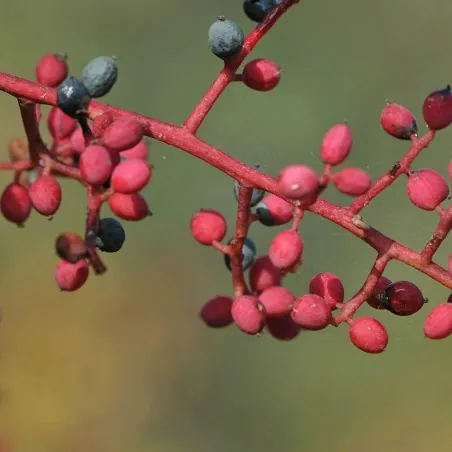
Terebinth - Turpentine Tree Seeds (Pistacia terebinthus)
Price for Package of 5 seeds.
Pistacia terebinthus, known commonly as terebinth and turpentine tree, is a species of Pistacia, native to the Canary Islands, and the Mediterranean region from the western regions of Morocco, and Portugal to Greece
Terebinth - Turpentine Tree Seeds (Pistacia terebinthus)
Price for Package of 5 seeds.
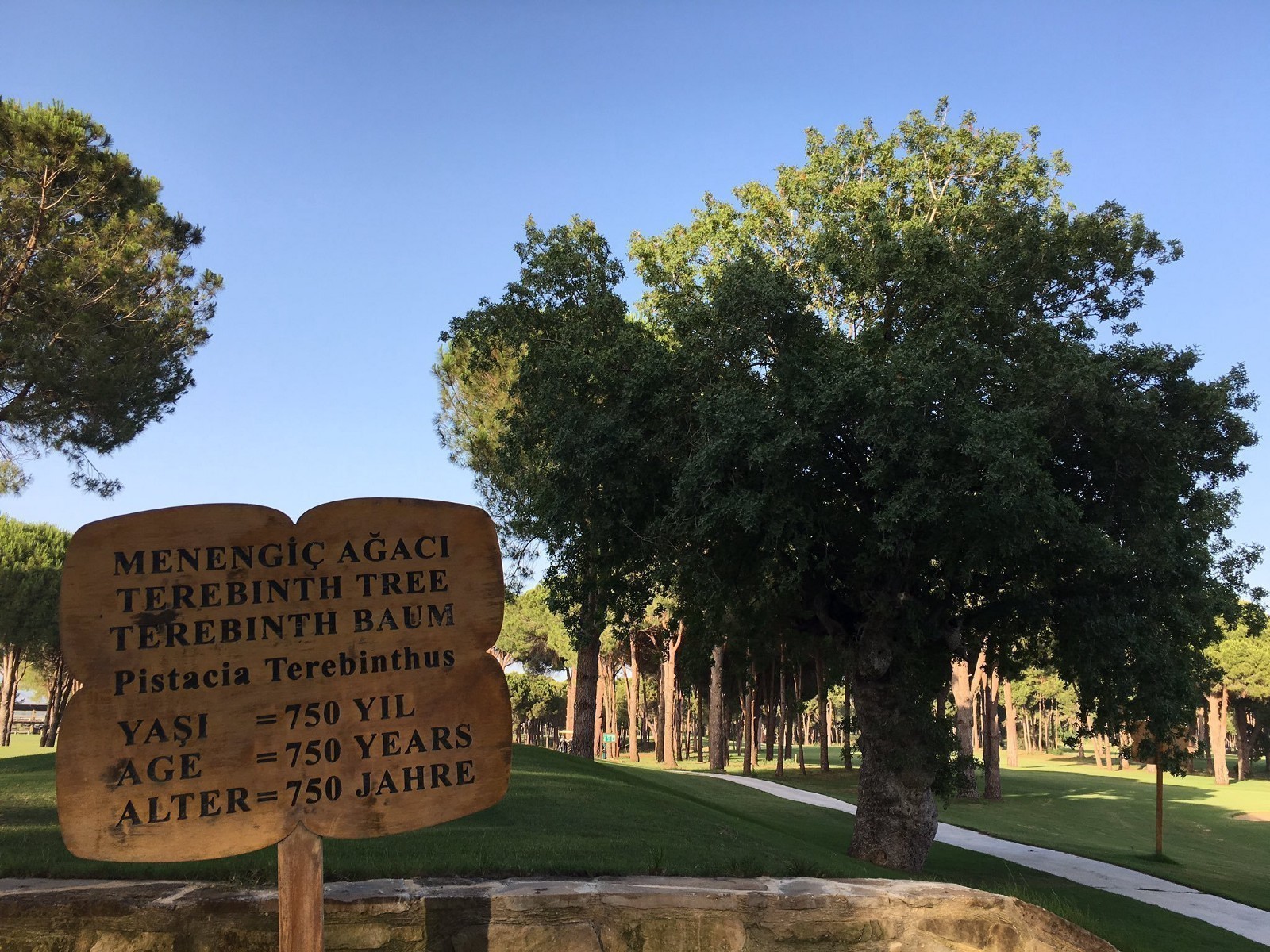
Pistacia terebinthus, known commonly as terebinth and turpentine tree, is a species of Pistacia, native to the Canary Islands, and the Mediterranean region from the western regions of Morocco, and Portugal to Greece, western and southeast Turkey. In the eastern shores of the Mediterranean sea – Syria, Lebanon and Israel – a similar species, Pistacia palaestina, fills the same ecological niche as this species and is also known as terebinth.
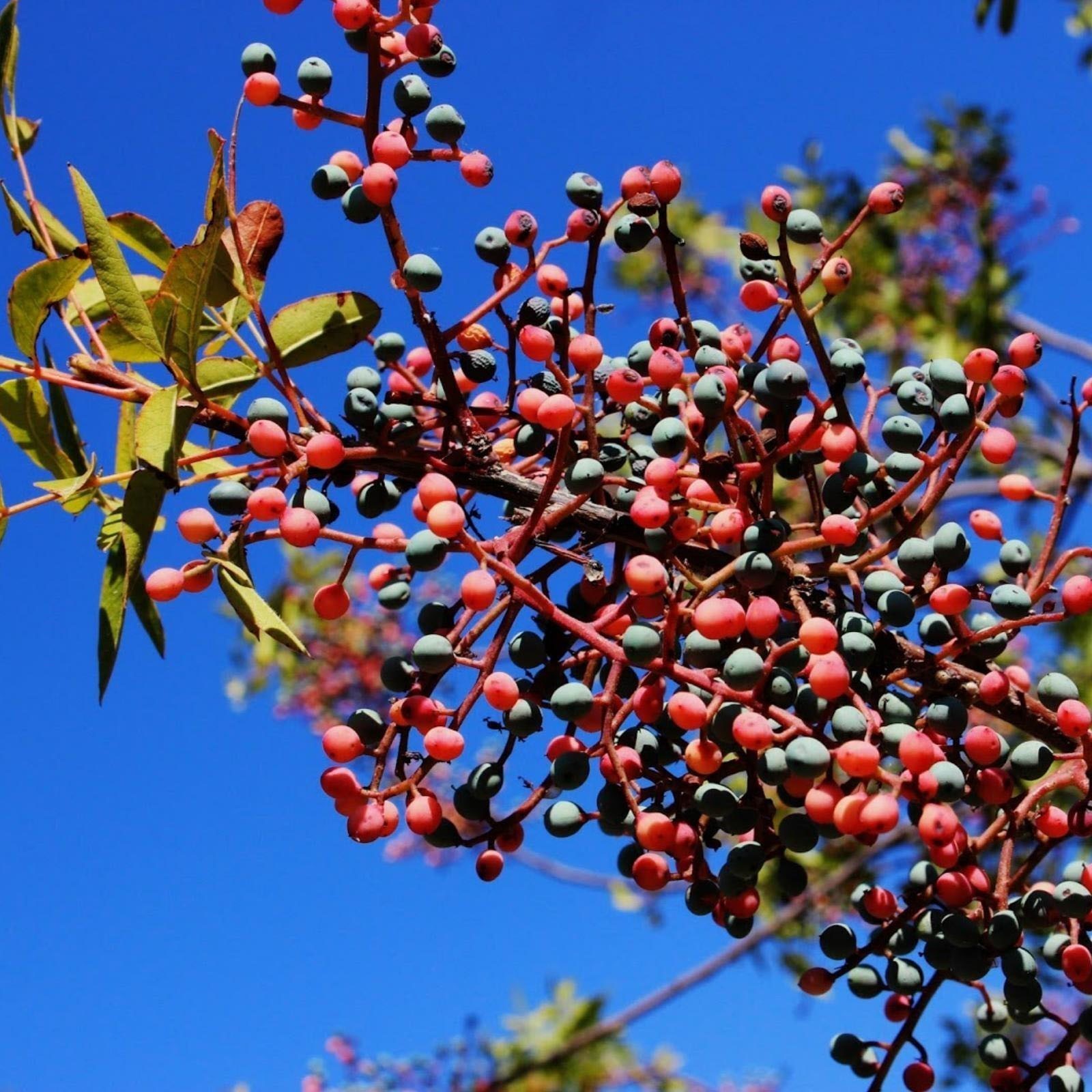
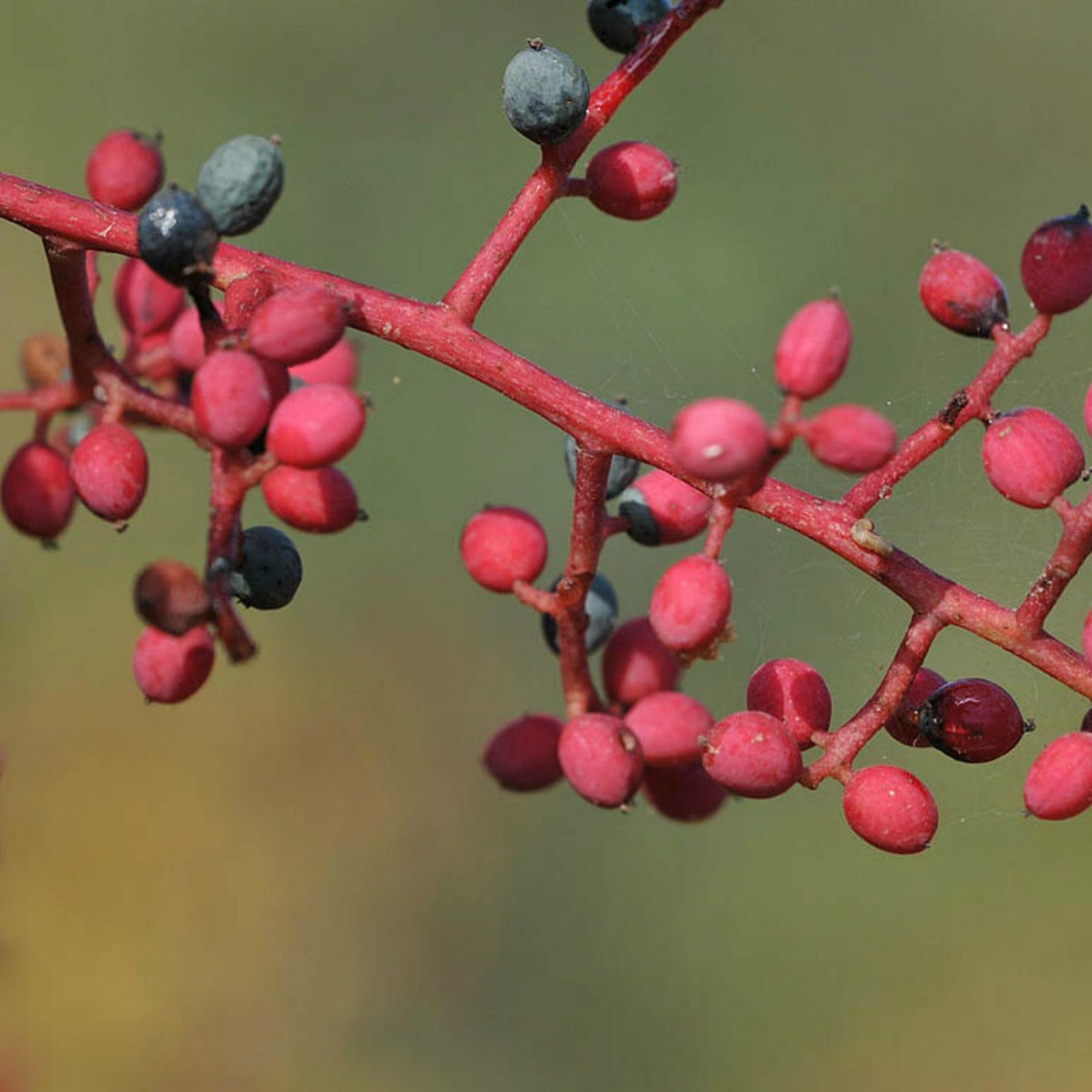
It is a species of flowering plant belonging to the family Anacardiaceae (the cashew family). It is a small deciduous tree or large shrub growing to 10 m tall. The leaves are compound, 10–20 cm long, odd pinnate with five to eleven opposite glossy oval leaflets, the leaflets 2–6 cm long and 1–3 cm broad. The flowers are reddish-purple, appearing with the new leaves in early spring. The fruit consists of small, globular drupes 5–7 mm long, red to black when ripe. All parts of the plant have a strong resinous smell.
It is a dioecious tree, i.e. exists as male and female specimens. For a viable population both genders must be present. The oblong leaf is bright green, leathery, with 10 cm long or more with 3-9 leaflets. Leaves alternate, leathery and compound paripinnate (no terminal leaflet) with 3 or 6 deep green leaflets. They are generally larger and rounder than the leaves of the mastic, reminiscent of the leaves of carob tree. The flowers range from purple to green, the fruit is the size of a pea and turns from red to brown, depending on the degree of maturation. The whole plant emits a strong smell: bitter, resinous or medicinal. In the vegetative period they develop "galls" in a goat's horn shaped (from which the plant gets the name cornicabra, the common name in Spanish), that occur on the leaves and leaflets which have been bitten by insects. The species propagates by seeds and shoots. Although marred by the presence of galls, is a very strong and resistant tree which survives in degraded areas where other species have been eliminated. Pistacia terebinthus is a plant related to Pistacia lentiscus, with which hybridizes frequently in contact zones. The cornicabra is more abundant in the mountains and inland and the mastic is usually found more frequently in areas where the Mediterranean influence of the sea moderates the climate. Mastic tree does not reach the size of the Pistacia terebinthus, but the hybrids are very difficult to distinguish. The mastic has winged stalks to its leaflets, i.e., they are flattened and side fins, whereas these stems in Cornicabra are simple. In the Eastern Mediterranean Coast, Syria, Lebanon and Israel, a similar species, Pistacia palaestina, fills the same ecological niche of this species and is also known as turpentine. On the west coast of the Mediterranean, Canary Islands and Middle East, Pistacia terebinthus can be confused with Pistacia atlantica.
Uses
It is used as a source for turpentine, possibly the earliest known source. The turpentine of the terebinth is now called Chian, Scio, or Cyprian turpentine.
The fruits are used in Cyprus for baking of a specialty village bread. In Crete, where the plant is called tsikoudia, it is used to flavor the local variety of pomace brandy, also called tsikoudia. In the Northern Sporades the shoots are used as a vegetable (called tsitsíravla).The plant is rich in tannin and resinous substances and was used for its aromatic and medicinal properties in classical Greece. A mild sweet scented gum can be produced from the bark, and galls often found on the plant are used for tanning leather. Recently an anti-inflammatory triterpene has been extracted from these galls. In Turkey, where it is known as menengiç or bıttım, a coffee-like beverage known as menengiç kahvesi is made from the roasted fruit and a soap is made from the oil. Terebinth resin was used as a wine preservative in ancient Israel and the ancient Near East.
Habitat
It prefers relatively moist areas, up to 600 m in height. Supports Mediterranean summer drought and frost more intense than mastic. The plant is common in the garrigue and maquis. Appears in deciduous and oak. It has a gray trunk very aromatic, may have multiple trunks or stems when grown as a shrub. Usually reached 5 m. in height, although in rare cases can reach 10 m. Pistacia terebinthus is one of the Anacardiaceae species present in Europe, it is a family of about 600 tropical species. Can be found in meso-and Thermo floors to 1,500 meters above sea level. Pistacia terebinthus is more moisture demanding than the mastic and more resistant to cold. Requires a sunny exposure and average soils, tolerating lime and some salt, often grows near the sea, deep ravines and near salt lakes and streams.
History
Historian of Mycenae John Chadwick believes that the terebinth is the plant called ki-ta-no in some of the Linear B tablets. He cites the work of a Spanish scholar, J.L. Melena, who had found "an ancient lexicon which showed that kritanos was another name for the turpentine tree, and that the Mycenaean spelling could represent a variant form of this word."
The word "terebinth" is used (at least in some translations) for a tree mentioned in the Hebrew Scriptures (or Old Testament), where the Hebrew word "elah" (plural "elim") is used. This probably refers to Pistacia palaestina which is common in the area. The Latin name is underlain by the Ancient Greek name τερέβινθος, which, in turn, is underlain by a pre-Greek Pelasgian word, marked by the characteristic consonant complex νθ.
Terebinth from Oricum is referred to in Virgil's Aeneid, Book 10, line 136, where Ascanius in battle is compared to "ivory skilfully inlaid in [...] Orician terebinth" ("inclusum[...] Oricia terebintho [...] ebur").
Terebinth is referred to by Robin Lane Fox in Alexander the Great: "When a Persian king took the throne, he attended Pasargadae, site of King Cyrus's tomb, and dressed in a rough leather uniform to eat a ritual meal of figs, sour milk and leaves of terebinth."
Czy jesteś pewien, że chcesz zgłosić ten komentarz?
Zgłoszenie wysłane
Twój komentarz został wysłany i będzie widoczny po zatwierdzeniu przez moderatora.
Twoje zgłoszenie nie może zostać wysłane
Napisz swoją opinię
Recenzja została wysłana
Twój komentarz został dodany i będzie widoczny jak tylko zatwierdzi go moderator.
Twoja recenzja nie może być wysłana
🌍 Wysyłka na cały świat z UE
Wysyłamy na cały świat z Unii Europejskiej za pośrednictwem zarejestrowanej poczty lotniczej z wymaganym podpisem przy odbiorze.
📦 Śledzenie zamówienia
Aby znaleźć swój numer śledzenia, zaloguj się na swoje konto i przejdź do: Historia zamówień > Szczegóły. Twój numer śledzenia znajduje się bezpośrednio w szczegółach zamówienia.
Będziesz otrzymywać powiadomienia e-mail na każdym etapie zamówienia.
Jeśli nie widzisz tych wiadomości, sprawdź folder Spam/Wiadomości śmieci lub skontaktuj się ze swoim dostawcą e-mail. Alternatywnie poszukaj w Internecie informacji, jak odblokować wiadomości e-mail od nadawcy.
NASZ SERWIS E-MAIL DZIAŁA — Jeśli nie otrzymujesz wiadomości e-mail, prawdopodobnie jest to problem z Twoim dostawcą poczty lub ustawieniami.
📧 Jak zapewnić, aby e-maile z naszego sklepu internetowego zawsze trafiały do Twojej skrzynki odbiorczej
Aby zapobiec oznaczaniu naszych wiadomości jako spam, dodaj nasz adres e-mail do swoich kontaktów:
Otwórz Gmail (lub innego dostawcę) i znajdź e-mail od nas (xxxxxxxxxxxx@xxx.com).
Najedź kursorem na nazwę lub adres e-mail nadawcy.
Kliknij ikonę „Dodaj do kontaktów” (ikonka małej osoby).
Nie możemy Ci pomóc, jeśli Twoje ustawienia nie są skonfigurowane w ten sposób. Skontaktuj się ze swoim dostawcą e-mail, aby uzyskać pomoc.
Alternatywnie utwórz filtr w Gmailu:
Otwórz Gmail i przejdź do Ustawienia > Zobacz wszystkie ustawienia.
Przejdź do karty Filtry i zablokowane adresy.
Kliknij Utwórz nowy filtr i wpisz nasz adres e-mail.
Zaznacz Nigdy nie wysyłaj do spamu i kliknij Utwórz filtr.
📍 Śledź swoją paczkę
Twój numer śledzenia znajduje się w szczegółach zamówienia. Możesz śledzić swoje zamówienie za pośrednictwem następujących platform:
Podczas składania zamówienia zawsze podawaj ważny numer telefonu komórkowego z numerem kierunkowym kraju (np. +48 601 234 567).
NIE zamawiaj do skrytek pocztowych (P.O. Boxes) ani jeśli nie możesz być w domu, aby podpisać odbiór paczki. Paczek nie można zostawiać u sąsiadów.
Jeśli paczka wysłana do skrytki pocztowej zaginie lub nie zostanie doręczona, zwrot pieniędzy nie zostanie przyznany.
⚖️ Odpowiedzialność klienta za zgodność z prawem
Klient jest odpowiedzialny za upewnienie się, że produkt może być legalnie importowany do jego kraju, w tym za przestrzeganie wszystkich przepisów importowych, uzyskanie niezbędnych zezwoleń oraz opłacenie obowiązujących ceł, podatków i innych opłat. Przed złożeniem zamówienia sprawdź lokalne przepisy.
🔄 Paczki zagubione, zwrócone i ponowna wysyłka
Klienci z Brazylii i Meksyku: Nie możemy zwrócić pieniędzy za paczki zagubione lub zniszczone przez urząd celny.
Jeśli Twoja paczka zostanie zwrócona, zwrócimy tylko koszt produktu — koszty wysyłki nie podlegają zwrotowi.
Opłatę za zwrot (2 €) oraz wszelkie koszty ponownej wysyłki musi pokryć klient.
🚚 Dostawa przesyłki
Przesyłki polecone wymagają podpisu.
Jeśli śledzenie pokazuje, że paczka nadal znajduje się w placówce początkowej, oznacza to, że jest w drodze — skontaktuj się ze swoim lokalnym urzędem pocztowym, aby uzyskać aktualne informacje.
Niestety, ani my, ani poczta, za pośrednictwem której wysłano zamówienie, nie możemy pomóc w ustaleniu, gdzie dokładnie znajduje się paczka. Gdy zobaczysz, że paczka jest w Twoim kraju, MUSISZ skontaktować się ze swoją pocztą, podając numer śledzenia.
⏱️ Opcje dostawy i szacowany czas
Opcja dostawy
Czas przetwarzania
Uwagi
Priority Delivery
Wysyłka w ciągu 1–7 dni roboczych
Priorytetowe przetwarzanie; możliwe opóźnienia w okresie świątecznym (3–10 dni)
Secured Delivery
Wysyłka w ciągu 1–7 dni roboczych
Dostępne dla zamówień do 150 €; zwrot pieniędzy w przypadku zagubienia
Standard Delivery
Wysyłka w ciągu 7–10 dni roboczych
Bardziej ekonomiczna; możliwe opóźnienia w okresie świątecznym (7–14 dni)
Szacowany czas dostawy:
Wewnątrz UE: 3–20 dni
Reszta świata: 5–30 dni
Uwaga: Czas dostawy zależy od Twojej lokalizacji i lokalnego systemu pocztowego. COVID-19 lub sezony świąteczne mogą powodować dodatkowe opóźnienia.
💰 Koszty wysyłki
Koszty wysyłki i obsługi są obliczane automatycznie podczas składania zamówienia na podstawie wagi paczki i miejsca przeznaczenia.
⏰ Godziny przetwarzania zamówień
Nie przetwarzamy ani nie wysyłamy zamówień w soboty i niedziele.
💳 Opcje płatności
Chcielibyśmy poinformować o ważnej zmianie dotyczącej opłat za płatności. Niestety, ze względu na wyjątkowo wysokie opłaty transakcyjne nakładane przez PayPal, jesteśmy zmuszeni doliczać dopłatę do płatności dokonywanych za pośrednictwem ich serwisu.
Mamy jednak dla Ciebie rozwiązanie! Możesz uniknąć tych astronomicznych opłat, wybierając jedną z naszych alternatywnych metod płatności z PROWIZJĄ 0%:
✅ Płatność kartą kredytową/debetową – 0% prowizji
✅ Przelew bankowy – 0% prowizji
Przelew bankowy (SEPA / IBAN / SWIFT-BIC): W opisie płatności podaj numer referencyjny zamówienia. Zamówienia nieopłacone w ciągu 4 dni zostaną automatycznie anulowane.
PayPal: Płatności są akceptowane wyłącznie w euro. Prosimy o wybranie euro podczas finalizacji zakupu.
Płatność kartą: Akceptujemy karty Visa, MasterCard, American Express, CB, Diners Club, Discover, China UnionPay, JCB i Discover.
⚠️ Opłaty transakcyjne
Klienci są odpowiedzialni za wszelkie bankowe lub transakcyjne opłaty PayPal.
📝 Uwagi końcowe
Przed złożeniem zamówienia zawsze sprawdzaj naszą stronę internetową pod kątem specjalnych ogłoszeń, harmonogramów świątecznych lub określonych warunków wysyłki.