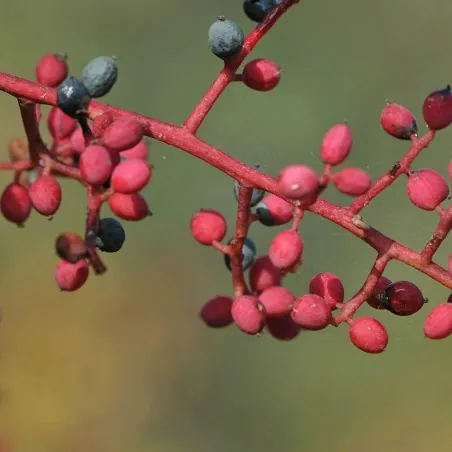
Terebinth - Turpentine Tree Seeds (Pistacia terebinthus)
Price for Package of 5 seeds.
Pistacia terebinthus, known commonly as terebinth and turpentine tree, is a species of Pistacia, native to the Canary Islands, and the Mediterranean region from the western regions of Morocco, and Portugal to Greece
Terebinth - Turpentine Tree Seeds (Pistacia terebinthus)
Price for Package of 5 seeds.
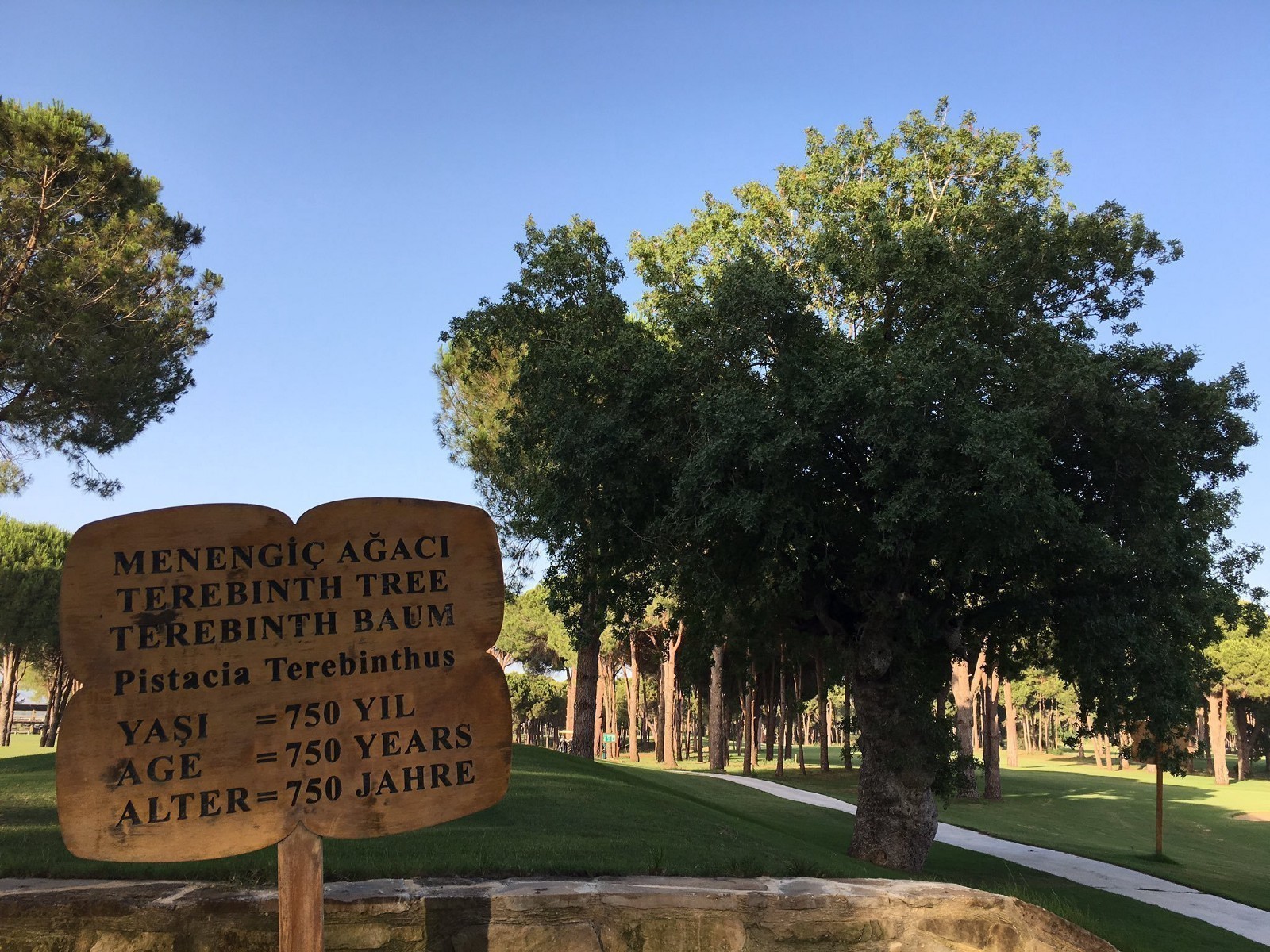
Pistacia terebinthus, known commonly as terebinth and turpentine tree, is a species of Pistacia, native to the Canary Islands, and the Mediterranean region from the western regions of Morocco, and Portugal to Greece, western and southeast Turkey. In the eastern shores of the Mediterranean sea – Syria, Lebanon and Israel – a similar species, Pistacia palaestina, fills the same ecological niche as this species and is also known as terebinth.
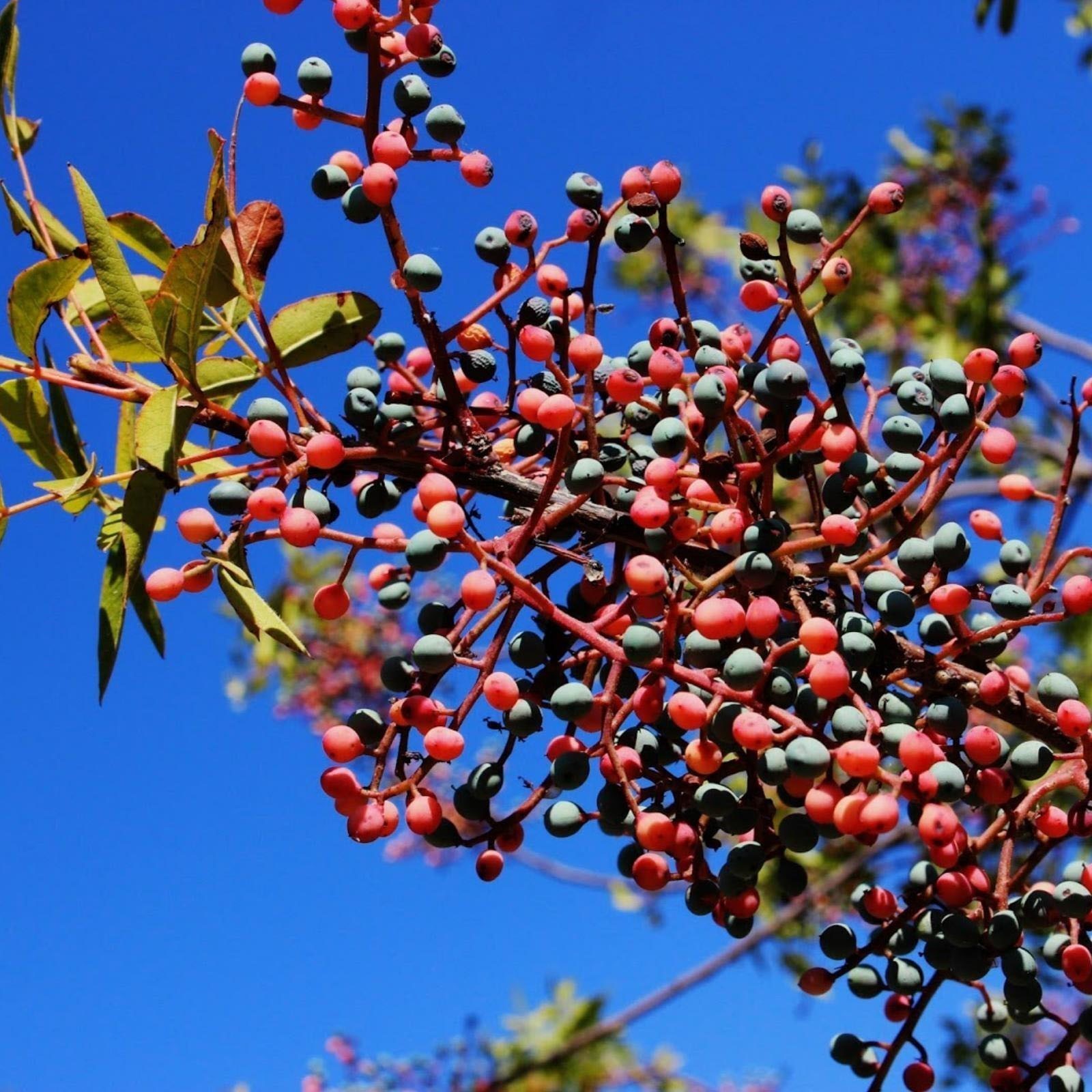
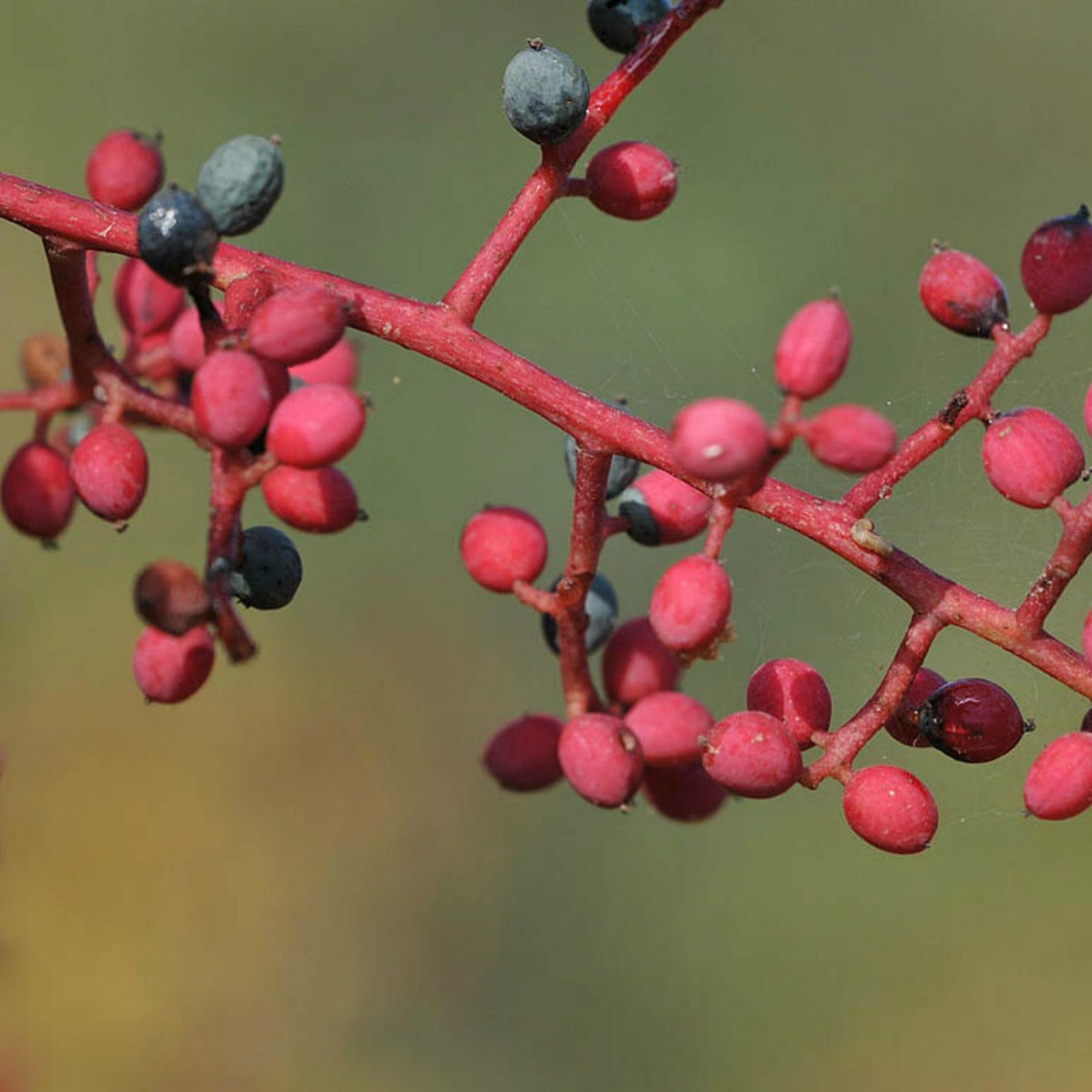
It is a species of flowering plant belonging to the family Anacardiaceae (the cashew family). It is a small deciduous tree or large shrub growing to 10 m tall. The leaves are compound, 10–20 cm long, odd pinnate with five to eleven opposite glossy oval leaflets, the leaflets 2–6 cm long and 1–3 cm broad. The flowers are reddish-purple, appearing with the new leaves in early spring. The fruit consists of small, globular drupes 5–7 mm long, red to black when ripe. All parts of the plant have a strong resinous smell.
It is a dioecious tree, i.e. exists as male and female specimens. For a viable population both genders must be present. The oblong leaf is bright green, leathery, with 10 cm long or more with 3-9 leaflets. Leaves alternate, leathery and compound paripinnate (no terminal leaflet) with 3 or 6 deep green leaflets. They are generally larger and rounder than the leaves of the mastic, reminiscent of the leaves of carob tree. The flowers range from purple to green, the fruit is the size of a pea and turns from red to brown, depending on the degree of maturation. The whole plant emits a strong smell: bitter, resinous or medicinal. In the vegetative period they develop "galls" in a goat's horn shaped (from which the plant gets the name cornicabra, the common name in Spanish), that occur on the leaves and leaflets which have been bitten by insects. The species propagates by seeds and shoots. Although marred by the presence of galls, is a very strong and resistant tree which survives in degraded areas where other species have been eliminated. Pistacia terebinthus is a plant related to Pistacia lentiscus, with which hybridizes frequently in contact zones. The cornicabra is more abundant in the mountains and inland and the mastic is usually found more frequently in areas where the Mediterranean influence of the sea moderates the climate. Mastic tree does not reach the size of the Pistacia terebinthus, but the hybrids are very difficult to distinguish. The mastic has winged stalks to its leaflets, i.e., they are flattened and side fins, whereas these stems in Cornicabra are simple. In the Eastern Mediterranean Coast, Syria, Lebanon and Israel, a similar species, Pistacia palaestina, fills the same ecological niche of this species and is also known as turpentine. On the west coast of the Mediterranean, Canary Islands and Middle East, Pistacia terebinthus can be confused with Pistacia atlantica.
Uses
It is used as a source for turpentine, possibly the earliest known source. The turpentine of the terebinth is now called Chian, Scio, or Cyprian turpentine.
The fruits are used in Cyprus for baking of a specialty village bread. In Crete, where the plant is called tsikoudia, it is used to flavor the local variety of pomace brandy, also called tsikoudia. In the Northern Sporades the shoots are used as a vegetable (called tsitsíravla).The plant is rich in tannin and resinous substances and was used for its aromatic and medicinal properties in classical Greece. A mild sweet scented gum can be produced from the bark, and galls often found on the plant are used for tanning leather. Recently an anti-inflammatory triterpene has been extracted from these galls. In Turkey, where it is known as menengiç or bıttım, a coffee-like beverage known as menengiç kahvesi is made from the roasted fruit and a soap is made from the oil. Terebinth resin was used as a wine preservative in ancient Israel and the ancient Near East.
Habitat
It prefers relatively moist areas, up to 600 m in height. Supports Mediterranean summer drought and frost more intense than mastic. The plant is common in the garrigue and maquis. Appears in deciduous and oak. It has a gray trunk very aromatic, may have multiple trunks or stems when grown as a shrub. Usually reached 5 m. in height, although in rare cases can reach 10 m. Pistacia terebinthus is one of the Anacardiaceae species present in Europe, it is a family of about 600 tropical species. Can be found in meso-and Thermo floors to 1,500 meters above sea level. Pistacia terebinthus is more moisture demanding than the mastic and more resistant to cold. Requires a sunny exposure and average soils, tolerating lime and some salt, often grows near the sea, deep ravines and near salt lakes and streams.
History
Historian of Mycenae John Chadwick believes that the terebinth is the plant called ki-ta-no in some of the Linear B tablets. He cites the work of a Spanish scholar, J.L. Melena, who had found "an ancient lexicon which showed that kritanos was another name for the turpentine tree, and that the Mycenaean spelling could represent a variant form of this word."
The word "terebinth" is used (at least in some translations) for a tree mentioned in the Hebrew Scriptures (or Old Testament), where the Hebrew word "elah" (plural "elim") is used. This probably refers to Pistacia palaestina which is common in the area. The Latin name is underlain by the Ancient Greek name τερέβινθος, which, in turn, is underlain by a pre-Greek Pelasgian word, marked by the characteristic consonant complex νθ.
Terebinth from Oricum is referred to in Virgil's Aeneid, Book 10, line 136, where Ascanius in battle is compared to "ivory skilfully inlaid in [...] Orician terebinth" ("inclusum[...] Oricia terebintho [...] ebur").
Terebinth is referred to by Robin Lane Fox in Alexander the Great: "When a Persian king took the throne, he attended Pasargadae, site of King Cyrus's tomb, and dressed in a rough leather uniform to eat a ritual meal of figs, sour milk and leaves of terebinth."
Na tento produkt momentálně není přidána žádná recenze.
Vaše hodnocení nelze odeslat
Nahlásit komentář
Opravdu chcete nahlásit tento komentář?
Zpráva odeslána
Váš podnět byl odeslán a bude ho posuzovat moderátor.
Váš podnět nelze odeslat
Napište svůj názor
Zkontrolovat před odesláním
Váš komentář byl přidán a bude zobrazen po schválení moderátorem.
Vaši recenzi nelze odeslat
🌍 Celosvětová doprava z EU
Odesíláme do celého světa z Evropské unie doporučenou leteckou poštou s nutností podpisu při převzetí.
📦 Sledování vaší objednávky
Chcete-li najít své sledovací číslo, přihlaste se ke svému účtu a přejděte na: Historie objednávek > Podrobnosti. Vaše sledovací číslo se nachází přímo v podrobnostech objednávky.
O každé fázi vaší objednávky budete informováni e-mailem.
Pokud tyto zprávy nevidíte, zkontrolujte prosím složku Spam/Nevyžádaná pošta nebo kontaktujte svého poskytovatele e-mailu. Případně vyhledejte online, jak odblokovat e-maily odesílatele.
NÁŠ E-MAILOVÝ SERVIS FUNGUJE — Pokud e-maily nedostáváte, je to pravděpodobně problém vašeho poskytovatele e-mailu nebo nastavení.
📧 Jak zajistit, aby e-maily z našeho e-shopu vždy skončily ve vaší doručené poště
Abyste zabránili označování našich e-mailů jako spam, přidejte si naši e-mailovou adresu do svých kontaktů:
Otevřete Gmail (nebo jiného poskytovatele) a najděte e-mail od nás (xxxxxxxxxxxx@xxx.com).
Najeďte myší na jméno nebo e-mailovou adresu odesílatele.
Klikněte na ikonu "Přidat do kontaktů" (ikona postavy).
Pokud vaše nastavení nebude takové, nemůžeme vám pomoci. O pomoc požádejte svého poskytovatele e-mailu.
Případně vytvořte filtr v Gmailu:
Otevřete Gmail a přejděte na Nastavení > Zobrazit všechna nastavení.
Přejděte na kartu Filtry a zablokované adresy.
Klikněte na Vytvořit nový filtr a zadejte naši e-mailovou adresu.
Zaškrtněte Nikdy neposílat do složky Spam a klikněte na Vytvořit filtr.
📍 Sledování zásilky
Vaše sledovací číslo se nachází v podrobnostech vaší objednávky. Svou objednávku můžete sledovat prostřednictvím následujících platforem:
Při objednávce vždy uveďte platné mobilní číslo s předvolbou země (např. +420 123 456 789).
NEOBJEDNÁVEJTE na poštovní přihrádky (P.O. Boxy) nebo pokud nemůžete být doma a zásilku podepsat. Zásilky nelze nechat u sousedů.
Pokud se zásilka zaslaná do P.O. Boxu ztratí nebo nebude doručena, nebude poskytnuta žádná náhrada.
⚖️ Odpovědnost zákazníka za dodržování právních předpisů
Zákazník je odpovědný za zajištění toho, aby byl produkt legální pro dovoz do jeho země, včetně dodržování všech dovozních předpisů, získání nezbytných povolení a zaplacení příslušných cel, daní a dalších poplatků. Před objednáním si prosím ověřte místní zákony.
🔄 Ztracené, vrácené a znovu zaslané zásilky
Zákazníci z Brazílie a Mexika: Nemůžeme vrátit peníze za zásilky ztracené nebo zničené celními orgány.
Pokud se vaše zásilka vrátí, vrátíme vám pouze náklady na produkt — náklady na dopravu se nevracejí.
Poštovné za vrácení (2 €) a veškeré náklady na opětovné zaslání musí uhradit zákazník.
🚚 Doručení zásilky
Doporučené zásilky vyžadují podpis.
Pokud sledování ukazuje, že zásilka je stále na výchozí poště, je na cestě — kontaktujte svou místní poštu pro aktuální informace.
Bohužel ani my, ani pošta, přes kterou byla vaše objednávka odeslána, vám nemůžeme pomoci s otázkou, kde přesně se vaše objednávka nachází. Jakmile uvidíte, že je zásilka ve vaší zemi, MUSÍTE kontaktovat svou poštu se sledovacím číslem.
⏱️ Možnosti doručení a odhadované časy
Možnost doručení
Čas zpracování
Poznámky
Priority Delivery
Odeslání do 1–7 pracovních dnů
Prioritní zpracování objednávky; během svátků možná zpoždění (3–10 dní)
Secured Delivery
Odeslání do 1–7 pracovních dnů
Dostupné pro objednávky do 150 €; vrácení peněz v případě ztráty
Standard Delivery
Odeslání do 7–10 pracovních dnů
Ekonomičtější; během svátků možná zpoždění (7–14 dní)
Odhadované dodací lhůty:
V rámci EU: 3–20 dní
Celosvětově: 5–30 dní
Poznámka: Dodací lhůty závisí na vaší lokalitě a místním poštovním systému. COVID-19 nebo svátky mohou způsobit další zpoždění.
💰 Náklady na dopravu
Poštovné a balné se vypočítá automaticky při dokončení objednávky na základě hmotnosti zásilky a místa určení.
⏰ Doba zpracování objednávek
O víkendech (v sobotu a v neděli) objednávky nezpracováváme ani neodesíláme.
💳 Možnosti platby
Rádi bychom vás informovali o důležité změně týkající se poplatků za platby. Bohužel vzhledem k výjimečně vysokým transakčním poplatkům účtovaným společností PayPal jsme nuceni u plateb provedených prostřednictvím jejich služby uplatnit příplatek.
Máme však pro vás řešení! Těmto astronomickým poplatkům se můžete vyhnout výběrem jedné z našich alternativních platebních metod s NULOVOU PROVIZÍ:
✅ Platba kreditní/debetní kartou – 0 % poplatek
✅ Bankovní převod – 0 % poplatek
Bankovní převod (SEPA / IBAN / SWIFT-BIC): Do popisu platby uveďte referenční číslo objednávky. Objednávky bez platby do 4 dnů budou automaticky zrušeny.
PayPal: Platby jsou přijímány pouze v eurech. Při platbě zvolte měnu Euro.
Platba kartou: Přijímáme karty Visa, MasterCard, American Express, CB, Diners Club, Discover, China UnionPay, JCB a Discover.
⚠️ Transakční poplatky
Zákazníci jsou zodpovědní za veškeré bankovní poplatky nebo transakční poplatky PayPal.
📝 Závěrečné poznámky
Před odesláním objednávky si vždy zkontrolujte naše webové stránky, zda neobsahují zvláštní upozornění, rozpisy svátků nebo konkrétní dodací podmínky.