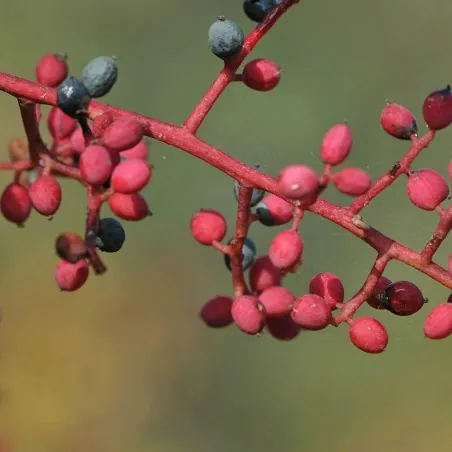
Terebinth - Turpentine Tree Seeds (Pistacia terebinthus)
Price for Package of 5 seeds.
Pistacia terebinthus, known commonly as terebinth and turpentine tree, is a species of Pistacia, native to the Canary Islands, and the Mediterranean region from the western regions of Morocco, and Portugal to Greece
Terebinth - Turpentine Tree Seeds (Pistacia terebinthus)
Price for Package of 5 seeds.
Pistacia terebinthus, known commonly as terebinth and turpentine tree, is a species of Pistacia, native to the Canary Islands, and the Mediterranean region from the western regions of Morocco, and Portugal to Greece, western and southeast Turkey. In the eastern shores of the Mediterranean sea – Syria, Lebanon and Israel – a similar species, Pistacia palaestina, fills the same ecological niche as this species and is also known as terebinth.
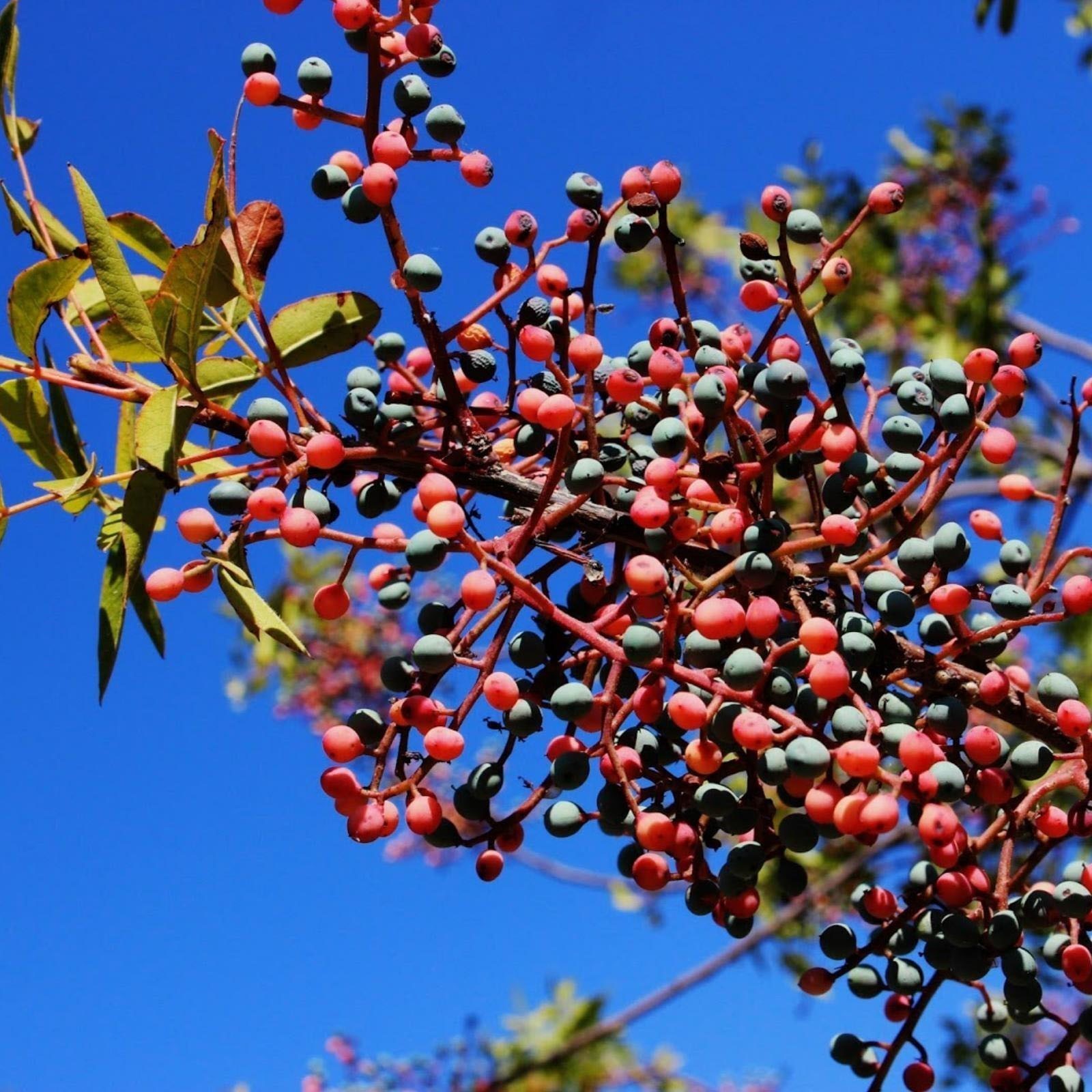
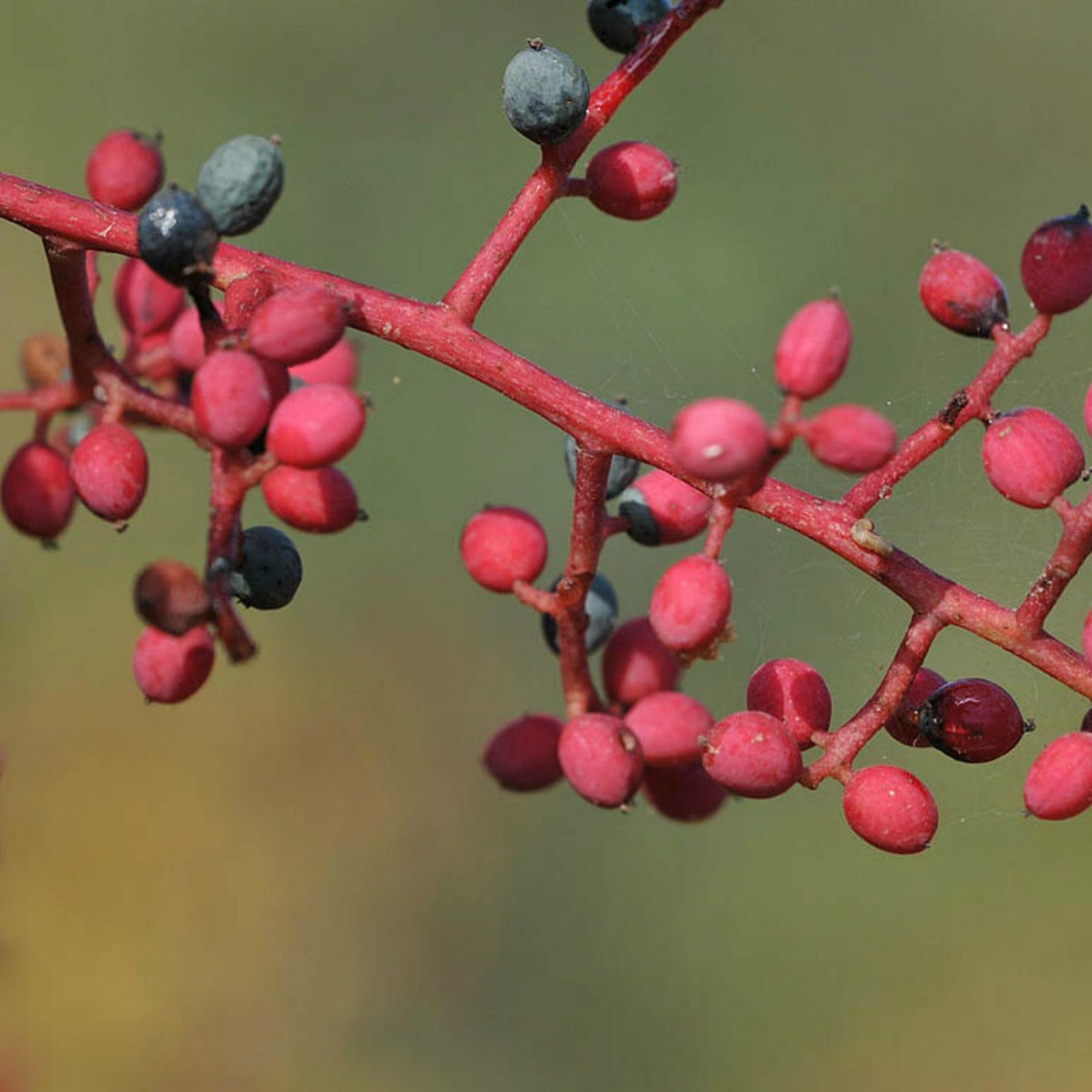
It is a species of flowering plant belonging to the family Anacardiaceae (the cashew family). It is a small deciduous tree or large shrub growing to 10 m tall. The leaves are compound, 10–20 cm long, odd pinnate with five to eleven opposite glossy oval leaflets, the leaflets 2–6 cm long and 1–3 cm broad. The flowers are reddish-purple, appearing with the new leaves in early spring. The fruit consists of small, globular drupes 5–7 mm long, red to black when ripe. All parts of the plant have a strong resinous smell.
It is a dioecious tree, i.e. exists as male and female specimens. For a viable population both genders must be present. The oblong leaf is bright green, leathery, with 10 cm long or more with 3-9 leaflets. Leaves alternate, leathery and compound paripinnate (no terminal leaflet) with 3 or 6 deep green leaflets. They are generally larger and rounder than the leaves of the mastic, reminiscent of the leaves of carob tree. The flowers range from purple to green, the fruit is the size of a pea and turns from red to brown, depending on the degree of maturation. The whole plant emits a strong smell: bitter, resinous or medicinal. In the vegetative period they develop "galls" in a goat's horn shaped (from which the plant gets the name cornicabra, the common name in Spanish), that occur on the leaves and leaflets which have been bitten by insects. The species propagates by seeds and shoots. Although marred by the presence of galls, is a very strong and resistant tree which survives in degraded areas where other species have been eliminated. Pistacia terebinthus is a plant related to Pistacia lentiscus, with which hybridizes frequently in contact zones. The cornicabra is more abundant in the mountains and inland and the mastic is usually found more frequently in areas where the Mediterranean influence of the sea moderates the climate. Mastic tree does not reach the size of the Pistacia terebinthus, but the hybrids are very difficult to distinguish. The mastic has winged stalks to its leaflets, i.e., they are flattened and side fins, whereas these stems in Cornicabra are simple. In the Eastern Mediterranean Coast, Syria, Lebanon and Israel, a similar species, Pistacia palaestina, fills the same ecological niche of this species and is also known as turpentine. On the west coast of the Mediterranean, Canary Islands and Middle East, Pistacia terebinthus can be confused with Pistacia atlantica.
Uses
It is used as a source for turpentine, possibly the earliest known source. The turpentine of the terebinth is now called Chian, Scio, or Cyprian turpentine.
The fruits are used in Cyprus for baking of a specialty village bread. In Crete, where the plant is called tsikoudia, it is used to flavor the local variety of pomace brandy, also called tsikoudia. In the Northern Sporades the shoots are used as a vegetable (called tsitsíravla).The plant is rich in tannin and resinous substances and was used for its aromatic and medicinal properties in classical Greece. A mild sweet scented gum can be produced from the bark, and galls often found on the plant are used for tanning leather. Recently an anti-inflammatory triterpene has been extracted from these galls. In Turkey, where it is known as menengiç or bıttım, a coffee-like beverage known as menengiç kahvesi is made from the roasted fruit and a soap is made from the oil. Terebinth resin was used as a wine preservative in ancient Israel and the ancient Near East.
Habitat
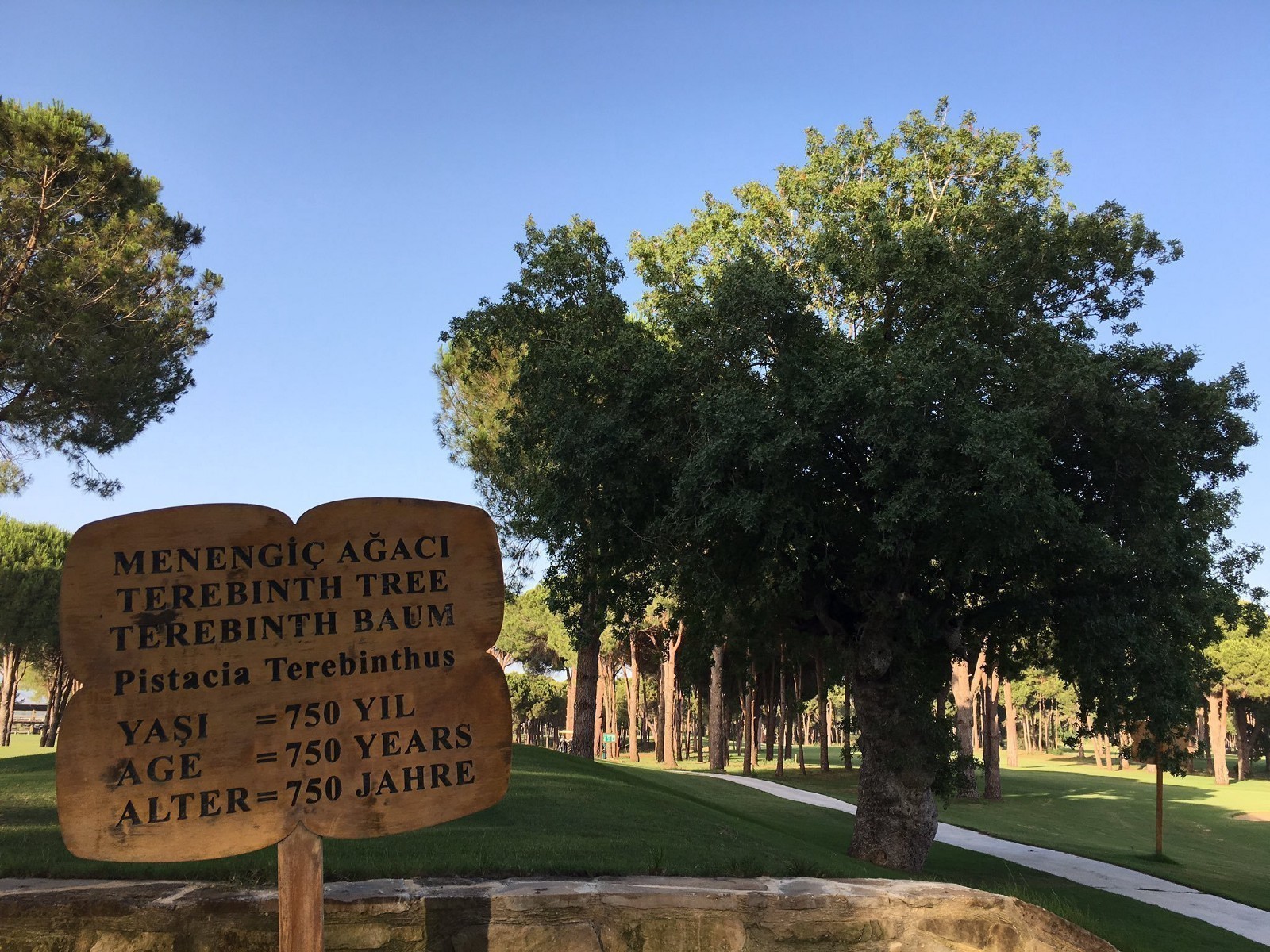
It prefers relatively moist areas, up to 600 m in height. Supports Mediterranean summer drought and frost more intense than mastic. The plant is common in the garrigue and maquis. Appears in deciduous and oak. It has a gray trunk very aromatic, may have multiple trunks or stems when grown as a shrub. Usually reached 5 m. in height, although in rare cases can reach 10 m. Pistacia terebinthus is one of the Anacardiaceae species present in Europe, it is a family of about 600 tropical species. Can be found in meso-and Thermo floors to 1,500 meters above sea level. Pistacia terebinthus is more moisture demanding than the mastic and more resistant to cold. Requires a sunny exposure and average soils, tolerating lime and some salt, often grows near the sea, deep ravines and near salt lakes and streams.
History
Historian of Mycenae John Chadwick believes that the terebinth is the plant called ki-ta-no in some of the Linear B tablets. He cites the work of a Spanish scholar, J.L. Melena, who had found "an ancient lexicon which showed that kritanos was another name for the turpentine tree, and that the Mycenaean spelling could represent a variant form of this word."
The word "terebinth" is used (at least in some translations) for a tree mentioned in the Hebrew Scriptures (or Old Testament), where the Hebrew word "elah" (plural "elim") is used. This probably refers to Pistacia palaestina which is common in the area. The Latin name is underlain by the Ancient Greek name τερέβινθος, which, in turn, is underlain by a pre-Greek Pelasgian word, marked by the characteristic consonant complex νθ.
Terebinth from Oricum is referred to in Virgil's Aeneid, Book 10, line 136, where Ascanius in battle is compared to "ivory skilfully inlaid in [...] Orician terebinth" ("inclusum[...] Oricia terebintho [...] ebur").
Terebinth is referred to by Robin Lane Fox in Alexander the Great: "When a Persian king took the throne, he attended Pasargadae, site of King Cyrus's tomb, and dressed in a rough leather uniform to eat a ritual meal of figs, sour milk and leaves of terebinth."
Aprecierea ta pentru recenzie nu a putut fi trimisa
Reclama un comentariu
Sigur doresti sa raportezi acest comentariu?
Raport trimis
Comentariul tau a fost inregistrat si va fi examinat de un moderator.
Reclamatia tau nu a putut fi trimisa
Scrie-ti recenzia
Recenzia a fost trimisa
Comentariul dumeavoastra a fost inregistrat si va fi vizibil de indata ce va fi aprobat de un moderator.
Recenzia ta nu a putut fi trimisa
🌍 Livrare în toată lumea din UE
Expediem în toată lumea din Uniunea Europeană prin poștă aeriană recomandată, cu semnătură obligatorie la livrare.
📦 Urmărirea comenzii dumneavoastră
Pentru a găsi numărul de urmărire, conectați-vă la contul dumneavoastră și accesați: Istoric comenzi > Detalii. Numărul de urmărire se află direct în detaliile comenzii.
Veți primi notificări prin e-mail pentru fiecare etapă a comenzii dumneavoastră.
Dacă nu vedeți aceste mesaje, vă rugăm să verificați folderul Spam/Junk sau să contactați furnizorul dumneavoastră de e-mail. Alternativ, căutați online cum să deblocați e-mailurile de la expeditor.
SERVICIUL NOSTRU DE E-MAIL FUNCȚIONEAZĂ — Dacă nu primiți e-mailuri, este probabil o problemă cu furnizorul dumneavoastră de e-mail sau cu setările dumneavoastră.
📧 Cum să vă asigurați că e-mailurile de la magazinul nostru online ajung întotdeauna în Inbox
Pentru a preveni marcarea e-mailurilor noastre ca spam, adăugați adresa noastră de e-mail în contactele dumneavoastră:
Deschideți Gmail (sau orice alt furnizor) și găsiți un e-mail de la noi (xxxxxxxxxxxx@xxx.com).
Treceți mouse-ul peste numele sau adresa de e-mail a expeditorului.
Faceți clic pe pictograma "Adaugă în contacte" (pictograma cu persoana mică).
Nu vă putem ajuta dacă setările dumneavoastră nu sunt așa. Contactați furnizorul de e-mail pentru asistență.
Alternativ, creați un filtru în Gmail:
Deschideți Gmail și accesați Setări > Vezi toate setările.
Mergeți la fila Filtre și adrese blocate.
Faceți clic pe Creați un filtru nou și introduceți adresa noastră de e-mail.
Bifați Nu se trimite niciodată în Spam și faceți clic pe Creați filtru.
📍 Urmăriți-vă pachetul
Numărul de urmărire se află în detaliile comenzii dumneavoastră. Vă puteți urmări comanda prin următoarele platforme:
Posta.hr (pentru numere de urmărire de tip RGxxxxxxHR)
⚠️ Notificări importante
Plata la livrare (ramburs) NU este disponibilă.
Când comandați, furnizați întotdeauna un număr de telefon mobil valid cu prefixul țării (de ex. +40 712 345 678).
NU comandați la căsuțe poștale (P.O. Boxes) sau dacă nu puteți fi acasă pentru a semna pentru pachet. Pachetele nu pot fi lăsate la vecini.
Dacă un pachet trimis la o căsuță poștală este pierdut sau nelivrat, nu se va acorda nicio rambursare.
⚖️ Responsabilitatea clientului pentru conformitatea legală
Clientul este responsabil să se asigure că produsul este legal pentru import în țara sa, inclusiv respectarea tuturor reglementărilor de import, obținerea permiselor necesare și plata taxelor vamale aplicabile, a impozitelor și a altor taxe. Vă rugăm să verificați legile locale înainte de a comanda.
🔄 Pachete pierdute, returnate și reexpediate
Clienți din Brazilia și Mexic: Nu putem rambursa pachetele pierdute sau distruse de vamă.
Dacă pachetul dumneavoastră este returnat, vom rambursa doar costul produsului — costurile de transport sunt nerambursabile.
Taxa poștală de returnare (2 €) și orice costuri de reexpediere trebuie acoperite de client.
🚚 Livrarea transportului
Expedierile recomandate necesită semnătură.
Dacă urmărirea arată că pachetul este încă la oficiul poștal de origine, acesta este în tranzit — contactați oficiul poștal local pentru actualizări.
Din păcate, nici noi, nici oficiul poștal prin care a fost trimisă comanda dumneavoastră nu vă putem ajuta cu întrebarea unde se află exact comanda dumneavoastră. Când vedeți că pachetul este în țara dumneavoastră, TREBUIE să contactați oficiul poștal cu numărul de urmărire.
⏱️ Opțiuni de livrare și timp estimat
Opțiune de livrare
Timp de procesare
Note
Priority Delivery
Se expediază în 1–7 zile lucrătoare
Prioritizează procesarea comenzii; posibile întârzieri în timpul sărbătorilor (3–10 zile)
Secured Delivery
Se expediază în 1–7 zile lucrătoare
Disponibil pentru comenzi de până la 150 €; rambursare în caz de pierdere
Standard Delivery
Se expediază în 7–10 zile lucrătoare
Mai economic; posibile întârzieri în timpul sărbătorilor (7–14 zile)
Timp estimat de livrare:
În interiorul UE: 3–20 zile
În restul lumii: 5–30 zile
Notă: Timpul de livrare depinde de locația dumneavoastră și de sistemul poștal local. COVID-19 sau perioadele de sărbători pot cauza întârzieri suplimentare.
💰 Costuri de livrare
Taxele de transport și manipulare sunt calculate automat la finalizarea comenzii pe baza greutății coletului și a destinației.
⏰ Programul de procesare a comenzilor
Nu procesăm și nu expediem comenzi sâmbăta sau duminica.
💳 Opțiuni de plată
Dorim să vă informăm despre o modificare importantă privind taxele de plată. Din păcate, din cauza comisioanelor de tranzacție excepțional de mari impuse de PayPal, suntem forțați să aplicăm o suprataxă pentru plățile efectuate prin serviciul lor.
Cu toate acestea, avem o soluție pentru dumneavoastră! Puteți evita aceste taxe astronomice alegând una dintre metodele noastre alternative de plată cu COMISION ZERO:
✅ Plată cu cardul de credit/debit – comision 0%
✅ Transfer bancar – comision 0%
Transfer bancar (SEPA / IBAN / SWIFT-BIC): Includeți referința comenzii dumneavoastră în descrierea plății. Comenzile fără plată în termen de 4 zile vor fi anulate automat.
PayPal: Plățile sunt acceptate numai în euro. Vă rugăm să selectați euro în timpul procesului de plată.
Plata cu cardul: Acceptăm Visa, MasterCard, American Express, CB, Diners Club, Discover, China UnionPay, JCB și Discover.
⚠️ Comisioane de tranzacție
Clienții sunt responsabili pentru orice comisioane bancare sau taxe de tranzacție PayPal.
📝 Note finale
Înainte de a plasa comanda, verificați întotdeauna site-ul nostru pentru anunțuri speciale, programe de sărbători sau condiții specifice de livrare.