Aloe vera is a succulent plant species that is found only in cultivation, having no naturally occurring populations, although closely related aloes do occur in northern Africa. The species is frequently cited as
Aloe vera is a succulent plant species that is found only in cultivation, having no naturally occurring populations, although closely related aloes do occur in northern Africa. The species is frequently cited as being used in herbal medicine since the beginning of the first century AD. Extracts from A. vera are widely used in the cosmetics and alternative medicine industries, being marketed as variously having rejuvenating, healing, or soothing properties. There is, however, little scientific evidence of the effectiveness or safety of Aloe vera extracts for either cosmetic or medicinal purposes, and what positive evidence is available is frequently contradicted by other studies.
Description
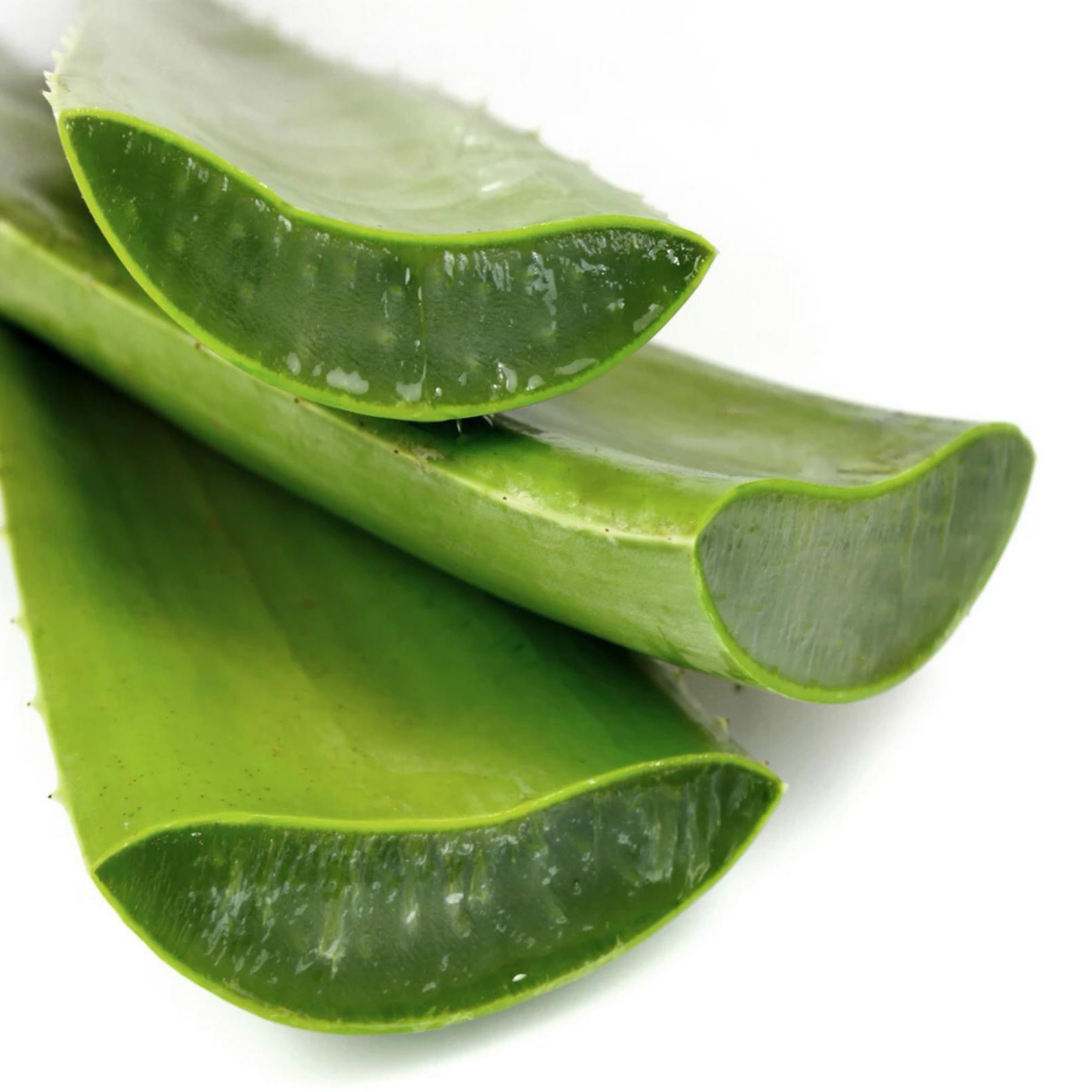
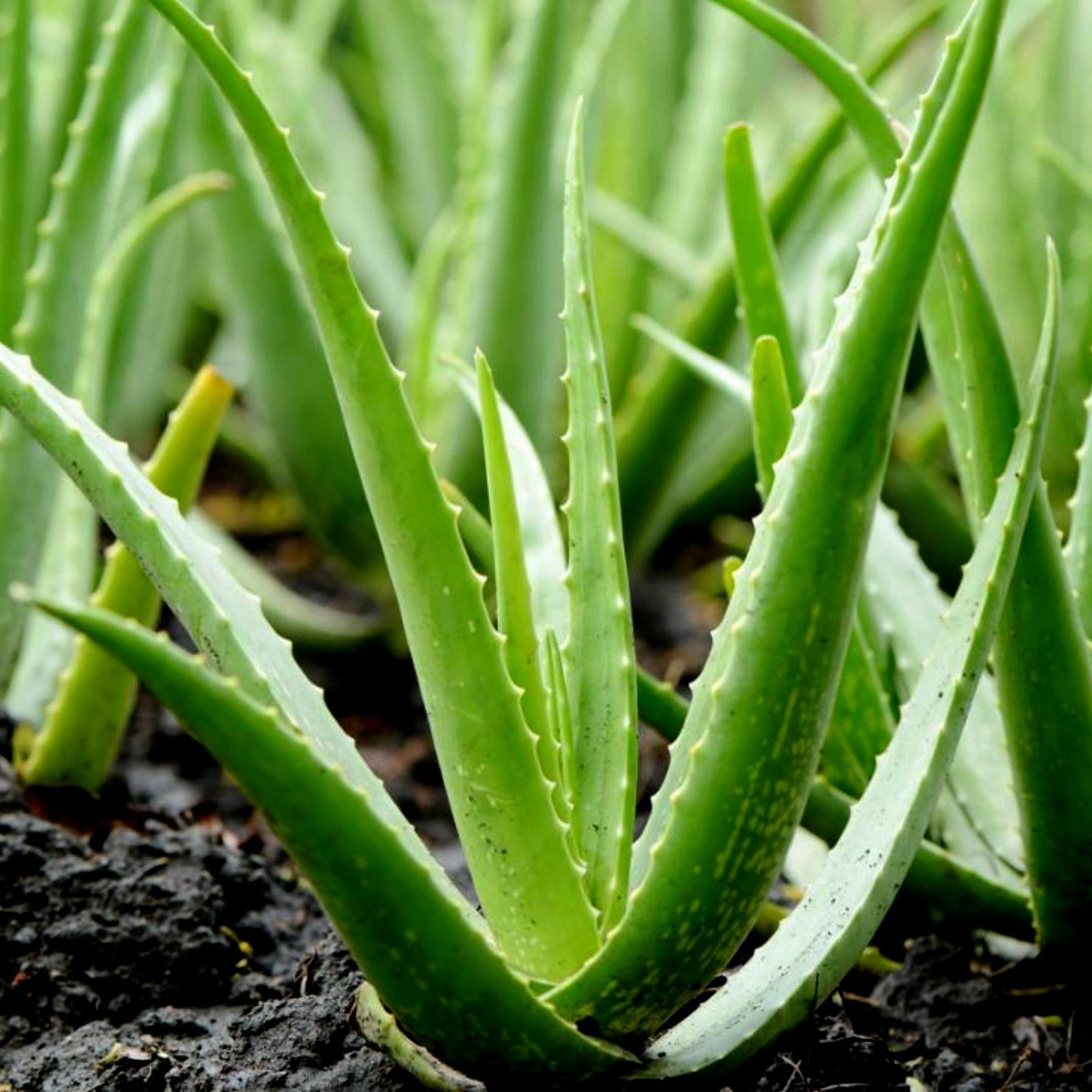
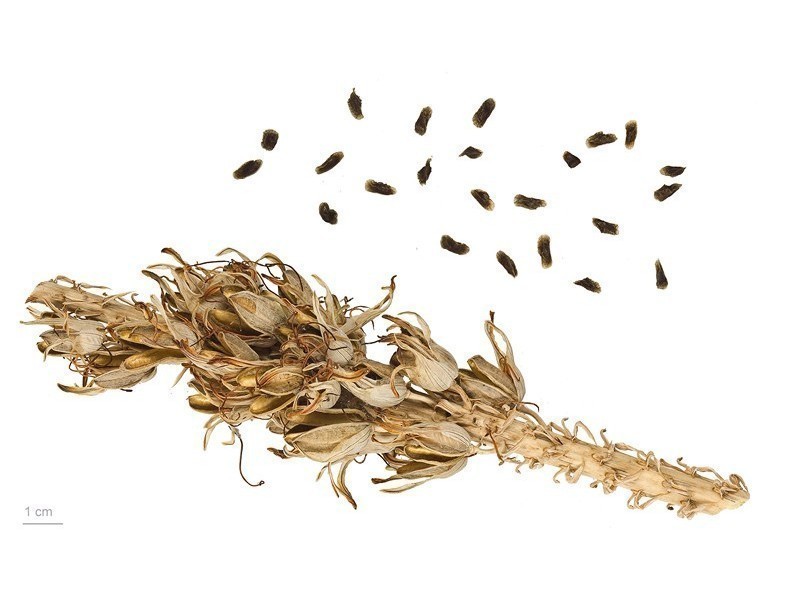
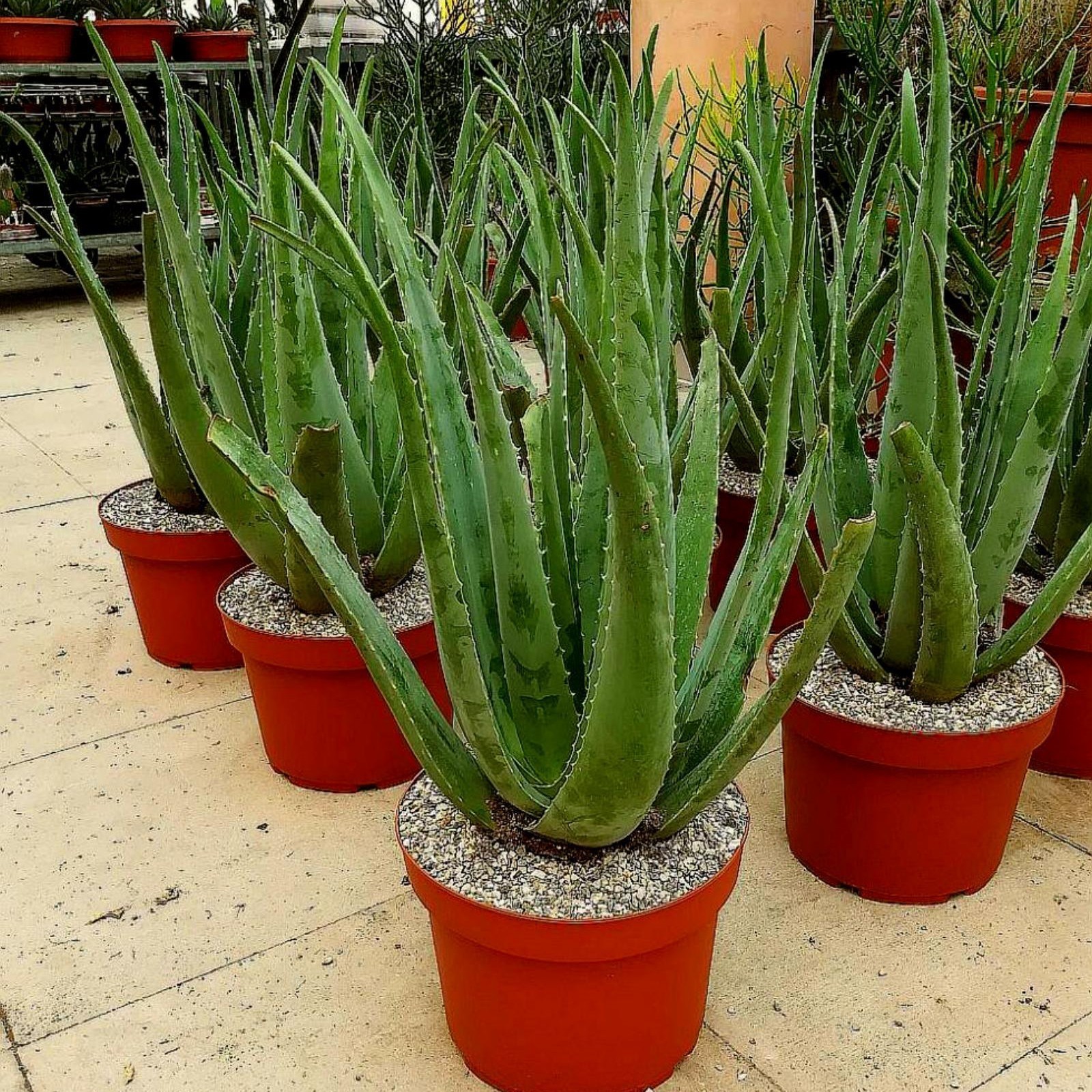
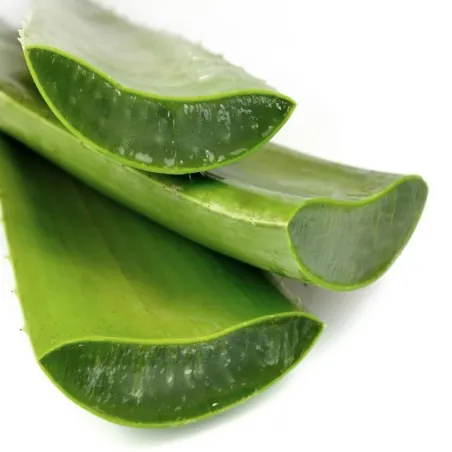
Aloe vera is a stemless or very short-stemmed succulent plant growing to 60–100 cm (24–39 in) tall, spreading by offsets. The leaves are thick and fleshy, green to grey-green, with some varieties showing white flecks on their upper and lower stem surfaces.[6] The margin of the leaf is serrated and has small white teeth. The flowers are produced in summer on a spike up to 90 cm (35 in) tall, each flower being pendulous, with a yellow tubular corolla 2–3 cm (0.8–1.2 in) long.[6][7] Like other Aloe species, Aloe vera forms arbuscular mycorrhiza, a symbiosis that allows the plant better access to mineral nutrients in soil.
Aloe vera leaves contain phytochemicals under study for possible bioactivity, such as acetylated mannans, polymannans, anthraquinone C-glycosides, anthrones, anthraquinones, such as emodin, and various lectins.
Taxonomy and etymology
The species has a number of synonyms: A. barbadensis Mill., Aloe indica Royle, Aloe perfoliata L. var. vera and A. vulgaris Lam.[11][12] Common names include Chinese Aloe, Indian Aloe, True Aloe, Barbados Aloe, Burn Aloe, First Aid Plant. The species epithet vera means "true" or "genuine". Some literature identifies the white-spotted form of Aloe vera as Aloe vera var. chinensis, however, the species varies widely with regard to leaf spots[1] and it has been suggested that the spotted form of Aloe vera may be conspecific with A. massawana.[19] The species was first described by Carl Linnaeus in 1753 as Aloe perfoliata var. vera,[20] and was described again in 1768 by Nicolaas Laurens Burman as Aloe vera in Flora Indica on 6 April and by Philip Miller as Aloe barbadensis some ten days after Burman in the Gardener's Dictionary.
Techniques based on DNA comparison suggest Aloe vera is relatively closely related to Aloe perryi, a species endemic to Yemen.[22] Similar techniques, using chloroplast DNA sequence comparison and ISSR profiling have also suggested it is closely related to Aloe forbesii, Aloe inermis, Aloe scobinifolia, Aloe sinkatana, and Aloe striata.[23] With the exception of the South African species A. striata, these Aloe species are native to Socotra (Yemen), Somalia, and Sudan.[23] The lack of obvious natural populations of the species has led some authors to suggest Aloe vera may be of hybrid origin.
Distribution
The natural range of A. vera is unclear, as the species has been widely cultivated throughout the world. Naturalised stands of the species occur in the southern half of the Arabian Peninsula, through North Africa (Morocco, Mauritania, Egypt), as well as Sudan and neighbouring countries, along with the Canary, Cape Verde, and Madeira Islands.[11] This distribution is somewhat similar to the one of Euphorbia balsamifera, Pistacia atlantica, and a few others, suggesting that a dry sclerophyll forest once covered large areas, but has been dramatically reduced due to desertification in the Sahara, leaving these few patches isolated. Several closely related (or sometimes identical) species can be found on the two extreme sides of the Sahara: dragon trees (Dracaena) and Aeonium being two of the most representative examples.
The species was introduced to China and various parts of southern Europe in the 17th century.[25] The species is widely naturalised elsewhere, occurring in temperate and tropical regions of Australia, Barbados, Belize, Nigeria, Paraguay and the United States[1][26] The actual species' distribution has been suggested to be the result of human cultivation.
Cultivation
Aloe vera has been widely grown as an ornamental plant. The species is popular with modern gardeners as a putatively medicinal plant and for its interesting flowers, form, and succulence. This succulence enables the species to survive in areas of low natural rainfall, making it ideal for rockeries and other low water-use gardens.[6] The species is hardy in zones 8–11, although it is intolerant of very heavy frost or snow.[7][27] The species is relatively resistant to most insect pests, though spider mites, mealy bugs, scale insects, and aphid species may cause a decline in plant health.[28][29] In pots, the species requires well-drained, sandy potting soil and bright, sunny conditions; however, Aloe plants can burn under too much sun or shrivel when the pot does not drain the rain. The use of a good-quality commercial propagation mix or packaged "cacti and succulent mix" is recommended, as they allow good drainage.[30] Terra cotta pots are preferable as they are porous.[30] Potted plants should be allowed to completely dry prior to rewatering. When potted, aloes become crowded with "pups" growing from the sides of the "mother plant", they should be divided and repotted to allow room for further growth and help prevent pest infestations. During winter, Aloe vera may become dormant, during which little moisture is required. In areas that receive frost or snow, the species is best kept indoors or in heated glasshouses.[7] Large-scale agricultural production of Aloe vera is undertaken in Australia,[31] Bangladesh, Cuba,[32] the Dominican Republic, China, Mexico,[33] India,[34] Jamaica,[35] Kenya, Tanzania and South Africa,[36] along with the USA[37] to supply the cosmetics industry with Aloe vera gel.
This plant has gained the Royal Horticultural Society's Award of Garden Merit.
Uses
Preparations made from Aloe vera are often referred to as "aloe vera".[39] Scientific evidence for the cosmetic and therapeutic effectiveness of aloe vera is limited and when present is frequently contradictory.[2][3] Despite this, the cosmetic and alternative medicine industries regularly make claims regarding the soothing, moisturizing, and healing properties of aloe vera [4][40] commercially advertised mainly for skin conditions such as sunburns, cold sores and frostbite. Aloe vera gel is also used commercially as an ingredient in yogurts, beverages, and some desserts;[41][42][43] although at certain doses, its toxic properties could be severe whether ingested or topically applied.[44] The same is true for aloe latex, which was taken orally for conditions ranging from glaucoma to multiple sclerosis until the FDA required manufacturers to discontinue its use.[45] Other uses for extracts of Aloe vera include the dilution of semen for the artificial fertilization of sheep,[46] as a fresh food preservative,[47] or for water conservation in small farms.[48] It has also been suggested that biofuels could be obtained from Aloe vera seeds.[49] Aloe is also used as a food substance, possibly for its gelling properties.
Traditional medicine
Early records of Aloe vera use appear in the Ebers Papyrus from the 16th century BC,[16] in both Dioscorides' De Materia Medica and Pliny the Elder's Natural History written in the mid-first century AD[16] along with the Juliana Anicia Codex produced in 512 AD.[41] The species is used widely in the traditional herbal medicine of many countries.[4] Aloe vera, called kathalai in Ayurvedic medicine, is used as a multipurpose skin treatment. This may be partly due to the presence of saponin, a chemical compound that acts as an antimicrobial agent.
Dietary supplement
Aloin, a compound found in the exudate of some Aloe species, was the common ingredient in over-the-counter (OTC) laxative products in the United States prior to 2003, when the Food and Drug Administration ruled that aloin was a class III ingredient, thereby banning its use.[51] Aloe vera has potential toxicity, with side effects occurring at some dose levels both when ingested or applied topically.[44] Although toxicity may be less when aloin is removed by processing, Aloe vera that contains aloin in excess amounts may induce side effects.[4][5][52] A two-year National Toxicology Program (NTP) study on oral consumption of nondecolorized whole leaf extract of Aloe vera found evidence of carcinogenic activity in male and female rats. The NTP says more information is needed to determine the potential risks to humans.
Aloe vera juice is marketed to support the health of the digestive system, but there is neither scientific evidence nor regulatory approval to support this claim.[56] The extracts and quantities typically used for such purposes appear to be dose-dependent for toxic effects.
Commodities
Aloe vera is used on facial tissues where it is promoted as a moisturiser and/or anti-irritant to reduce chafing of the nose. Cosmetic companies commonly add sap or other derivatives from Aloe vera to products such as makeup, tissues, moisturizers, soaps, sunscreens, incense, shaving cream, or shampoos.[41] A review of academic literature notes that its inclusion in many hygiene products is due to its "moisturizing emollient effect".
Toxicity
In 2011, the NTP carried out a series of short- and long-term carcinogenicity studies of a nondecolorized whole leaf extract of Aloe barbadensis miller (Aloe vera) in rats and mice, in which the extracts were fed to the rodents in drinking water.[4] The studies found "clear evidence of carcinogenic activity" in the rats, but "no evidence of carcinogenic activity" in the mice. Both the mice and rats had increased amounts of noncancerous lesions in various tissues. The NTP believes further studies of oral preparations of aloe are important, as are studies of the oral exposure of humans to aloe; topical preparations are still considered safe.
Oral ingestion of Aloe vera may also cause diarrhea, which in turn can lead to electrolyte imbalance, kidney dysfunction, dry mouth, headache, and nausea, while topical application may induce contact dermatitis, erythema, or phototoxicity.
Research into medical uses
Two 2009 reviews of clinical studies determined that all were too small and faulty to allow strong conclusions to be drawn from them, but concluded, "there is some preliminary evidence to suggest that oral administration of aloe vera might be effective in reducing blood glucose in diabetic patients and in lowering blood lipid levels in hyperlipidaemia. The topical application of aloe vera does not seem to prevent radiation-induced skin damage. It might be useful as a treatment for genital herpes and psoriasis. The evidence regarding wound healing is contradictory. More and better trial data are needed to define the clinical effectiveness of this popular herbal remedy more precisely." [5][58] One of the reviews found that Aloe has not been proven to offer protection for humans from sunburn, suntan, or other damage from the sun.
A 2007 review of aloe vera's use in burns concluded, "cumulative evidence tends to support that aloe vera might be an effective interventions used in burn wound healing for first- to second-degree burns. Further, well-designed trials with sufficient details of the contents of aloe vera products should be carried out to determine the effectiveness of aloe vera.[59] Topical application of aloe vera may also be effective for genital herpes and psoriasis.
Sowing Instructions
Propagation:
Seeds
Pretreat:
0
Stratification:
0
Sowing Time:
all year round
Sowing Depth:
Needs Light to germinate! Just sprinkle on the surface of the substrate + gently press
Na tento produkt momentálně není přidána žádná recenze.
Vaše hodnocení nelze odeslat
Nahlásit komentář
Opravdu chcete nahlásit tento komentář?
Zpráva odeslána
Váš podnět byl odeslán a bude ho posuzovat moderátor.
Váš podnět nelze odeslat
Zkontrolovat před odesláním
Váš komentář byl přidán a bude zobrazen po schválení moderátorem.
Vaši recenzi nelze odeslat
🌍 Wereldwijde verzending vanuit de EU
Wij verzenden wereldwijd vanuit de Europese Unie via aangetekende luchtpost met handtekening voor ontvangst bij levering.
📦 Uw bestelling volgen
Om uw trackingnummer te vinden, logt u in op uw account en gaat u naar: Bestelgeschiedenis > Details. Uw trackingnummer bevindt zich direct in de bestelgegevens.
U ontvangt e-mailmeldingen voor elke fase van uw bestelling.
Als u deze berichten niet ziet, controleer dan uw map Spam/Ongewenste e-mail of neem contact op met uw e-mailprovider. Zoek anders online naar hoe u e-mails van afzenders kunt deblokkeren.
ONZE E-MAILSERVICE WERKT — Als u geen e-mails ontvangt, ligt dit waarschijnlijk aan uw e-mailprovider of instellingen.
📧 Hoe u ervoor zorgt dat e-mails van onze webshop altijd in uw inbox terechtkomen
Om te voorkomen dat onze e-mails als spam worden gemarkeerd, voegt u ons e-mailadres toe aan uw contacten:
Open Gmail (of een andere provider) en zoek een e-mail van ons (xxxxxxxxxxxx@xxx.com).
Beweeg de muis over de naam of het e-mailadres van de afzender.
Klik op het icoon "Toevoegen aan contacten" (het poppetje).
We kunnen u niet helpen als uw instellingen niet zo staan. Neem contact op met uw e-mailprovider voor hulp.
Als alternatief kunt u een filter maken in Gmail:
Open Gmail en ga naar Instellingen > Alle instellingen bekijken.
Ga naar het tabblad Filters en geblokkeerde adressen.
Klik op Nieuw filter maken en voer ons e-mailadres in.
Vink Nooit naar Spam verzenden aan en klik op Filter maken.
📍 Uw pakket volgen
Uw trackingnummer staat in uw bestelgegevens. U kunt uw bestelling volgen via de volgende platforms:
Geef bij het bestellen altijd een geldig mobiel nummer op met landnummer (bijv. +31 6 1234 5678).
Bestel NIET naar postbussen (P.O. Boxes) of als u niet thuis kunt zijn om voor het pakket te tekenen. Pakketten kunnen niet bij de buren worden afgegeven.
Als een pakket dat naar een postbus is verzonden verloren gaat of niet wordt bezorgd, vindt er geen terugbetaling plaats.
⚖️ Verantwoordelijkheid van de klant voor wettelijke naleving
De klant is verantwoordelijk om ervoor te zorgen dat het product legaal in zijn land mag worden geïmporteerd, inclusief naleving van alle importvoorschriften, het verkrijgen van de nodige vergunningen en de betaling van toepasselijke douanerechten, belastingen en andere kosten. Controleer uw lokale wetgeving voordat u bestelt.
🔄 Verloren, geretourneerde en opnieuw verzonden pakketten
Klanten uit Brazilië en Mexico: We kunnen geen pakketten terugbetalen die door de douane zijn verloren of vernietigd.
Als uw pakket wordt geretourneerd, betalen we alleen de productkosten terug — verzendkosten worden niet gerestitueerd.
Retourkosten (€2) en eventuele kosten voor opnieuw verzenden zijn voor rekening van de klant.
🚚 Levering van de zending
Aangetekende zendingen vereisen een handtekening.
Als de tracking aangeeft dat het pakket nog op het postkantoor van herkomst is, is het onderweg — neem contact op met uw lokale postkantoor voor updates.
Helaas kunnen wij, noch het postkantoor waardoor uw bestelling is verzonden, u helpen met de vraag waar uw bestelling zich precies bevindt. Wanneer u ziet dat het pakket in uw land is, MOET u contact opnemen met uw postkantoor met het trackingnummer.
⏱️ Leveringsopties & geschatte tijden
Leveringsoptie
Verwerkingstijd
Opmerkingen
Priority Delivery
Verzonden binnen 1–7 werkdagen
Prioriteit bij orderverwerking; vertragingen mogelijk tijdens feestdagen (3–10 dagen)
Secured Delivery
Verzonden binnen 1–7 werkdagen
Beschikbaar voor bestellingen tot €150; terugbetaling bij verlies
Standard Delivery
Verzonden binnen 7–10 werkdagen
Voordeliger; vertragingen mogelijk tijdens feestdagen (7–14 dagen)
Geschatte levertijden:
Binnen de EU: 3–20 dagen
Wereldwijd: 5–30 dagen
Opmerking: Levertijden zijn afhankelijk van uw locatie en het lokale postsysteem. COVID-19 of feestdagen kunnen extra vertraging veroorzaken.
💰 Verzendkosten
Verzend- en administratiekosten worden automatisch berekend bij het afrekenen op basis van het gewicht van het pakket en de bestemming.
⏰ Verwerkingstijden
Wij verwerken of verzenden geen bestellingen op zaterdag of zondag.
💳 Betalingsmogelijkheden
Wij willen u informeren over een belangrijke wijziging met betrekking tot de betalingskosten. Helaas zijn wij, vanwege de uitzonderlijk hoge transactiekosten die PayPal in rekening brengt, genoodzaakt een toeslag toe te passen voor betalingen die via hun service worden gedaan.
We hebben echter een oplossing voor u! U kunt deze astronomische kosten vermijden door te kiezen voor een van onze alternatieve betaalmethoden met NUL COMMISSIE:
✅ Creditcard/Betaalpas betaling – 0% Kosten
✅ Bankoverschrijving – 0% Kosten
Bankoverschrijving (SEPA / IBAN / SWIFT-BIC): Vermeld uw bestelreferentie in de betalingsomschrijving. Bestellingen zonder betaling binnen 4 dagen worden automatisch geannuleerd.
PayPal: Betalingen worden alleen in Euro geaccepteerd. Selecteer Euro tijdens het afrekenen.
Kaartbetaling: Wij accepteren Visa, MasterCard, American Express, CB, Diners Club, Discover, China UnionPay, JCB en Discover.
⚠️ Transactiekosten
Klanten zijn verantwoordelijk voor eventuele bank- of PayPal-transactiekosten.
📝 Slotopmerkingen
Controleer voor het plaatsen van uw bestelling altijd onze website voor speciale mededelingen, vakantieschema's of specifieke verzendvoorwaarden.


Komentáře (0)
Vaše hodnocení nelze odeslat
Nahlásit komentář
Zpráva odeslána
Váš podnět nelze odeslat