
How to grow melons
SKU 0000033 Category Home
Price: €0.00
How to grow melons
The succulent flavor of vine-ripened melons is worth the special effort it takes to grow them. Homegrown melons outshine those from the grocery store because melons pack up on sugar during their final days of growth—commercial melons just can’t compete because they’re picked a
Out-of-Stock
Share on
How to grow melons
The succulent flavor of vine-ripened melons is worth the special effort it takes to grow them. Homegrown melons outshine those from the grocery store because melons pack up on sugar during their final days of growth—commercial melons just can’t compete because they’re picked a little green for shipping.
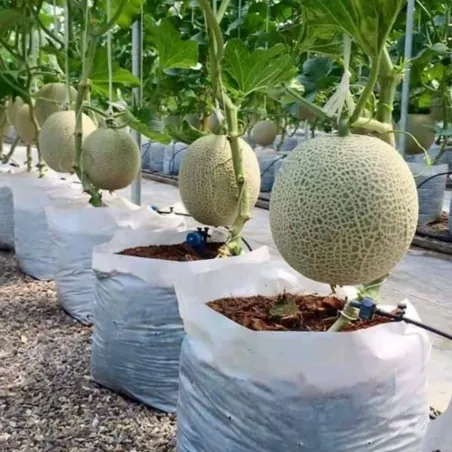
Most melons need nutrient-rich soil, plenty of sunshine, and at least 3 to 4 months of warm weather. Melons can take up lots of space. A single watermelon vine, for example, can sprawl across 100 square feet and produce only two fruits; muskmelons, on the other hand, can provide at least a dozen fruits in a 16-square-foot area. If you have limited space, try bush cultivars, or grow standard types vertically on a strong fence or trellis.
Types: What we call cantaloupes are actually muskmelons. This class of melon has pumpkin-like ribbing and skin covered with a netting of shallow veins. Its fragrant flesh ranges from salmon to green. ‘Athena’ and ‘Pulsar’ are popular cultivars for home gardens. True cantaloupes, grown mostly in Europe, have orange flesh and rough, scaly skin with dark, distinct veins.
Winter melons (also a type of muskmelon) ripen as the weather starts to turn cool and will keep for fairly long periods if stored properly. This group includes honeydews, crenshaws, casabas, and Persians. These larger, more oval fruits have waxy skins that can be smooth or wrinkled, with less-fragrant flesh.
Winter melons require a growing season of well over 100 days and are more susceptible to diseases, but they’re certainly delicious. Honeydews such as ‘Earlidew’ have smooth, creamy white skins and lime green flesh that takes on a slight golden tinge when mature. Crenshaws have salmon pink flesh with a distinctive flavor. The tenderness of their dark green skins makes them difficult to ship. Casabas have wrinkled, golden skins and white flesh that stays sweet and juicy over a long period. Large, round Persian melons have thick, orange flesh.
Watermelons fall under a different botanical classification, Citrullus lanatus, but they thrive under the same cultural conditions that other melons require. Compact cultivars such as ‘Sugar Baby’ and ‘Petite Treat” (which is also seedless) are perfect for smaller home gardens. ‘Petite Yellow’ is one of several small yellow-fleshed cultivars for home gardens.
Planting:
Melons need the sunniest spot possible with plenty of air circulation to help them dry out quickly after rain and prevent disease. Melon roots usually extend from 2 to 10 inches into the earth, but some go as deep as 4 to 5 feet. Therefore, the soil must be loose and moisture retentive but well drained. Since melons will be one of the last things you plant in your vegetable garden, you might want to give them an extra boost by working 2 to 3 inches of compost into the planting area.
Vines may not set fruit if they are chilled as seedlings, so don’t plant until the soil has warmed to between 70° and 80°F. Get a head start by planting seeds indoors in 4-inch peat pots. Start them just 2 to 4 weeks before transplanting, because seedlings that develop tendrils or more than four leaves may have difficulty later in establishing roots. Sow several seeds ½ inch deep in each pot, and place the pots in a south-facing window or other sunny spot. Provide bottom heat if necessary to bring the soil temperature to 75°F. Thin 2-inch-tall seedlings to the strongest plant by cutting the others off at soil level. A few days before planting, harden off the seedlings by setting them outdoors in a sunny area during the day and bringing them in at night.
You can grow large crops in rows, but most melons seem to do better in hills. For most cultivars, space hills 4 to 6 feet apart; vigorous growers like watermelons may require 6 to 12 feet between hills, while some bush types need only 2 feet.
When planting directly in the garden, sow six seeds per hill no earlier then 2 weeks after the last frost date. Thin to two or three plants per hill, or in short-season areas, thin to only one plant per hill, so it won’t have to compete with the other vines for nutrients.
In colder climates, lay black plastic or black paper mulch a few weeks prior to planting or transplanting to warm up the soil and keep it warm once the plants are in the ground. Anchor the mulch securely to keep it from shifting and covering young plants. You can also use hotcaps, such as plastic jugs with the bottom cut out, to keep seedlings warm.
Growing guidelines:If you’re not using paper mulch, apply several inches of organic mulch just as the vines start to elongate. This covering will suppress weeds and help keep the fruits clean and disease free. Provide generous amounts of water, particularly right after transplanting and as the fruits develop.
Male flowers appear first, at leaf joints on the main stem and on larger side shoots. Around a week later, fruit-producing female flowers form on secondary side shoots. Despite the many female blossoms, each vine will produce only three or four melons. Most young melons will grow to the size of an egg, then shrivel as they send their nutrients back into the vines. Fertilize with compost tea when the fruits set and again 2 weeks later.
Though melon vines look very robust, they are actually quite delicate—always handle them carefully. If they start to sprawl outside the area where you wish them to grow, gently guide them back toward the center of the planted area.
In areas colder than about Zone 7, remove flowers and smaller fruits from the vines after midsummer; these won’t have time to mature before frost, and they use up energy that should go into ripening the two or three larger fruits you’ve left on each vine.
Problems: Striped and spotted cucumber beetles can be serious pests. The beetles, which spread bacterial wilt as they feed, tend to be more destructive to direct-seeded plants than to transplants. They often attack around the time the plants flower. Tents of cheesecloth, mosquito netting, or floating row covers are the best protection from beetles, but you must remove these coverings when female flowers form so that bees can pollinate them. Spraying young plants with kaolin clay may deter beetles from feeding. You can also use a hand-held vacuum cleaner to remove beetles from the plants (dump the collected beetles into soapy water to kill them). As a last resort to fight a cucumber beetle infestation, spray a pyrethrin product.
Melon aphids can also be a problem.
Squash vine borers, which eat their way up the stem of a plant and cause the leaves to wilt, may also attack melons. See the squash growing guide for information on this pest.
Resistant cultivars and crop rotation are the best defenses against melon diseases, including downy and powdery mildews. Mildews are common in wet weather. Downy mildew produces yellow spots on leaf surfaces, with purplish areas on the undersides. Powdery mildew causes powdery white areas on leaves and stems. Even a small amount of mildew can affect the sweetness of melons because the fungus will siphon off the vine’s sugar to fuel its own growth. Sprays of potassium bicarbonate (or baking soda) can help prevent powdery mildew. Cut off and destroy any affected branches.
Bacterial wilt produces limp leaves and stems that secrete a white sticky substance when cut. Remove and destroy affected plants. Reduce the chances of bacterial wilt by controlling cucumber beetles and aphids.
Harvesting:
The stem of a vine-ripened fruit should break cleanly with no pressure at all on the stem; just picking up the fruit should be sufficient. You can often judge the ripeness of cantaloupes and muskmelons by scent alone.
Some gardeners determine the ripeness of a watermelon by thumping it, with a resulting ringing sound if it’s green and a dull or dead sound if it’s ripe. However, a dull or dead sound can also mean that the fruit is overripe. Other growers harvest when the “pig’s-tail” curl where the watermelon attaches turns brown, but on some cultivars this tail dries up at 7 to 10 days 380before the fruit is ripe. Instead, look at the bottom surface or “ground spot” on a watermelon. If it has turned from a light straw color to gold, orange, or rich yellow, it’s ripe for picking.
Storage time for various melons kept in a cool place can vary from 2 weeks for a cantaloupe to 8 weeks for a casaba.
Category Home Reference 0000033
Comments (0)
No customer reviews for the moment.
Your review appreciation cannot be sent
Report comment
Are you sure that you want to report this comment?
Report sent
Your report has been submitted and will be considered by a moderator.
Your report cannot be sent
Write your review
Review sent
Your comment has been submitted and will be available once approved by a moderator.
Your review cannot be sent
🌍 Worldwide Shipping from the EU
We ship worldwide from the European Union using registered air mail with signature confirmation upon delivery.
📦 Tracking Your Order
Log in to your account and navigate to Order History > Details to find your tracking number.
You will receive email notifications for each stage of your order.
If you don’t see these messages, please check your Spam/Junk folder or contact your email provider. Alternatively, search online for how to unblock sender emails.
OUR EMAIL SERVICE IS WORKING
You will receive email notifications for each stage of your order. If you don’t see these messages, please check your Spam/Junk folder or contact your email provider.
📧 How to Ensure Emails from Our Online Shop Always Land in Your Gmail or any other email provider's Inbox and Aren't Marked as Spam or Blocked:
Add the Sender to your Google or any other email provider's contacts. We can't help you if your settings are not like this. Contact your email provider for help.
Step 1: Open Gmail and find an email from us xxxxxxxxxxxx@xxx.com
Do not try to send us an email directly to this address; we will not receive it. Every contact is exclusively through the contact form in our online shop!
If you can’t find our email, it might have been blocked. In that case, proceed with Step 4 below.Step 2: Hover over the sender’s name or email address at the top of the email.
Step 3: Click the "Add to Contacts" icon (the little person icon).
This will help Gmail recognize us as a trusted sender, ensuring our emails go straight to your inbox and not to spam.
Create a Filter to Prevent Emails from Being Marked as Spam or Blocked
Step 1: Open Gmail and click on the gear icon in the top-right corner, then select "See all settings".
Step 2: Go to the "Filters and Blocked Addresses" tab.
Step 3: Click "Create a new filter".
Step 4: In the "From" field, enter the email address you want to whitelist (e.g., our shop’s email).
Step 5: Click "Create filter".
Step 6: In the next window, check the box labeled "Never send it to Spam".
Step 7: Click "Create filter" to save.
This will ensure our emails always land in your inbox and won’t get marked as spam or blocked by mistake.
Track your package via:
Aftership
17Track
Posta.hr (for tracking numbers like RGxxxxxxHR)
⚠️ Important Notices
Cash on delivery is NOT available.
Always provide a valid mobile number with country code when ordering (e.g., +365 456 7686 576).
Do not order to P.O. Boxes, or if you cannot be home to sign for the package, parcels cannot be left with neighbors.
If a package sent to a P.O. Box is lost or undelivered, no refund will be issued.
⚖️ Customer Responsibility for Legal Compliance
The customer is responsible for ensuring that the product is legal to import into their country, including complying with all import regulations, obtaining necessary permits, and paying applicable customs duties, taxes, and other fees. Please check your local laws before ordering to avoid any issues with customs or delivery.
📦 Lost, Returned & Reshipping Packages
Brazil & Mexico Customers: We cannot refund packages lost or destroyed by customs.
If your package is returned, we will refund only the product cost — shipping costs are non-refundable.
Return postage (€2) and any reshipping costs must be covered by the customer.
If a package is returned to us for any reason, you are responsible for paying the return shipping (€2) plus the cost to resend the package.
🚚 Shipment Delivery
Registered shipments require a signature.
If your tracking shows that the package is still at the origin post office, it is in transit — contact your local post office for updates.
Unfortunately, neither we nor the post office through which your order was sent can help you with the question of where your order is. When you see that your package is in your country, you MUST contact your post office with the tracking number and discuss the matter with them. We send all orders by official state mail.
We are not responsible for delivery times and cannot track shipments on your behalf.
📅 Delivery Options & Estimated Times
| Delivery Option | Processing Time | Notes |
|---|---|---|
| Priority Delivery | Ships in 1–7 business days | Prioritizes order processing (not guaranteed faster delivery); delays possible during holidays (3–10 days) |
| Secured Delivery | Ships in 1–7 business days | Available for orders up to €150; refund if lost |
| Standard Delivery | Ships in 7–10 business days | More economical; delays possible during holidays (7–14 days) |
Estimated Delivery Time:
Within the EU: 3–20 days
Worldwide: 5–30 days
USA Examples: Delivered in 13, 17, 19, 22, or 27 days.
Note: Delivery times depend on your location and local postal system. COVID-19 or holiday seasons may cause additional delays.
💰 Shipping Costs
Shipping and handling fees are calculated automatically at checkout based on the parcel weight and destination.
⏰ Order Processing Hours
We do not process or ship orders on Saturdays or Sundays.
💳 Payment Options
Bank Transfer (SEPA / IBAN / SWIFT-BIC)
Include your order reference in the payment description (e.g., "SGS-19811702").
Orders without payment within 7 days will be automatically cancelled.PayPal
Payments are accepted in Euros only.
Please select Euros during checkout.Card Payment
For card payments, visit our partner site: exotic-seeds.store
We accept Visa, MasterCard, American Express, CB, Diners Club, Discover, China UnionPay, JCB, and Discover.
⚠️ Transaction Fees
Customers are responsible for any bank or PayPal transaction fees.
Please ensure accurate payment details for faster order processing.
📢 Final Notes
Before placing your order, always check our website for special notices, holiday schedules, or specific shipping conditions that might affect your purchase.
Important Notice: Digital Invoices
To help reduce paper waste, we do not include a printed invoice with your order. You can easily download and print your invoice at any time by visiting your Order History in your account profile.